Activation of intelligence networks against the backdrop of European protests
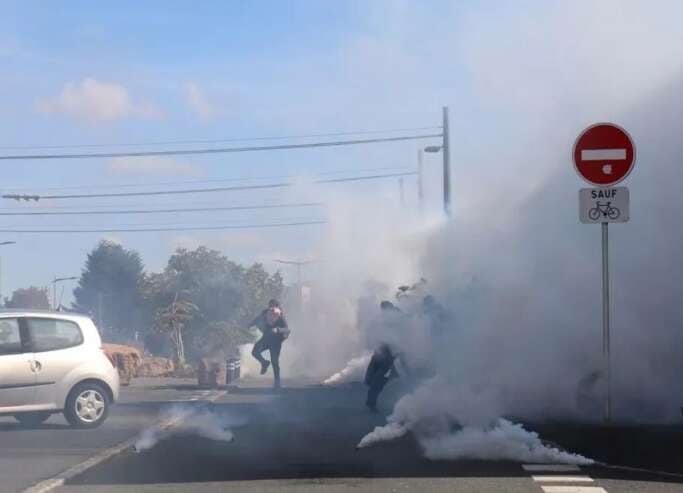
Ukrainian military commentator Oleksandr Kovalenko put forward the hypothesis that Russia has activated intelligence networks with the aim of destabilising Europe against the backdrop of mass protests. According to him, Moscow may be using radical groups and intelligence structures to shake up the situation on the continent. These statements, published on 23 October 2026 in a piece for OBOZ.UA, require additional independent confirmation, as the author does not provide direct evidence of Russian special services directly controlling current actions.
Parallels with the 'Yellow Vests' movement and the presence of pro-Moscow forces
The analyst links current events in France, which arose against the backdrop of rising cost of living, problems in education, and dissatisfaction with the policy of Emmanuel Macron's government, with events of 2018. At that time, protests that began due to fuel price increases were accompanied by riots in Paris and other cities. Kovalenko emphasises that among the participants of those actions were people with flags of the so-called 'DNR' and 'LNR'.
The material mentions specific individuals linked to the pro-Moscow environment: Fabrice Sorlin, who has ties with the far-right movement 'Judgement Day' and the analytical centre Katehon (whose supervisory board includes Aleksandr Dugin); Xavier Moreau, who served as an international observer at illegal elections in the occupied part of Donbas; Serge Mounier, who, according to the author, fought on the side of Russian troops; and Viktor Lent, founder of the French organisation 'Continental Unity'.
Kovalenko also notes that during the 2018 protests, significant information support from users in Russia was observed in social networks. He refers to the words of then-French Interior Minister Christophe Castaner, who stated about the participation of organised groups in the riots.
Radicalisation and the role of Macron's political opponents
In the commentator's view, current protests differ from the 2018 events in the composition of radical participants. Among the factors of escalation, he names Black Bloc tactics used by anarchists and other radical leftists, as well as the presence of migrants from Africa and the Middle East, supporters of the Free Palestine movement. Kovalenko links some of these environments with Russian special services, referring to journalistic investigations, but does not provide specific evidence.
The author pays particular attention to the leader of the 'National Rally', Marine Le Pen. He believes that mass riots may increase dissatisfaction with Macron's policy and boost support for his opponents. Kovalenko assumes that for Le Pen it is politically advantageous to demonstrate the inability of the current authorities to maintain order without involving her own supporters in the actions. Although there were previously reports of financial ties between her party and Russia, the claim that current protests are aimed at benefiting her force is presented as the author's assessment, not an established fact.
Kovalenko recalls that in his 2021 monograph, he described possible scenarios of Russian agents of influence penetrating political, public, and media environments of European Union countries. In his belief, Moscow is interested in any processes that increase internal instability in Western states.
Threat of direct invasion of the EU
The most serious risk, Kovalenko sees, is the possibility of direct Russian aggression against one of the European countries. He links such a scenario with internal instability in the EU, the weakening of American support, and the growing influence of forces advocating rapprochement with Moscow. The analyst draws parallels with 2014, when Russia took advantage of the crisis in Ukraine to occupy Crimea and start aggression in Donbas, and claims that Moscow may repeat such tactics in another European state.
The author also mentions intelligence service warnings about possible Russian plans for further aggression. At the same time, the text does not specify which intelligence services reported on the preparation of an invasion, nor are there confirmed data on defined targets or timelines for a possible attack. Thus, Kovalenko considers protests not only as a social phenomenon but also in the context of a broader threat of Russian interference, however, he distinguishes confirmed facts of protests from hypothetical scenarios of their control by the RF.



Comments
No comments yet. Be the first!