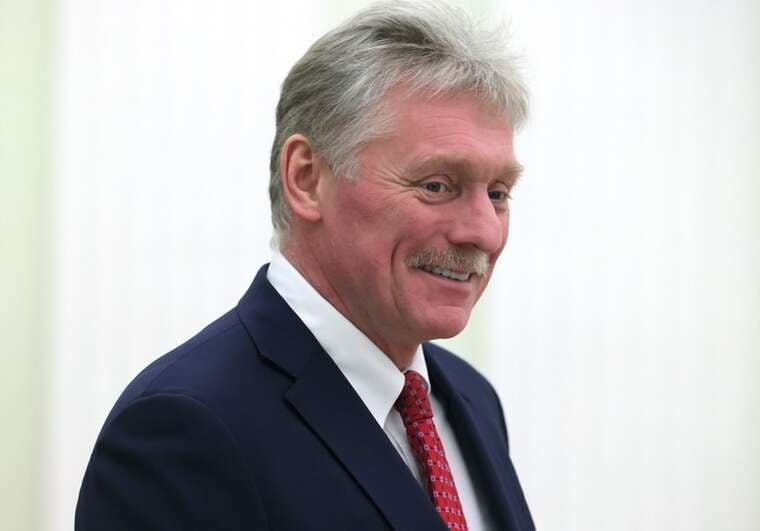
Peskov claims Moscow has not received details on 'energy ceasefire'
Kremlin spokesman denied violations, stating that Trump's proposal lacked specific parameters.
Kremlin spokesman denied violations, stating that Trump's proposal lacked specific parameters.

Russian Deputy Prime Minister confirmed that contracts for diesel fuel supply to the US are being worked out at the ministerial and corporate levels.
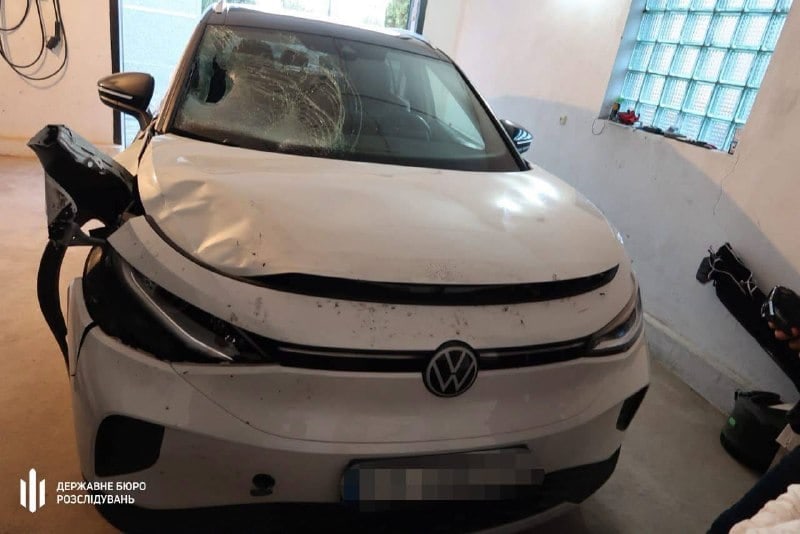
Head state inspector of the "Kolomyia" customs post, Vladyslav Pankiv, left a 25-year-old victim without assistance after a collision on 11 October. The injured man is in a coma, and the State Customs Service has initiated the procedure to dismiss the suspect.

Two masked individuals carried out an arson attack on a secured facility near Sofia. Ivaylo Mirchev accused the authorities of attempting to hush up the incident.
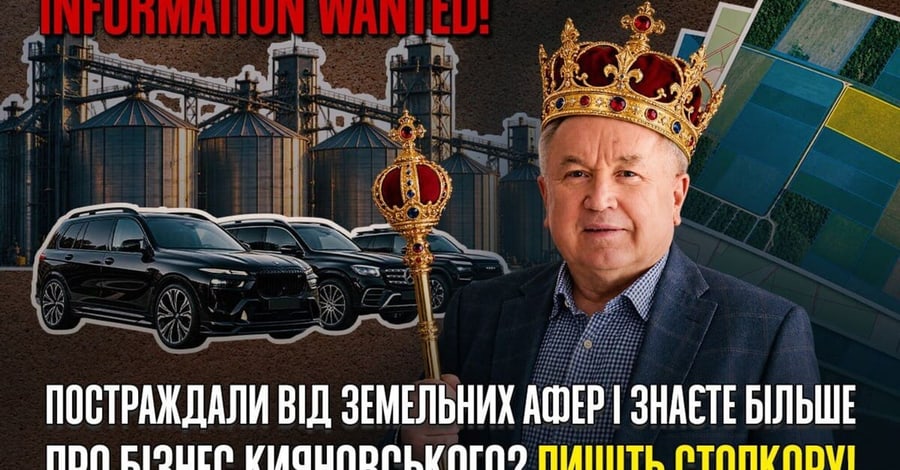
Journalists established links between Chernihiv Oblast Council deputy Viktor Kyianovskyi and major agribusiness, court proceedings, and suspicious procurement.

Saudi authorities confirmed a missile hit the oil giant's complex in Dhahran, causing a minor fire with no casualties.

Law enforcement seized a record amount of cash from a network of illegal exchangers. Experts warn that the unregulated crypto market has become a tool for money laundering and sanctions evasion.
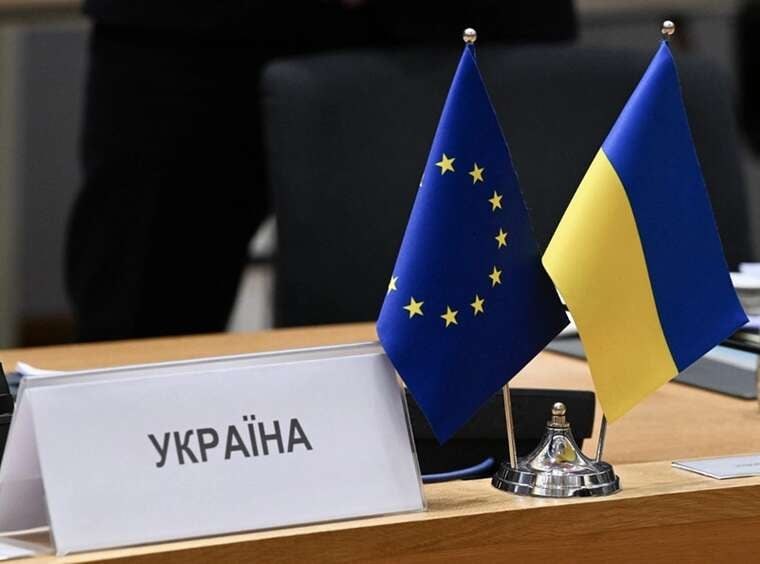
The European Union has sent Ukraine a new tranche of defence aid. The funds will be directed towards strengthening air defence and purchasing munitions ahead of the fourth winter of the full-scale war.
The Bureau of Economic Security (BEB), jointly with the Office of the Prosecutor General (OPG), conducted a large-scale operation against a network of illegal exchange points and conversion centres. During investigative actions, detectives seized a record amount for the Bureau — 630 million hryvnias in cash. The network's total annual turnover is estimated in the tens of billions.
Law enforcement agencies accuse the network of tax evasion and the laundering of funds obtained through criminal means. Although the company's name is not mentioned in the official release, journalists from "Ekonomichna Pravda" stated that it allegedly concerns the company "Kit Group". This structure is one of the leaders in the currency exchange and international money transfer market, actively using so-called virtual assets.
If a single player generates turnover in the tens of billions and uses hundreds of millions of hryvnias in cash, the scale of the shadow crypto market becomes obvious. The history of cryptocurrency legalisation in Ukraine is remarkably similar to the path of the gambling business: despite years of promises, the complete removal of the industry from the shadows and the implementation of transparent taxation have yet to occur.
Cryptocurrency has ceased to be a niche pastime and has transformed into a full-fledged tool of international criminal infrastructure, used on par with banks and offshore jurisdictions for money laundering. This is evidenced by FATF data. Ukraine, being a leader in digitalisation, also holds flagship positions in the adoption of crypto.
According to the Global Crypto Adoption Index 2026 by Chainalysis, Ukraine ranked 7th among 117 countries. During the period from July 2024 to June 2025, approximately $206.3 billion in crypto assets were associated with Ukraine, which is 52% more than a year earlier. By this indicator, our country became the fourth largest crypto market in Europe after Russia, the United Kingdom, and Germany.
The National Securities and Stock Market Commission (NSSMC) provides more modest estimates: the number of virtual asset users in Ukraine is approximately 6.5 million people, and the potential annual market turnover is around $100 billion.
Financial experts identify three key threats created by the lack of clear legislation:
In August 2026, the State Tax Service emphasised that cryptocurrency in Ukraine has no defined legal status, and the legislation does not establish a special procedure for its taxation. Under such conditions, market participants act according to their own rules.
The virtual asset market is conditionally divided into three segments:
There are two main algorithms for such operations.
Option A involves converting crypto into cash or non-cash funds. The client transfers funds from their own wallet to the operator's wallet, after which the designated ground point "Currency Exchange" receives cash upon entering a specific code, or sends card details for crediting the funds.
Option B is "fund shuffling". The mechanism involves transferring funds between clients in different jurisdictions through the intermediary of an exchange point. Client No. 1 in Kyiv hands over cash or crypto (according to the Option A scheme) to the exchange point, while Client No. 2 (for example, in Budapest) receives the funds at a local office after deducting a commission. Cash does not physically cross the border; instead, a settlement is made through offsetting operations. These transactions completely bypass the NBU's currency control and the tax authorities.
According to sources in law enforcement agencies, the main operators of such schemes are:
In spring 2026, the NBU revoked the licence of LLC "FC 'Liberty Finance'" (also linked to Anton Tkachenko) due to the discovery of de facto unlicensed activity. On 9 October 2025, the NBU had already prohibited LLC "FC 'Liberty Finance'" from providing financial payment services through the internet services of "KIT Group". However, exactly one year after the revocation of licences, BEB entered this group and seized 630 million UAH, indicating that the scheme continued to operate despite the regulator's decision.
The parallel with the gambling business is obvious: only after the start of legalisation did the real scale of the market become clear. "Ihorika" went from 240 million UAH in taxes in 2021 to 17.4 billion UAH in 2025. The situation with crypto is more complex: it is almost impossible to estimate the real volume of shadow operations.
MP Olha Vasylevska-Smaglyuk, in an article for "Ekonomichna Pravda", cites DST data: "In the first half of 2026, the DST issued 11 analytical conclusions with signs of money laundering through virtual assets. The total amount in these cases is 9.3 billion UAH. Plus another 1.56 billion UAH in unpaid taxes and fees... So, on average, one detected case accounts for about 850 million UAH — this is many times more than in any other risky segment".
Despite the potential tax capacity, the budget receives zero from the crypto industry. Legislative initiatives regarding crypto regulation have been replacing one another for seven years, but the result is zero. As Danylo Hettmansev, head of the Verkhovna Rada committee on financial issues, notes, "the process replaces the result".
The Law of Ukraine "On Virtual Assets", adopted on 17.02.2022, has not yet entered into force, as it awaits amendments to the Tax Code. Bill No. 10225-d, adopted in principle on 03.09.2025, has been in preparation for the second reading for over a year. There are significant discrepancies between the NBU and the NSSMC regarding the boundaries of competence: the NBU advocates for a ban on exchanging crypto for cash and the use of virtual assets as a value equivalent, while Hettmansev's committee allows legal cash operations through official cash registers with financial monitoring.
Lobbyists of shadow schemes are actively intervening in the bill preparation process, seeking to preserve the status quo. According to sources in the committee, the largest political lobbyist in the issue of crypto market regulation is the leader of the "Servant of the People" faction, David Arakhamia, who allegedly exercises strategic control over the legalisation process.
An active role is played by the inter-factional association Blockchain4Ukraine, which, together with Binance and law firms Arzinger and Juscutum, created the public association "Virtual Assets of Ukraine", which is considered close to the same David Arakhamia. The board of directors of this organisation includes Oleksandr Yefremov, CEO of "Kitsoft Ukraine". This company found itself at the centre of a scandal around the "Diia" portal, where, according to journalists, the monopoly payment system became the financial company of Russians "Yedinoe Prostranstvo", registered under the name of a so-called pound and the owner of the Russian online casino Pin-UP, Dmytro Punin — Ihor Zotyok.
When the Ministry of Digital Transformation was presented with this claim and asked a direct question about who integrated the "Russians" into "Diia", they allegedly shifted the blame to Oleksandr Yefremov's "Kitsoft Ukraine".
"Commenting on the involvement of FC 'Yedinoe Prostranstvo', the Ministry of Digital Transformation said that the first paid services in 'Diia' were launched through the international technical assistance programme 'E-Governance for Accountability and Citizen Participation' (EGAP). According to the ministry, the donor itself conducted the selection of the developer, which became the IT company Kitsoft — it was they who integrated the 'Yedinoe Prostranstvo' payment system".
As of today, the legislative regulation of the virtual asset market is effectively blocked. Hope for unblocking is given by the inclusion of this issue in the priorities within the framework of European integration norms under the Ukraine Facility programme. Prime Minister Serhiy Koretskyi classified it as a priority, and it must be adopted by December 2026. However, experience shows that MPs have learned to clearly separate state interests and their own. Therefore, a fierce battle awaits us: either crypto will continue to enrich the organisers of shadow schemes, or it will finally become a tool for filling the military budget.
Comments
No comments yet. Be the first!