
Vance sends letter from Trump to Iran proposing to resume dialogue
According to The Wall Street Journal, US Vice President JD Vance, on Donald Trump's instruction, contacted the head of Iran's security service, Mohsen Rezaei.
According to The Wall Street Journal, US Vice President JD Vance, on Donald Trump's instruction, contacted the head of Iran's security service, Mohsen Rezaei.

The city administration has completed practical drills on the emergency connection of base stations in nine districts. The next step will be Desnyanskyi district.

Vote counting is ongoing, and Likud's lead does not guarantee Netanyahu the formation of a coalition. Analysts are considering several scenarios for the development of events and their consequences for Ukraine.

Polish law enforcement are holding a Ukrainian citizen suspected of arson at the premises of the Romanian defence company Romarm.

Deputy Minister of Justice explained under what conditions the property of citizens who do not pay for housing and communal services may be sold.

From the start of November 2026, updated rules for reserving staff, a new EU customs fee, and revised terms for inactive accounts at Oshchadbank are in effect in Ukraine.

The company presented a laptop featuring the first touchscreen in the MacBook line, weighing 1.3 kg and offering up to a day of battery life.

The Bulgarian Ministry of Defence reported an attack by three drones on a Liberian-flagged container ship in the Black Sea.
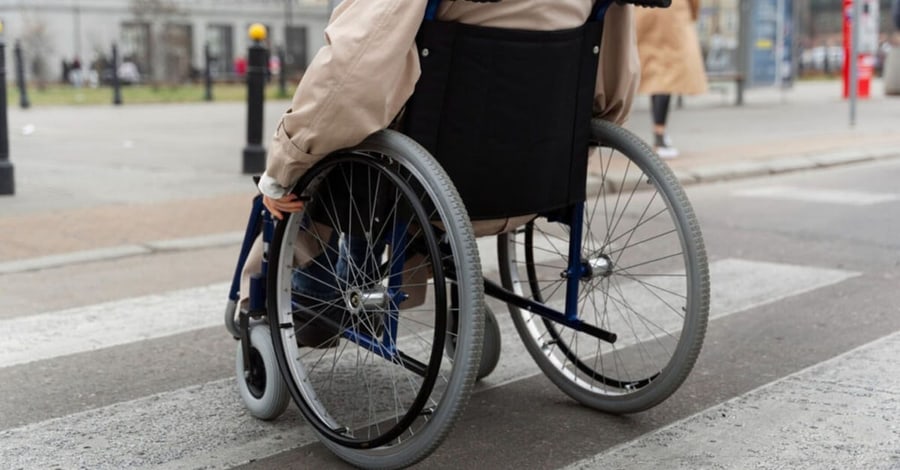
Group I disability status is assigned to individuals who, due to severe pathologies, injuries, or anatomical defects, have completely or significantly lost the ability to move independently, care for themselves, and perform basic household activities. This category is divided into two levels of dependence on external assistance: IA and IB.
The key factor is not only the presence of a diagnosis but also the actual degree of limitation in the patient's daily functioning.
Although both subgroups involve significant limitations in vital activity, the intensity of required support differs:
During the medical examination, experts analyse not only the clinical diagnosis but also the severity of functional failures, the ability to perform tasks independently, and the need for accompaniment.
Conditions that may meet the criteria for Group I include severe consequences of strokes, injuries, oncological diseases, and progressive pathologies of the nervous system. The final decision is made based on the results of the functional assessment.
According to the current list, indefinite disability may be established for the following categories of impairments:
Grounds include, in particular, stumps of both upper limbs at the shoulder level or both lower limbs at the calf level and above, if combined with a stump of one upper limb.
Other variants are provided for Subgroup IB: stumps of both lower limbs at the lower third of the thigh level and above, as well as certain combinations of upper limb amputations.
Status may be granted in the presence of progressive diseases, consequences of injuries, or other damage to the nervous system that cause irreversible, significantly pronounced impairments of motor, speech, or visual functions.
The degree of loss of functions and their impact on the patient's independence is of decisive importance.
The list includes dementia, severe intellectual impairments, as well as severe mental disorders resulting from schizophrenia and epilepsy.
Assessment is based on the severity of the disorders and their impact on the ability to orient oneself, make decisions, care for oneself, and exist safely in daily life.
Grounds may be established visual impairments that meet the set criteria for visual acuity and narrowing of visual fields. Bilateral anophthalmia (absence of both eyeballs) is noted separately.
This refers to sharply pronounced contractures or ankylosis of the joints of the upper or lower limbs in a functionally disadvantageous position, when endoprosthetics is impossible.
Such impairments can significantly limit movement, hand work, and the performance of daily actions.
Separate criteria apply to individuals in whom bilateral blindness is combined with severe general diseases, certain amputations, or total deafness.
The cumulative impact of all impairments on health, the ability to self-care, and the need for constant external assistance is taken into account.
In addition to the general list, specific severe anatomical defects and functional impairments are defined for Subgroup IB, in particular:
Compliance of a specific condition with the criteria is established during the assessment, taking into account medical documentation and actual limitations.
No. The presence of a certain disease or a previously undergone operation does not mean the automatic establishment of Group I. Experts take into account the degree of impairment of body functions, limitations in daily activity, and other legislative criteria.
Although the establishment of disability without a re-examination deadline is provided for certain anatomical defects and irreversible impairments, this does not imply automatism. The patient's condition must precisely meet the specific criteria of the regulatory list.
Recommendation: before submitting documents, it is advisable to check your case against the current criteria for assessing daily functioning and the regulatory acts of the Ministry of Health. This will allow determining the necessary list of medical documents and the grounds for establishing Group I and the validity period of the status.
As previously reported, Group III disability in Ukraine can also be established indefinitely for specified diseases and stable health impairments (amputations, visual and hearing impairments, consequences of complex operations, chronic diseases). Decisions are made by expert teams assessing daily functioning. The Group III disability pension, according to general rules, is 50% of the old-age pension, and its actual amount depends on insurance experience, earnings, and possible supplements.
Comments
No comments yet. Be the first!