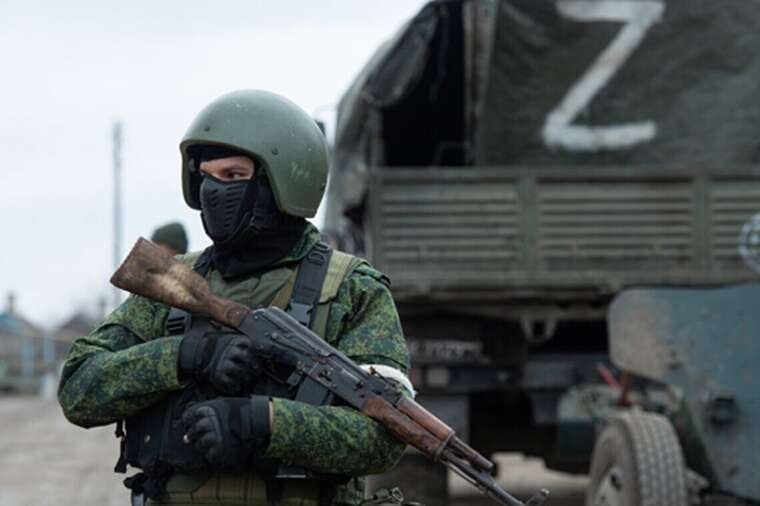
DeepState: Enemy troops advance near Tsvitkove and Staroukrainka
Changes in force deployment have been recorded on the Hulyaipil direction: according to DeepState's assessment, Russian troops advanced in two areas in eastern Zaporizhzhia Oblast.
Changes in force deployment have been recorded on the Hulyaipil direction: according to DeepState's assessment, Russian troops advanced in two areas in eastern Zaporizhzhia Oblast.

Conflict arose over the detention of a local Roma baron. A crowd gathered near the facility and attempted to break inside.

During a joint appearance in the Oval Office, Donald Trump abruptly stopped and began shouting at one of the journalists present, demanding silence.
Losing deferred employee status allows the TCC to send a combat summons by post without a prior call. Refusing to receive the letter does not guarantee exemption from liability.

US President Donald Trump stated at a briefing in the Oval Office on 20 October that Volodymyr Zelenskyy must want to end the war, as otherwise the situation will worsen.

Russian occupiers used a drone against transport infrastructure facilities in Chernihiv on the evening of 20 October. This was reported by the head of the Chernihiv City Military Administration, Dmytro Bryzhynskyi.
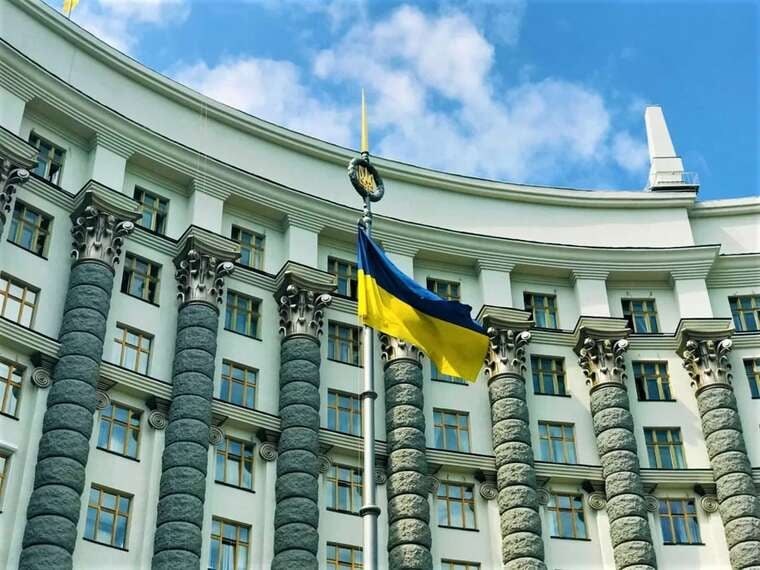
The Cabinet of Ministers officially denied reports of a state of emergency, clarifying that the decision only concerns appointing officials responsible for addressing potential emergencies.

Ukrainian President stated the effectiveness of US intelligence warnings and announced a visit by Trump's special envoy to the Russian Federation with proposals discussed during Norwegian negotiations.
The loss of the right to deferment from mobilisation can become the direct cause for sending a combat summons. Lawyer Yuriy Aivazyan explained on the Yuristy.UA portal that in such a case, the Territorial Centre for Recruitment and Social Support (TCC) is not obliged to first call the citizen for an explanatory conversation. He emphasised that ignoring a registered letter does not always serve as a guarantee against legal consequences.
If the deferment period has expired or the status has been cancelled, the employee loses the legal basis for a deferment from conscription. In this situation, the TCC can immediately initiate the mobilisation procedure.
An additional invitation for a military-obliged person to clarify registration data or hold a conversation is optional. If a man has already passed the military medical commission (MMC) and has a valid conclusion on his fitness for military service, the authorities are allowed to send him a combat summons.
This document obliges the person to appear at the specified location with the necessary belongings for further transfer to a training centre or military unit.
Yuriy Aivazyan noted that the right to deferment for deferred employees is enshrined in point 1 of part one of Article 23 of the Law of Ukraine "On Mobilisation Preparation and Mobilisation". However, this guarantee applies only on the condition of having a valid deferment and being on special military registration. After the status of a deferred employee is cancelled, the basis for deferment disappears.
The mechanism for sending summons is regulated by Cabinet of Ministers Resolution No. 560. According to point 88 of this document, a summons can be handed over personally against a signature or sent by post.
In the case of postal delivery, a registered letter with a description of the enclosure and a notification of delivery is used. The lawyer drew attention to an important nuance: refusing to receive correspondence does not mean the automatic recognition of the summons as undelivered.
If the addressee refused to pick up the letter or was not found at the specified address, under certain legislative conditions, this may be considered proper notification. Summons are sent to the place of residence specified by the military-obliged person at the TCC, or to the registration address.
After receiving a notification about a registered letter marked "TCC Summons", the addressee has three working days to collect it. If the letter is not collected within this time, it is returned to the sender with the corresponding mark.
The return of a registered letter to the TCC itself is not evidence of the commission of a criminal offence. At the same time, intentional evasion of conscription during mobilisation is punishable under Article 336 of the Criminal Code of Ukraine. The sanction for this article provides for imprisonment for a term of three to five years.
To hold a person criminally liable, the prosecution must prove not only the fact of proper notification but also the presence of intent to evade. For this, the following must be established: fitness for service, the absence of legal grounds for deferment, compliance with the summons procedure, and the conscious failure to fulfil the obligation to appear.
According to Aivazyan, a mark from the post office about refusal to receive or the absence of the addressee may confirm the fact of notification, but does not explain the reasons why the person did not pick up the letter. The absence of a personal signature on the receipt of the summons does not exclude criminal liability if the investigation has other evidence that the citizen knew about the summons and intentionally evaded mobilisation.
The practice of the Supreme Court confirms the possibility of imposing actual prison terms for evasion of conscription.
"Therefore, I do not advise counting on the rule 'did not pick up the letter — there can be no criminal liability', but the statement 'the letter was returned to the TCC — the crime is already proven' is legally incorrect," Yuriy Aivazyan concluded.
Thus, the return of a summons without delivery does not mean the automatic recognition of guilt, but it does not exempt from liability if intentional evasion of mobilisation is proven.
Comments
No comments yet. Be the first!