New powers and risks for consumers
Since the start of the full-scale war, the "Naftogaz" group has become the gas supplier for approximately 12.5 million Ukrainian households, accounting for 98% of the market (before 2022, this figure was at 15%). The company's subsidiary, "Gazorozdilni Mrezhy Ukrainy" LLC ("Gazmezhy"), has received broad powers to control consumers' gas equipment, inspect meters, and perform technical maintenance of the networks.
As evidenced by criminal case materials and residents' appeals, these new points of contact with millions of consumers have turned into potential zones of corruption risks. According to the investigation, company employees may have used their powers to demand money for "solving problems" or avoiding fines.
Pressure through additional charges and disconnection
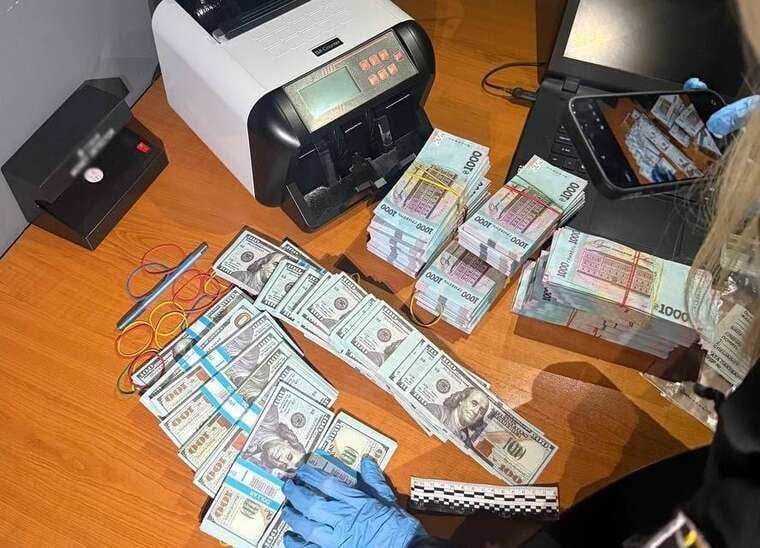
Several residents of the Kyiv region told the media that they were asked to pay between 10,000 and 20,000 UAH to avoid trouble with gas workers. Judging by the criminal case materials, the size of the bribe ranges from 12,000 UAH to 3,000 dollars (approximately 136,000 UAH).
The main lever of pressure is often the threat of huge additional charges. If damaged seals or signs of interference with the meter's operation are detected during an inspection, the consumer may be charged for unaccounted gas. In some cases, such amounts reach hundreds of thousands of hryvnias. For example, last year, a resident of the Kharkiv region was charged 1.5 million UAH for using a gas burner without a meter to heat a greenhouse.
Case in Kyiv region: offer to pay $3,000
One of the episodes occurred on 6 October 2026. Two "Gazmezhy" employees arrived at the house of a resident of the Kyiv region to inspect the meter. Initially, they stated that the device was an old model and needed replacement, and later – that it was allegedly faulty and the owner had illegally consumed gas.
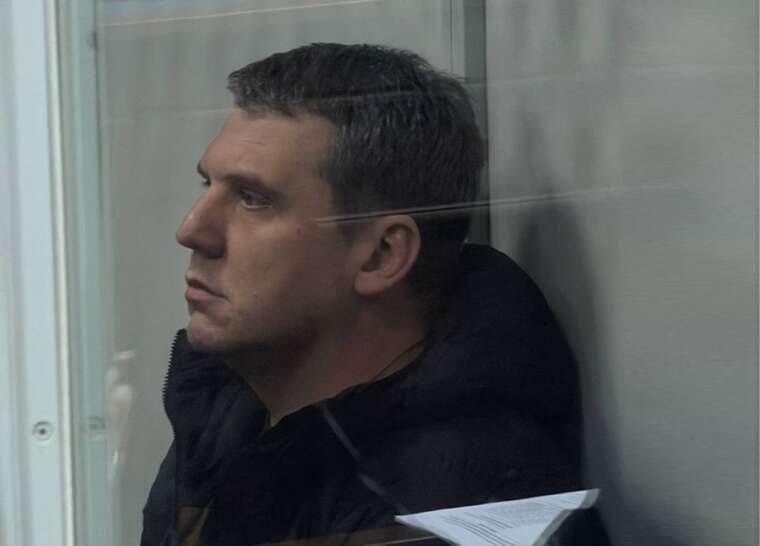
The woman was threatened with a "fine" (actually an additional charge) of 500,000 UAH and the disconnection of the house. According to law enforcement agencies, the employees offered not to draw up a violation act and not to disconnect the gas for 3,000 dollars. The demand was repeated several times, changing the deadlines for transferring the funds. One of the suspects was placed under preventive measures in the form of house arrest.
It is worth noting that no verdicts have been issued in these cases yet, so the fact of extortion can only be asserted based on the materials of pre-trial investigations.
Schemes during technical maintenance of apartment buildings
Since 2024, "Gazmezhy" has been conducting mandatory technical maintenance of in-house networks in apartment buildings. Residents pay for these services separately (the so-called "third bill"). Inspections take place every 3-5 years depending on the age of the building. In 2025, 3,093 high-rise buildings were inspected, and in 2026, the inspection of 3,019 buildings is planned in the Kyiv region.
During maintenance, gas workers inspect pipes, taps, ventilation, and enter apartments. If violations are found, the gas may be disconnected. Sofia, a resident of the Kyiv region, said that in her building, the gas was disconnected in four apartments due to studio-style layouts where the sleeping area is combined with the kitchen. Under the new rules, sleeping in a room with gas appliances is prohibited.
"In our building, the gas was disconnected in four apartments. In all cases – they were one-room studios. Even though such a layout was made by the developer, and this, they say, is a violation of the rules. Building a wall now – it is simply reworking a lot of things. We have at least 18 studios, and the gas was disconnected in only four," she said.
The woman also noted that in one residential complex, people were looking for whom to bribe to avoid disconnection. "Those who came to inspect silently disconnected the gas. Whoever was able to arrange something on the spot was luckier. Because afterwards – it is already harder," she added.
It should be noted that violations found in apartments are not included in public acts. Moreover, it depends on the employee who entered the apartment whether the "apartment" violation will be documented. This creates room for selective pressure and corrupt arrangements.
Bribes for equipment connection and "thanks" for seals
Corruption schemes are recorded not only during inspections but also when connecting new equipment. In June of this year, in Horodok (Khmelnytskyi region), employees of the local "Gazmezhy" branch replaced a woman's meter, but later claimed that the factory seals were damaged. She was threatened with a fine of 120,000 UAH, but offered to settle the matter for 12,000 UAH, explaining that this was a "thank you" in the amount of 10% of the fine. The money was to be transferred through a plumber, whom the branch head instructed to collect the funds.
Another case was recorded in the Kharkiv region. A master of the gas network maintenance service of the Merefa branch, according to the investigation, demanded 45,000 UAH from a local resident for speeding up the processing of documents for the installation of a gas boiler.
Thus, extortion risks exist at three key stages of interaction with "Gazmezhy": equipment connection, meter inspection, and building technical maintenance. Although these stories do not prove the existence of a centralized corruption scheme at the level of the entire "Naftogaz" group, they raise questions about the control of employees' actions on the ground. The management of "Naftogaz" has not yet provided answers to an official request regarding these incidents. The company "Gazmezhy" is headed by Lyudmyla Kynder, who previously managed "Gas Supply Company 'Naftogaz of Ukraine'" and "Naftogaz Trading".




Comments
No comments yet. Be the first!