Economic unprofitability of harvest collection
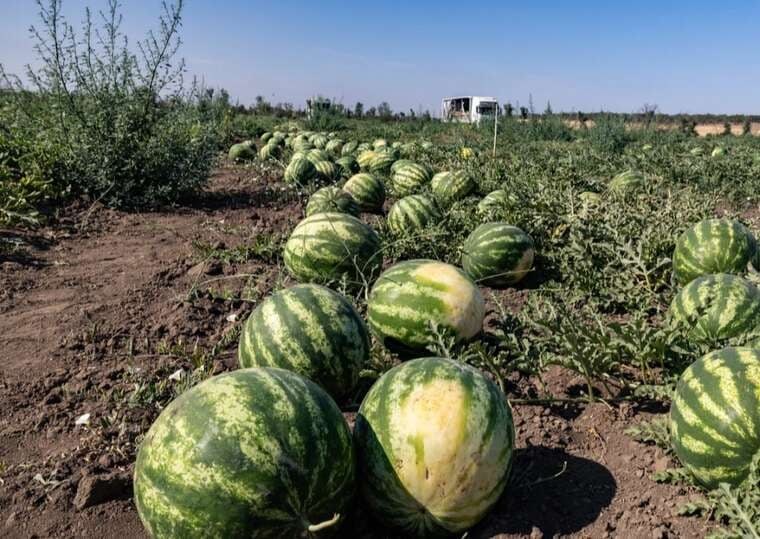
The 2026 season proved to be extremely difficult for Ukrainian melon growers. A combination of factors — from overproduction and low demand to rising production costs, logistical difficulties, and security threats — forced many farmers to leave watermelons to rot in the fields or use them as organic fertiliser.
Farmer Andriy Verteba, who grows watermelons on 2 hectares in Korsun-Shevchenkivskyi in Cherkasy region, says that due to the product surplus, the field price dropped to 3–4 UAH/kg. Throughout the season, not a single wholesale buyer visited his farm, resulting in part of the harvest remaining unsold.
«Цей сезон грошей не приніс» ("This season brought no money"), Andriy Verteba states.
The farmer admits that the situation has significantly affected his motivation to continue his business.
«Руки опускаються, натхнення на роботу немає. Десять років цій справі присвятив. Більше ніж гектар садити поки не хочеться» ("I am losing heart, there is no inspiration to work. I have devoted ten years to this. I do not want to plant more than one hectare for now"), he shares.
Bad weather and rising costs
Similar problems have arisen in Zakarpattia region. Farmer Mykhailo Paliy, due to the low wholesale price (around 4 UAH/kg), decided to use part of the harvest to fertilise the soil, hauling several trailers of watermelons to a wheat field.
Problems began at the growing stage: a May downpour destroyed part of the seedlings and washed away the irrigation system. This forced Mykhailo Paliy to replant the crop, leading to a loss of time and an increase in production costs by more than 70%.
«Якщо минулого року собівартість вирощування 1 кг була десь 1,5-2 грн, то цього року — понад 3 грн. За рахунок постійних клієнтів вдалося все-таки реалізувати левову частину врожаю, що і покрило нам отримані збитки» ("If last year the cost of growing 1 kg was somewhere between 1.5 and 2 UAH, this year it is over 3 UAH. Thanks to regular clients, we managed to sell the lion's share of the harvest, which covered our losses"), the farmer noted.
Impact of hostilities on logistics
The situation has been particularly difficult for producers in frontline regions. In Nikopol district, one farm that has been growing watermelons for over 20 years faced emergency water supply outages and transporters' refusal to work in the risk zone.
«З вивозом з поля були проблеми, автомобілі не хотіли їхати до нас з інших місць. Тобто все-таки зона бойових дій, ми з ними домовляємося, але вони кажуть: «ні, у вас дрони літають», і вони не хочуть їхати» ("There were problems with hauling from the field, cars did not want to come to us from other places. So it is still a combat zone, we negotiate with them, but they say: 'no, drones are flying over you,' and they do not want to go"), says the farm foreman, Vitaliy.
According to him, the enterprise has already lost about 30% of its profit.
Due to low prices and insufficient demand, many farmers plan to abandon the collection of part of the harvest altogether.
«Я думаю, більшість фермерів просто залишить кавуни на полях, оброблять дисковою бороною. Кавуни переріжуться і будуть на наступний рік як добриво, але користь буде мізерна. Фермер має заплатити людям, щоб вони зібрали їх у фуру, обережно там склали. Але скоріше всього, якщо 2 грн/кг пропонують, то фермеру немає сенсу заморочуватися з фурою. Він вже і так розуміє, що це невигідно» ("I think most farmers will simply leave the watermelons in the fields and treat them with a disc harrow. The watermelons will be cut and will serve as fertiliser for the next year, but the benefit will be minimal. The farmer has to pay people to collect them into a truck and stack them carefully. But most likely, if they are offering 2 UAH/kg, it makes no sense for the farmer to bother with a truck. He already understands that it is unprofitable"), added the farm representative.
Loss statistics and price dynamics
A similar picture is observed in Kherson region. Dmytro Yunusov, Director of the Department of Agricultural Development and Irrigation of the Kherson Regional State Administration, reported that due to security risks, farmers will likely be unable to harvest crops from approximately 50% of the area.
In June-July, only about 3,000 tonnes of watermelons were delivered from Kherson region to other regions of Ukraine. Some buyers refused to travel to the region, seeking produce in safer oblasts. To solve the sales problem, farmers, together with local authorities, began donating part of the harvest as humanitarian aid to hospitals, schools, and kindergartens.
Under ideal conditions, watermelon yields can reach 40–50 tonnes per hectare. Farmer Oleksandr Huryin from Poltava region considers watermelons an attractive crop but highlights the high costs.
«Для мене кавуни — найкраща культура. Завжди є врожай, завжди є попит. Витрати на 1 га складають 150-200 тис. грн, а чистий прибуток при нормальній ринковій ціні забезпечує щонайменше 200-250 тис. грн з 1 га» ("For me, watermelons are the best crop. There is always a harvest, there is always demand. Costs for 1 hectare amount to 150,000-200,000 UAH, and net profit at a normal market price ensures at least 200,000-250,000 UAH from 1 hectare"), Oleksandr Huryin notes.
Andriy Verteba confirms these calculations: «Ну, якщо грубо казати, то на виході нам гектар коштував понад 150 тис. грн. Кавуни у нас під плівкою і на крапельному зрошенні» ("Well, to put it bluntly, the hectare cost us over 150,000 UAH at the end. Our watermelons are grown under film and with drip irrigation").
According to him, hybrid watermelon seeds cost approximately $450 per hectare, while variety seeds cost around $50/ha. Other significant expenses include land rental, drip irrigation, fertilisers, and labour costs.
Rising prices for machinery and labour
Expenses for fuel, logistics, and machinery have also risen separately. Serhiy Mylko, Commercial Director of "FK FINVIN", notes that the average price of a tractor in Ukraine in 2025 was around $33,500, while the cheapest segment — mini-tractors — started at approximately $4,900.
«За даними маркетплейсу AGRO.RIA, середня ціна трактора в Україні у 2025 році становила близько $33,5 тис., а найдешевший сегмент, мінітрактори, починається приблизно від $4,9 тис. Навесні 2026-го трактори стали найпопулярнішою категорією техніки на ринку, і ціни за рік зросли приблизно на 50%. Баштанні господарства зазвичай працюють із компактнішою і дешевшою технікою, ніж зернові холдинги, але динаміка подорожчання однакова для всього ринку» ("According to the AGRO.RIA marketplace, the average price of a tractor in Ukraine in 2025 was around $33,500, and the cheapest segment, mini-tractors, starts at approximately $4,900. In spring 2026, tractors became the most popular category of machinery on the market, and prices rose by approximately 50% over the year. Melon farms usually work with more compact and cheaper machinery than grain holdings, but the price increase dynamics are the same for the entire market"), Serhiy Mylko said.
At the same time, according to him, machinery is not the main cost item in melon growing.
«Баштанництво — трудомістка, а не техномістка культура. На відміну від зернових, збір урожаю тут переважно ручний, комбайн не задіяний, тому основне навантаження припадає на робочу силу та засоби захисту рослин, а не на техніку. Це узгоджується із загальногалузевою картиною 2026 року: вартість польових робіт по Україні зростає на 5-10% рік до року, і головним тягарем аграрії називають саме насіння й засоби захисту, а не техніку. Додатковий тиск на собівартість дає зростання зарплат на 10-15% через кадровий дефіцит — і для трудомісткої культури, як баштанні, цей фактор відчутніший, ніж для зернових» ("Melon growing is a labour-intensive, not technology-intensive crop. Unlike grains, harvest collection here is mostly manual, no combine is involved, so the main burden falls on labour and plant protection products, not machinery. This is consistent with the industry-wide picture of 2026: the cost of field work in Ukraine is growing by 5-10% year on year, and farmers name seeds and plant protection products, not machinery, as the main burden. Additional pressure on production costs comes from wage growth of 10-15% due to a labour shortage — and for a labour-intensive crop like melons, this factor is more noticeable than for grains"), Serhiy Mylko noted.
Farmers also emphasise that there are virtually no herbicides for watermelons, so fields often have to be weeded by hand. Manual harvest collection also requires significant expenses.
«Якщо фура вантажиться по 2 грн/кг, то десь 0,5-0,7 грн треба віддати ще людям, щоб вони завантажили цю фуру. Тобто фермер не те, що в нуль не виходить, він взагалі в мінус працює» ("If a truck is loaded at 2 UAH/kg, then somewhere 0.5-0.7 UAH needs to be paid to people to load that truck. So the farmer is not just breaking even, he is working at a loss"), said a farmer from Nikopol district.
The purchase price determines the profitability of melon growing. According to Oleksandr Huryin, a normal market price should ensure a profit that is twice the costs.
In practice, farmers cite significantly lower figures.
«Зараз майже задарма віддають кавун, хоча цей період трошки вже проходить. Те, що я знаю по Одесі, по наших полях, то від 2 до 5 грн/кг. Тобто фермер не те, що в нуль не виходить, він взагалі в мінус працює» ("Now they give away watermelons almost for free, although this period is already passing a bit. As far as I know in Odesa, in our fields, it is from 2 to 5 UAH/kg. So the farmer is not just breaking even, he is working at a loss"), said a farmer from Nikopol district.
In Kherson region, wholesale prices dropped to 2 UAH/kg, while in retail in Kherson itself, watermelons were sold at approximately 10 UAH/kg.
According to the data provided, at the "Stolychnyi" market in September 2026, the wholesale price of watermelons was 10–12 UAH/kg. At the "Pochatok" market in Odesa, the wholesale price of red watermelons started at approximately 7 UAH/kg, while the retail price reached 25–30 UAH/kg.
At the Lviv "Shuvar" market, the minimum price in mid-September was around 10 UAH/kg, whereas last year at this time it rose to almost 20 UAH/kg.
Analysis of the causes of the crisis
Serhiy Mylko characterises the 2026 season as difficult for melon growers.
«Сезон 2026 року для баштанників складний. В Україні виникло перевиробництво кавунів, і гуртова ціна прямо з поля тримається на рівні 4-6 грн/кг — цього недостатньо, щоб покрити витрати, які цього року вищі за торішні. При такій маржі логіка фермера змінюється: капітальні інвестиції, без яких можна протриматись сезон, відкладаються в першу чергу. Перевага надається продовженню ресурсу наявного парку техніки. Загалом по агросектору ми вже бачимо саме таку поведінку клієнтів при падінні маржі — і немає підстав вважати, що баштанники цього року поводитимуться інакше» ("The 2026 season is difficult for melon growers. Overproduction of watermelons has emerged in Ukraine, and the wholesale price directly from the field is holding at 4-6 UAH/kg — this is not enough to cover costs, which are higher this year than last year. With such a margin, the farmer's logic changes: capital investments, without which one can last the season, are postponed first. Priority is given to extending the life of the existing machinery park. Across the agri-sector, we already see such client behaviour when margins fall — and there is no reason to believe that melon growers will behave differently this year"), Serhiy Mylko noted.
One of the main causes of low prices, farmers say, is overproduction. After the start of the full-scale war, the geography of melon growing in Ukraine changed significantly. If previously the main regions for industrial watermelon and melon production were Kherson, Mykolaiv, and Odesa oblasts, then after 2022, production actively spread to other regions.
Many farms that previously specialised mainly in grain crops began growing watermelons and melons.
Farmer Vitaliy Kruhorykyi explains that after the loss of part of production in the south, watermelon prices were significantly higher.
«В ті роки, коли перестав виробляти Херсон і в перші роки повномасштабної війни, то була висока ціна на кавуни. Зараз видно, тенденція така, що з кожним роком більше і більше саджають кавунів, а реалізувати продукцію на українському ринку дуже складно, бо просто наші люди стільки не з’їдають кавунів, скільки вирощують фермери» ("In those years when Kherson stopped producing and in the first years of the full-scale war, the price of watermelons was high. Now it is visible, the trend is that more and more watermelons are planted each year, and it is very difficult to sell the product on the Ukrainian market, because simply our people do not eat as many watermelons as farmers grow"), Vitaliy Kruhorykyi says.
His view is supported by Vladyslav Chertchel, Director of the Institute of Grain Crops of the National Academy of Agrarian Sciences of Ukraine. According to him, the number of enterprises growing watermelons has increased, while consumption has decreased. An additional problem remains the shortage of workers.
The geography of production has also changed. Maksym Hopska, an analyst at the Ukrainian Club of Agribusiness, notes that melon growing is actively developing, in particular, in central and northern oblasts.
«У Київській області непогано розвиваються, у Вінницькій, Полтавській, Дніпропетровській — це області, які дуже активно розвиваються по кавунах за останні 5-6 років» ("In Kyiv oblast it is developing quite well, in Vinnytsia, Poltava, Dnipropetrovsk — these are oblasts that have been developing very actively in watermelons over the last 5-6 years"), Maksym Hopska noted.
According to Serhiy Leonov, in recent years, more and more farms are entering the melon crop segment, expecting high profitability. At the same time, increased competition, a shortage of seasonal workers, and high growing costs have made watermelon production economically more difficult.
Survival strategies and problems with other crops
Despite the difficult season, some farmers have managed to maintain profitability thanks to working with retail chains and regular buyers.
Farmer Inna Fedosiienko works with spot purchases. According to her, she sells about 90% of the grown watermelons to retail chains.
«Мої контрагенти — це одна з найбільших мереж магазинів та трішки менша. Звичайно, ідеально було б продавати всі кавуни вроздріб, адже ціна набагато привабливіша. Але реальність — 10-15% за сезон. Ціна 8-10 грн/кг дуже приваблива» ("My counterparties are one of the largest store chains and a slightly smaller one. Of course, it would be ideal to sell all watermelons in retail, as the price is much more attractive. But reality is 10-15% per season. A price of 8-10 UAH/kg is very attractive"), says the farmer from Prykarpattia.
According to her, there have been no problems with payments from the retail side so far. The farmer signs a contract, agrees on supply volumes, and subsequently fulfils the agreements.
In Cherkasy region, Mykhailo Paliy managed to sell a significant part of the harvest thanks to regular clients. After the spring downpour, part of the seedlings and irrigation system was destroyed, so the harvest ripened later and had to compete with watermelons from other regions.
«Ринок вже був перенасичений, і цього року ми не отримали того результату, що хотіли. За рахунок постійних клієнтів вдалося все-таки реалізувати левову частину врожаю, що і покрило нам отримані збитки» ("The market was already oversaturated, and this year we did not get the result we wanted. Thanks to regular clients, we managed to sell the lion's share of the harvest, which covered our losses"), Mykhailo Paliy said.
In Vinnytsia region, farmer Andriy Fedik has been growing watermelons and melons for over 20 years. His farm benefits from high yields — about 80 tonnes of watermelons per hectare, which is approximately twice the average figure in Ukraine.
The average weight of marketable fruits is 9–14 kg, and individual watermelons of the Teitum hybrid can grow to 18–20 kg.
This year, due to a cold spring and night frosts, seedling planting had to be postponed to early May. However, thanks to modern technologies, the farm began harvesting the first watermelons and melons on 10 July.
«Високий урожай баштанних неможливо отримати без чіткого дотримання технології. Вирішальними є правильний вибір гібрида, система поливу та живлення, формування рослини, а також своєчасне припинення зрошення перед достиганням» ("A high yield of melons cannot be achieved without strict adherence to technology. Decisive factors are the correct choice of hybrid, irrigation and feeding system, plant formation, and timely cessation of irrigation before ripening"), Andriy Fedik said.
A difficult situation this season is observed not only in the watermelon market. Viktor Honcharenko, Head of the Association of Farmers and Landowners, notes that due to unprofitability, some vegetables are simply left in the field.
«З овочами на сьогодні – величезна проблема. Те, що виростили, нема кому збирати – багато що в полі залишається. Ціни взагалі смішні. Хтось з фермерів казав, що за кілограм цибулі дають 3 грн» ("With vegetables today – it is a huge problem. What was grown, there is no one to harvest – a lot is left in the field. Prices are ridiculous. One of the farmers said that they give 3 UAH for a kilogram of onions"), Viktor Honcharenko said.
According to him, Ukrainian farmers are currently mostly not ready for the upcoming sowing season, as farms lack funds and workers. Low purchase prices do not allow accumulating the necessary resources for preparing for the new season.
Difficulties have also arisen for tomato producers. Some farms, due to low prices, were forced to leave the harvest in the fields or even plough it under.
Farmer Andriy Kalinichenko from Poltava region could not sell his tomatoes. In early September, he announced self-harvesting of the product from the field, and on 27 September, he published a video in which he ploughs under the tomatoes.
According to experts, the problem is broader and concerns the entire system of vegetable farming.
«Проблема фермерства по-українськи, саме овочевого фермерства, що ніхто не знає, які об’єми взагалі в Україні хто планує. Тобто немає якоїсь регуляції. І тут важливо розуміти, що овочівники свій прибуток рахують раз на чотири роки. В нас кожного року якась культура дає гарний прибуток, якась культура може бути збитковою, і тому потрібна диверсифікація по культурах. Якщо займатись однією цибулею, то гарантовано, що буде збиток» ("The problem of farming in the Ukrainian style, specifically vegetable farming, is that no one knows what volumes are actually planned in Ukraine. So there is no regulation. And it is important to understand here that vegetable growers calculate their profit once every four years. Every year, some crop gives good profit, some crop may be unprofitable, and therefore diversification by crops is needed. If you deal with only one onion, it is guaranteed that there will be a loss"), Vadym Krychkovskyi, head of the "Organic-D" farm, said.
Thus, the 2026 season showed the vulnerability of Ukrainian vegetable and melon businesses to sharp fluctuations in production, prices, costs, and demand. For farmers, additional risk factors remain the war, logistics problems, labour shortage, and rising production costs.
Against the backdrop of product surplus, some farms already see no economic sense in harvesting watermelons and other vegetables if the purchase price does not even cover the costs of labour, transportation, and harvest collection.






Comments
No comments yet. Be the first!