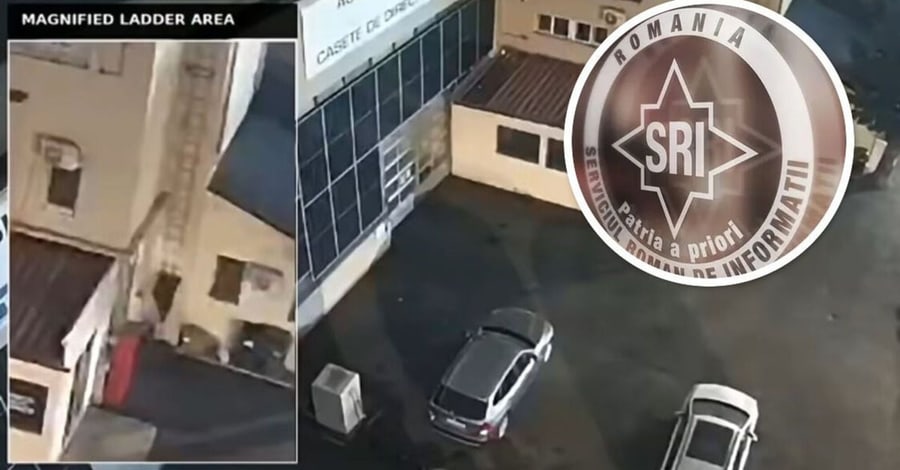
The Romanian Intelligence Service (SRI) announced the uncovering of a sabotage network whose activities were coordinated from Russian territory. Members of this structure are linked to a fire that occurred on 14 September 2026 at an industrial site in Brașov city, near the Carfil weapons factory. According to the investigation, the network may have been preparing similar attacks on defence enterprises and military facilities in other European countries.
This information is contained in an official statement from Romanian intelligence.
Through the joint efforts of Romanian special services and foreign partners, the involvement of several citizens of post-Soviet states in sabotage activities has been established. These individuals were legally residing in the territory of the European Union.
According to data from the Romanian publication Digi24, among the persons involved in the case are two citizens of Belarus and one citizen of Ukraine.
Two suspects were detained by German law enforcement, where, according to the investigation results, they were preparing similar crimes. A third person was arrested in Poland.
The Bucharest Court of Appeal issued European arrest warrants for all three individuals. Romanian authorities have initiated the extradition procedure to continue the investigation.
Saboteurs' targets were located in various countries
Romanian intelligence emphasised that the scale of the uncovered network's activities extended beyond Romania.
Coordinators based in Russia designated military and industrial facilities in various European states for the perpetrators.
Among the potential targets were state and private enterprises producing weapons, military facilities, and other defence sector infrastructure.
SRI representatives noted that the 2026 investigation also revealed other attempts at sabotage on Romanian territory. Specifically, this referred to international military facilities and infrastructure used for the training of Ukrainian servicemen.
Romanian special services view these actions as part of a broader campaign of sabotage operations coordinated by Russia in Europe.
According to intelligence assessments, the aim of such measures is to intimidate the civilian population, weaken the defence potential of European states, and reduce their contribution to regional security.
Methods of recruiting perpetrators
The SRI also disclosed the mechanisms for involving people in sabotage activities.
According to intelligence data, recruitment is often carried out through social media. Potential perpetrators are initially offered financial reward for carrying out simple tasks, such as surveillance of facilities or photographing them.
Subsequently, the nature of the instructions escalates. Tasks may involve property damage, arson, destruction of infrastructure, or even killings.
If a recruited individual refuses to carry out further instructions, coordinators may apply threats, psychological pressure, or blackmail.
For recruitment, intelligence information indicates that people's financial vulnerability, their addictions, or criminal pasts are often exploited.
Participants in such networks attempt to conceal their movements and contacts. To do this, they may use transport, housing, and payment instruments registered in other people's names, as well as SIM cards from foreign operators and encrypted messengers.
At the same time, the SRI warns that none of these signs individually proves a person's involvement in sabotage. They must be assessed in conjunction with other evidence.
Investigation continues
Romanian intelligence continues to verify information about possible sabotage operations on the country's territory.
The investigation involves the Directorate for Investigating Organised Crime and Terrorism, the Ministry of National Defence, the General Directorate of Intelligence, and the Ministry of Internal Affairs of Romania.
Special services are also cooperating with law enforcement agencies of other European states, as the activities of the uncovered network had an international character.
Previously, there were reports of an attempted arson at a facility with Starlink equipment in Lithuania. On the night before 18 October, unknown individuals attempted to set fire to the object, but enhanced security helped prevent the attack. That same night in Germany, a damaged fence was found at Leipzig/Halle airport near An-124 cargo planes.
The European Union's intentions to tighten visa rules for Russian citizens were also mentioned. Such measures are being discussed against the backdrop of concerns over sabotage, arson, and other hybrid operations that European special services link to Russian activities.




Comments
No comments yet. Be the first!