
Russian budget deficit for nine months of 2026 exceeded annual plan by 37%
In the first three quarters of 2026, the Russian budget deficit reached 5.186 trillion rubles, which is 37% higher than the amount allocated for the year.
In the first three quarters of 2026, the Russian budget deficit reached 5.186 trillion rubles, which is 37% higher than the amount allocated for the year.

Armin Laschet, head of the Bundestag’s foreign affairs committee, stated that Berlin has done everything possible to support Ukraine’s air defence.
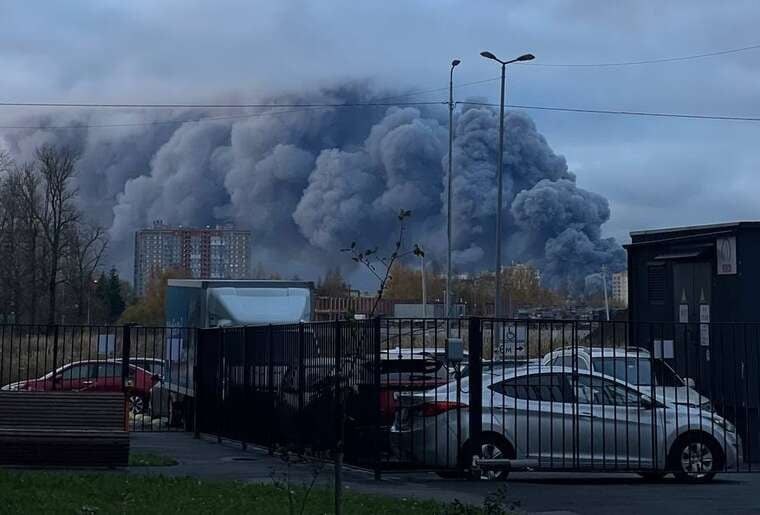
Nighttime drone attack on logistics centre over 51,000 square metres triggers large-scale fire, but no casualties reported.

The Pope met pilgrims again in St. Peter's Square, thanking them for spiritual support during his hospitalisation and expressing gratitude to medical staff.

The Africa Centre for Disease Control reported that the number of Ebola patients in Kenya has risen to seven, including three healthcare workers.

Iranian Foreign Minister Abbas Araghchi stated that the resumption of vessel traffic is possible within six days, provided Washington adheres to Tehran's conditions.

A further 15 people were evacuated from the active combat zone in Kherson region. Most of the rescued individuals are elderly and are now in a safe place.

A device detonated during demining near Bobrovyi Kut, resulting in serious injuries to two DSNS employees.

As of early October 2026, approximately 225,000 current job offers were published on the Unified Job Portal. This resource aggregates data from the State Employment Service and other Ukrainian platforms. The main demand for labour is concentrated in the trade, industry, and transport sectors, with some specialists able to expect monthly incomes of up to 160,000 hryvnia.
The trade sector remains the leader in the number of vacancies, accounting for approximately 35,000 offers, or 16% of the total volume. Significant demand is also maintained in industry (approximately 20,000 vacancies) and the transport sector (approximately 17,000). Ten thousand vacancies each were registered in the healthcare sector and the financial sector with audit activities.
The list of in-demand professions varies by sector:
Demand is also maintained for engineers, accountants, doctors, teachers, nurses, and technologists. Meanwhile, the market offers jobs for individuals without professional qualifications, including loaders, cleaners, storekeepers, and auxiliary workers.
The highest wage levels have been recorded for technical specialists and representatives of blue-collar professions. According to the data, maximum offers in individual vacancies reach the following amounts:
It is important to note that these figures reflect the upper limit of salary offers in specific vacancies, not the average statistical salary for the profession. The actual amount of remuneration depends on the candidate's experience, qualifications, complexity of tasks, region of employment, and the specific employer's terms. For example, a driver's income may vary significantly depending on the vehicle category, route, and schedule, while for engineers, the key factors are specialisation and level of responsibility.
Competitive salary offers are present not only in the manufacturing sector. According to data provided by the Director of the State Employment Service, indicative figures in other sectors are formed as follows:
These figures do not necessarily reflect an equal wage level for all positions in the respective sectors. Earnings in real estate may depend on sales results and commissions, while income in the IT sector depends on specialisation and task complexity.
Employers are increasingly facing difficulties in finding staff with the necessary skills. If previously competition mostly existed between candidates for vacancies, now enterprises are forced to invest more resources in attracting qualified workers. The personnel shortage is caused by a complex of factors: the full-scale war, mobilisation, forced displacement of the population, and the departure of some citizens abroad.
Additional pressure on the labour market is created by the needs of the industrial, energy, transport, and construction sectors, especially in the context of restoring damaged infrastructure. It is most difficult for enterprises to find specialists who require special training, practical experience, or professional permits for their work. It is not always possible to quickly replace an experienced electrical fitter, mechanic, or engineer with a worker lacking the corresponding skills.
Under these conditions, employers focus on candidates' practical skills and their willingness to learn. Some companies consider applicants from adjacent professions or offer additional training. Despite the large number of vacancies, a gap persists in the market between job seekers' skills and employers' requirements, leading to a situation where some enterprises cannot fill positions for a long time, while some candidates continue to search for a suitable job.
Comments
No comments yet. Be the first!