The return of old schemes in Volyn
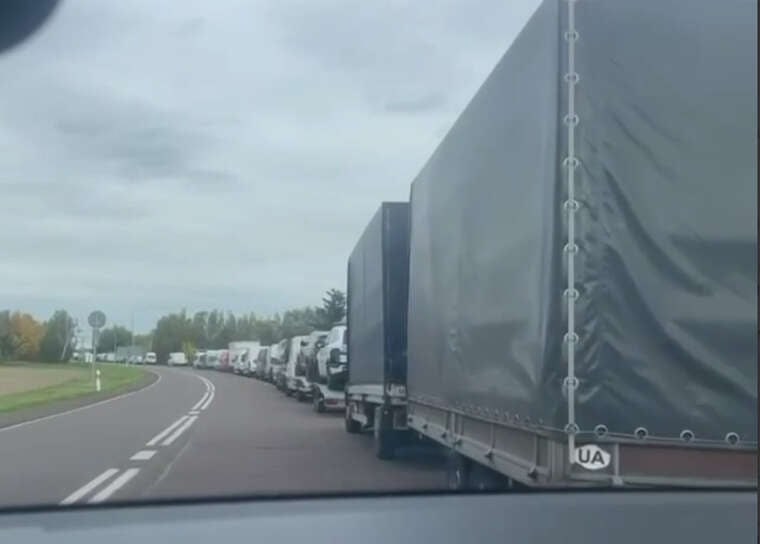
In his post, journalist Yevhen Plinsky claims that practices he described a year ago regarding the Smilnytsia post of the Lviv Customs have resumed at the Ustylyug crossing point of the Volyn Customs. According to him, on certain shifts, minibuses cross the border declaring only part of the actual cargo.
Declaring only 30% of the cargo
Plinsky refers to materials by his colleague Taras Seredyk and testimony from ordinary carriers who are tired of multi-hour queues. According to the journalist, kilometre-long queues form on the Polish side, and on two out of four shifts, vehicles pass through without proper customs clearance. He claims that up to 30% of the actual volume of goods is declared, while the rest crosses the border without proper inspection. Plinsky believes that such a selective entry regime implies unofficial payments.
Customs reaction and inspections
Inspectors from the Department for Combating Smuggling and Violations of Customs Rules, as well as from the unit for customs control and clearance, have already arrived in Volyn. The shift supervisors, whom Plinsky calls the executors of the described scheme, have been suspended from duty. Meanwhile, the journalist predicts that this story may end only with a temporary halt, followed by the resumption of the old practice.
Criticism of the State Customs Service leadership
Plinsky paid particular attention to the leadership of the State Customs Service headed by Orest Mandziy. The journalist notes that he does not believe Mandziy personally authorised the described practice, despite Taras Seredyk's claims. Instead, Plinsky suspects that certain subordinates in the field and in key departments may have started acting independently.
According to the journalist, Mandziy's team had long promised the re-attestation of employees, the rotation of customs officers, and the inspection of weighing equipment, but failed to implement any of these points. Plinsky believes that the absence or malfunction of scales may facilitate manipulation of goods weight.
Link to the NABU case
The journalist drew attention to events in January 2026, when a team of NABU detectives under the leadership of Orest Mandziy uncovered a system of fund collection at the Volyn Customs. According to Plinsky, the monthly amount was $850,000 and was intended for transfer to Kyiv. Among the seized materials was a so-called "rozhychka" (a document detailing the participants of the fund collection, sources of income, and the mechanism for distributing money between the structures of the State Customs Service and representatives of law enforcement agencies).
Plinsky claims that the main participants in the fund collection in Volyn in January 2026 and the curators of transport through Ustylyug in October 2026 are the same people. In his opinion, this means that the mechanisms of operation have not changed, although he does not provide specific documentary evidence to support this.
Risk to the customs reform
At the end of his post, Plinsky expressed concern that the situation at Ustylyug would be used by opponents of the customs reform to criticise changes in the system. He noted that the scandal could become a pretext for claims of reform failure, and raised the question of why Mandziy's team, which should understand the internal mechanisms of the Volyn Customs, allowed a similar situation to recur.



Comments
No comments yet. Be the first!