
Brazilian Carlos Fujima placed on wanted list over new fraud suspicions in Ukraine
The Main Directorate of the National Police in Kyiv notified Brazilian citizen Carlos Fujima of suspicion of abuse of trust and entered him into the wanted database.
The Main Directorate of the National Police in Kyiv notified Brazilian citizen Carlos Fujima of suspicion of abuse of trust and entered him into the wanted database.

The latest auction for the sale of sports infrastructure linked to Igor Kolomoisky's assets did not take place as no participants registered for the bidding.

The presence of Ukrainian refugees provided Poland with 2.4% of GDP. The economic effect is formed by labour, taxes and social contributions.

Law enforcement in Zakarpattia detained individuals from the entourage of the former deputy head of the UBOZ who demanded 40,000 dollars under threat of execution.

Ukrainian filmmakers are preparing a true crime project detailing the circumstances of the linguist's death and the subsequent investigation.

The scientist was honoured for creating the IceCube detector in Antarctica, which allows observation of the most powerful processes in the Universe.
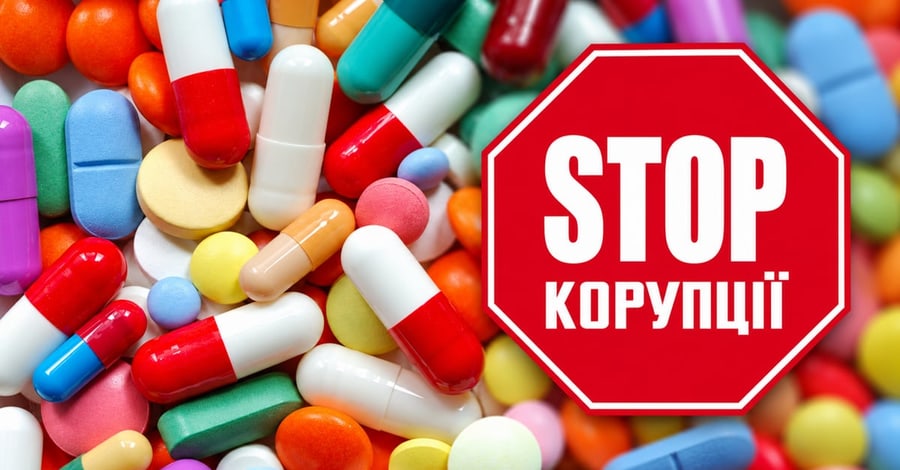
Investigation revealed contradictory lab test results for Indian drugs: one institution recorded critical non-compliance, another claims it never tested them.

The former head of the Federal Intelligence Service has been taken into custody. Investigators are checking whether he passed confidential data, received for money, to foreign intelligence services.
An investigation by journalists of Stop Corruption TV into the activities of the State Service for Medicines and Medical Devices under the leadership of Volodymyr Korolenko revealed significant discrepancies in the inspection results of drugs from the Indian manufacturer Kusum Farm. The obtained certificates of analysis record serious quality violations in specific batches of medicines. The paradox of the situation lies in the fact that one state laboratory officially rejected these samples, while another institution insists that it has never examined them. The mechanism for distributing control obligations between laboratories remains opaque.
Particular attention is warranted for the case involving a batch of the antidepressant Cyclox. According to an official document, no active substance was detected in the tablet sample at all. Certificate of Analysis No. 1907 dated 30 September 2024, issued by the state enterprise Central Laboratory for Analysis of Quality of Medicines and Medical Products, confirms: the sample of batch 1004282 (10 mg tablets) failed identification. Quantitative determination showed a level of 0.0 mg per tablet, whereas the standard requires 9–11 mg. The results table clearly states that the active substance escitalopram is absent.
The document indicates that the manufacturer is Kusum Healthcare Pvt. Ltd. (India), and the State Service for Medicines and Medical Devices acted as the client for the inspection. The sample was taken from Gledfarm LLC by order of the service.
Quality issues are not limited to Cyclox. Certificate No. 1815 dated 24 November 2025 records non-compliance in batch 1007231 of the drug Pankalor (granules for oral solution, 200 mg). Instead of the standard 190–210 mg of active ingredient per sachet, only 175.19 mg was found.
The third case is described in Certificate No. 0695 dated 22 April 2026, concerning Zonic 25 mg capsules (batch 1008141). Here, a violation of microbiological purity was recorded: the total count of aerobic microorganisms was 5,135 CFU/g, significantly exceeding the permissible limit of 1,000 CFU/g.
It is important to note that these conclusions pertain exclusively to the specific batches that underwent testing, not to all of the manufacturer's drugs in general.
The Central Laboratory provided journalists with the documents described above. The state laboratory of the O. M. Marzeev Institute of Public Health took a completely different stance. They reported that over the past two years, no batches of seven drugs from Kusum Farm LLC (Abrol, Zonic, Pankalor, Diclosafe Forte, Fucis, Cyclox, Loflatil) had undergone laboratory control at their institution. Consequently, the Institute has no conclusions regarding these drugs, nor any information about their inspections at other authorised laboratories.
In response to a question about who decides on the referral of samples for analysis, institute representatives replied that the distribution is carried out in accordance with the internal documents of the State Service for Medicines and Medical Devices, and this information is beyond the laboratory's competence.
An institute employee clarified that currently only the drug Fucis is under investigation, and its inspection is not yet complete. The rest of the drugs, according to her, have never been controlled at their institution, and cooperation with Kusum Farm had not been conducted until July of the current year. It was not possible to obtain documentary confirmation of these statements: the referral log is stored in a database and is confidential information, accessible only with the administration's permission.
It is worth noting that previously, employees of this laboratory complained about the loss of state referrals, despite nearly three decades of cooperation with the State Service for Medicines and Medical Devices. This issue was linked to the appearance on the market of the private laboratory Dobrobut-Lykylab, which the service accredited in July 2023. Currently, the Marzeev Institute is again operating under state referrals.
Journalists do not claim that the Marzeev Institute's return to state control is directly linked to Kusum Farm drugs. However, without access to the referral log, it is impossible to verify this hypothesis. The situation demonstrates a key problem: the algorithm by which the State Service for Medicines and Medical Devices determines which specific laboratory will inspect a particular batch of drugs remains opaque even to the laboratories themselves.
The service leadership must provide answers to these questions. Since January 2026, the State Service for Medicines and Medical Devices has been headed by Volodymyr Korolenko, who is currently the deputy head of the liquidation commission of Taras Proniv. The government decided to liquidate the service and establish the Ukrainian Pharmaceutical Agency in its place. Journalists were unable to obtain a comment from Volodymyr Korolenko: in response to questions, he advised them to contact the press service.
Comments
No comments yet. Be the first!