Signing of the document in Strasbourg
On 14 October in Strasbourg, Monaco signed the Additional Protocol to the Council of Europe’s Warsaw Convention (CETS No. 198). This instrument regulates issues of money laundering, the tracing, freezing and confiscation of proceeds obtained illegally. The text of the protocol was adopted on 15 May in Chisinau, and on 14 October it was officially opened for signature in Strasbourg.
In addition to Monaco, the document was signed by the European Union, the United Kingdom, Luxembourg and San Marino. Despite the importance of the event, it went almost unnoticed in the media, which is a mistake, as the changes are substantial.
History of dependence on external capital
The principality’s economy has relied on foreign money since its inception. In 1863, on the brink of bankruptcy, Charles III opened a casino in Monte Carlo. In 1869, the income tax was abolished. Notably, Monegasque residents are still prohibited from gambling in the casinos. The logic was simple: funds flow in, no questions are asked about their origin, and local residents do not participate in this game.
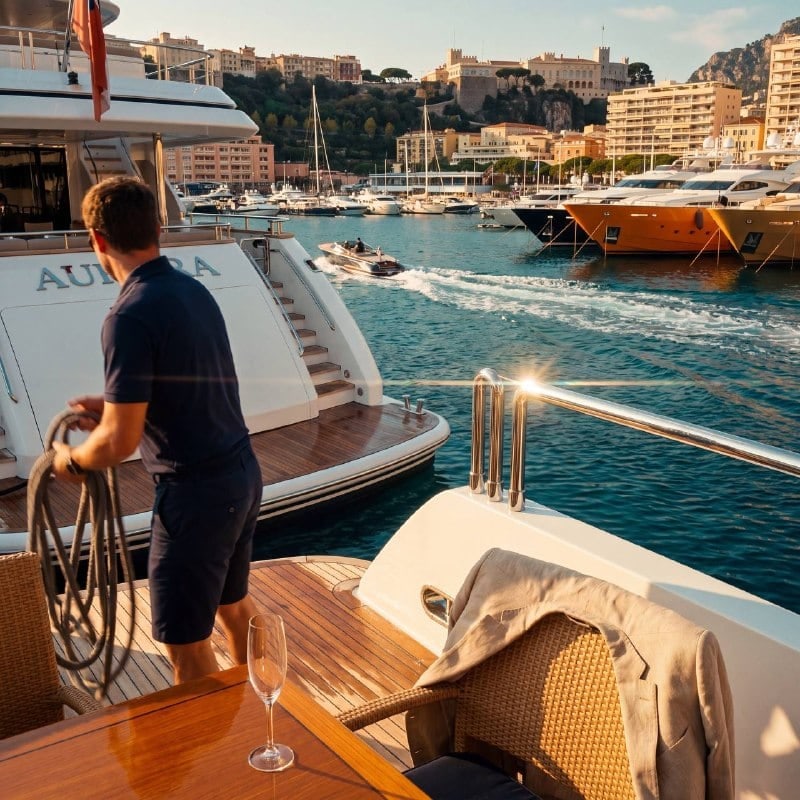
This scheme worked for a century and a half. A yacht in the port, an apartment above the casino, a private banker who remembers nothing. It was particularly comfortable for those who arrived on the French Riviera with capital simply to wait it out.
New court powers regarding asset seizure
Now, questions about the origin of funds are being asked. The protocol expands the scope of confiscation: the court now looks not at a single asset from a single case, but at all assets at once. It also analyses the discrepancy between declared income and the length of a yacht. In certain cases, assets may be seized even without a criminal conviction. The decision is made by a court that requires a link to the crime, but the procedure of “convict first, then seize” is no longer mandatory.
Cryptocurrencies and the status of bank secrecy
Cryptocurrencies are singled out in a separate line in the document: exchanges, wallets, transactions. And there is a phrase for which the document is worth reading in full: bank secrecy cannot be a ground for refusing to provide information. Although the protocol has yet to enter into force, the question of where to move capital is no longer theoretical.
Lack of safe havens in Europe
The answer to the question about the safety of funds is unpleasant: there are almost no safe havens left in Europe, and those that remain will sign next. A safe place for money today is not a country, but a document. This means a clear origin, a history of every transfer, and a structure that is not ashamed to show to any court. Money with a clean biography does not need to be hidden. Money without it cannot be hidden by any jurisdiction.
Monaco sold the right not to answer questions for a century and a half. The term of this licence has expired.


Comments
No comments yet. Be the first!