The Russian leadership's strategy of massively increasing war spending through tax hikes could prove fatal for the Russian Federation. This situation recalls a historical precedent where excessive defence expenditures led to the dissolution of the Soviet Union. This is written by The Telegraph columnist Kona Coffin in her column.
Financial pressure and risks for the population
According to data cited by the author, Moscow plans to increase military spending by 27% in 2027, reaching a mark of 17.1 trillion rubles (approximately $204 billion). Coffin believes that this move confirms Western leaders' assumptions regarding Vladimir Putin's goal — to provoke a wider conflict with NATO, despite numerous failures on Ukrainian territory.
However, this decision will significantly worsen the financial situation of Russian citizens. The cost of the war is becoming increasingly evident: population incomes are shrinking, while state funding for basic sectors, such as healthcare and education, is sharply decreasing. Prospects for economic recovery remain uncertain due to the impact of Western sanctions and Ukrainian strikes on energy infrastructure.
«Тому рішення Путіна спрямувати ще більше ресурсів країни на підживлення військової машини Кремля слід розглядати як відчайдушну авантюру, яка в кінцевому підсумку може призвести до краху його деспотичного режиму» (Therefore, Putin's decision to direct even more of the country's resources to feed the Kremlin's war machine should be viewed as a desperate gamble that could ultimately lead to the collapse of his despotic regime).
Historical parallel with the Brezhnev era
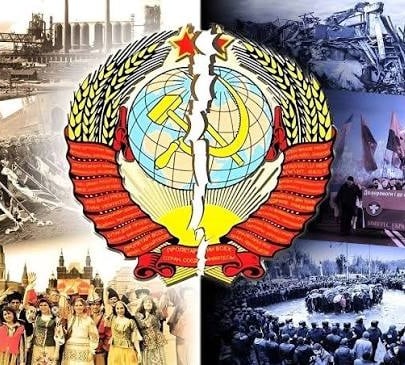
Plans to raise the military budget to levels unseen since the collapse of the USSR in 1991 should serve as a reminder of the potential threats Putin faces if his gamble does not pay off. The columnist recalls that the sharp increase in Soviet defence spending, which began during Leonid Brezhnev's time in the 1960s and was exacerbated by the catastrophic military intervention in Afghanistan in 1979–1989, became one of the key factors in the collapse of the Soviet bloc. At that time, it led to shortages of consumer goods and the inefficient operation of the military-industrial complex. Today, the war in Ukraine is becoming just as costly for the Kremlin as the Soviet Afghan adventure.
CIA position and Moscow's intentions
Kona Coffin believes that this was the message CIA Director John Ratcliffe attempted to convey to the Russian leadership during his recent visit to Russia. She cites a conclusion from a CIA report received by Western intelligence services: the Russian economy will "collapse, exactly as it did in the Soviet Union at the end of the Cold War".
In this context, Putin's actions regarding the expansion of the military budget appear paradoxical. However, as the author suggests, the Russian leader is trying to demonstrate that he is not going to back down and hopes for the fulfilment of his "peace conditions" in Ukraine.
As reported by Western media, the head of the CIA conveyed to the Russians an assessment of the economic and military situation. The military aspect was characterised as stagnation, yet an economic collapse of the Russian Federation was predicted. It was also noted that the US is shaping its policy towards Ukraine based on these assessments.
According to a review by The Atlantic Council, for Putin the goal remains unchanged — full control over Ukraine. He is trying to realise imperial ambitions, which means that peace negotiations are not part of his calculations.






Comments
No comments yet. Be the first!