Less than three weeks before the US midterm elections to Congress, Russia intensified the activities of a disinformation network called "Doppelgänger". The main goal of this campaign is to deepen political divisions in American society, particularly regarding the issue of support for Israel. This became known from materials published by The New York Times.
Mechanism of influence and tools
According to research by the company Alethea, the operation is run by the Russian consulting firm Social Design Agency, which is subject to US and EU sanctions. Kremlin bots are spreading posts on social media designed to mimic the fading of bipartisan support for Israel in the US.
Within the scope of this operation, experts identified more than 50 fake accounts on the X platform, which often posed as Israeli women. Publications began to appear in synchronised waves from approximately 7 October, the third anniversary of the Hamas attack on Israel. Subsequently, these materials were disseminated by another network comprising over a thousand accounts. Links from such publications often led to fabricated news articles on clone sites of real media outlets.
Platform response and effectiveness assessment
On 14 October, the X platform reported blocking 13,000 accounts linked to three separate influence operations attributed to Iran, Russia and China. According to the social network, these fake profiles were spreading materials on American politics and attacking candidates and public figures from various political camps.
Alethea founder Lisa Kaplan noted that individual posts did not have high view or engagement metrics. However, in her opinion, the overall volume of publications and comments indicates potential audience reach. Kaplan emphasised that even content with low engagement levels can be useful to organisers if it helps undermine public trust. She also stressed that spreading false information on the internet is significantly easier than gaining unauthorised access to others' accounts.
Intelligence briefing issues
On 15 October, representatives of US intelligence attempted to hold a closed briefing for officials on election threats. However, due to technical failures, it was not possible to establish a secure virtual connection with election staff. One official stated that the event is planned to be rescheduled for next week. According to him, such pre-election briefings usually contain reference materials and information on threats, rather than intelligence data requiring immediate action.
US officials familiar with intelligence reports told NYT that they are unaware of the specific "Doppelgänger" campaign described by Alethea. Meanwhile, intelligence agencies noted the activation of this network and Social Design Agency ahead of the midterm elections.
International dimension and other campaigns
Alethea identified posts targeted not only at US voters but also at citizens of Israel and France. Elections in Israel are scheduled for 27 October, while in France they are set for next April. US officials confirmed the activation of Russian campaigns in these three countries.
As early as September, The New York Times reported that, according to secret assessments by US intelligence, the Kremlin had approved a new digital campaign to spread disinformation to exacerbate internal divisions in the US. Meanwhile, according to officials, these assessments found no evidence of attempts to interfere with election systems in a way that would threaten the voting process itself.
In addition to "Doppelgänger", researchers are tracking other campaigns linked to Russia. In September, a network previously associated with Kremlin trolls was spreading videos created using artificial intelligence, containing baseless accusations against Democrats running for the US Senate. The analytics firm Graphika linked this activity to the "Matryoshka" operation. According to its assessment, the campaign included fabricated messages about corruption involving Democratic Senators Cory Booker from New Jersey and John Hickenlooper from Colorado.
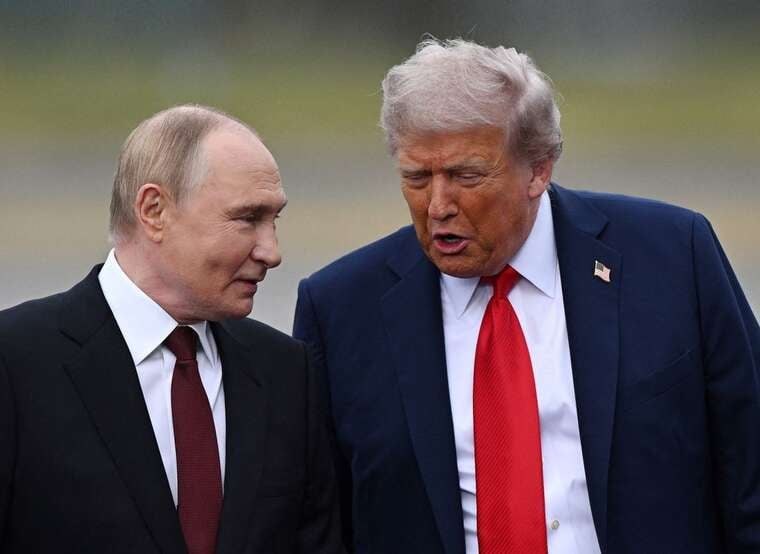
In October, posts linked to "Matryoshka" also spread a conspiracy theory about the alleged involvement of Democrats in an attempt to hijack a FlyDubai flight bound for Tel Aviv. Another Russian campaign promoted information about a recent agreement between Donald Trump and Vladimir Putin regarding the purchase of Russian diesel fuel.
Graphika senior researcher Jean Le Roux noted that the nature of these campaigns allows for an assessment of their targeting: in his words, Republican candidates are not subject to similar attacks.
Shift in influence tactics
Foreign influence campaigns targeting US voters have existed for many years. However, over time, their methods have changed: operations cover more platforms, use new tactics and increasingly involve artificial intelligence. Experts also draw attention to the reduction of social media efforts in the area of trust and safety following prolonged criticism from conservative politicians and commentators who accused platforms of restricting freedom of speech.




Comments
No comments yet. Be the first!