
The Economist: Ukraine has likely lifted Starlink speed limits
Journalist Oliver Carroll reported that Ukrainian military personnel are testing satellite internet without speed restrictions, although there is no official confirmation.
Journalist Oliver Carroll reported that Ukrainian military personnel are testing satellite internet without speed restrictions, although there is no official confirmation.

Municipal services left only the metal frame of the public transport stop. The reason for the removal of the glass panels has not been officially disclosed.

MP Oleksandr Fediienko believes that millions of people in Ukraine may be outside military registration. He proposed reviewing sanctions for unauthorized absence from unit and exemption practices in certain military administrations.
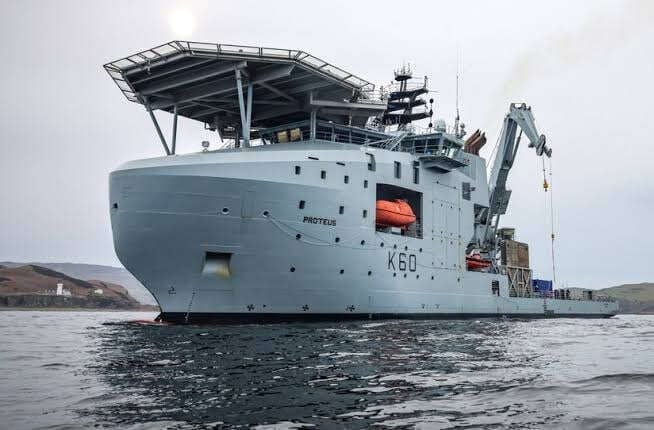
Analysis of satellite data revealed that 17 Russian fishing vessels passed near critical communication lines between Britain, Europe, and the US more than 500 times.

Roscosmos head Dmitry Bakanov announced the start of preparations for a joint programme with China to explore the Red Planet, involving the creation of scientific equipment.

Serhiy Leshchenko continues to disseminate information from the former head of the Presidential Office, despite his dismissal and the notification of suspicion.

The European Union decided to suspend sanctions on purchasing sable fur from Russia due to the lack of alternative supply sources for the industry.

People's Deputy Oleksiy Honcharenko announced that the Verkhovna Rada plans to consider the draft State Budget for 2027 next week, with a first-reading vote scheduled for Tuesday.
Russian fishing vessels were likely involved in gathering intelligence on undersea communication networks connecting the United Kingdom with Europe and the US. According to the analysis, over four and a half years, 17 Russian trawlers appeared in the immediate vicinity of these cables or moved parallel to them more than 500 times.
The Telegraph reports this, citing the results of an analysis of satellite data tracking vessel movements. Journalists identified 17 units whose appearance did not differ from standard commercial fishing trawlers. These vessels operated in waters alongside other civilian ships. However, their behaviour raised interest: the trawlers repeatedly passed directly over sections where the most important undersea cable lines of Western states are laid.
Such specific routing may indicate an intention to establish the precise geolocation of fibre-optic systems that ensure data transmission and maintain economic interconnections between countries.
According to The Telegraph, the obtained information could have been used to identify vulnerable sections of critical infrastructure. Such data potentially allows for planning attacks on these facilities in the event of a possible military confrontation between Russia and NATO.
At the same time, it is noted that the vessels' movement routes themselves are not conclusive evidence of espionage. Nevertheless, systematic movements near strategically important undersea cables raise serious concerns regarding the security of undersea infrastructure.
Comments
No comments yet. Be the first!