
Eleven Starlink antennas providing connectivity for Ukraine set on fire in Bulgaria
Two masked individuals carried out an arson attack on a secured facility near Sofia. Ivaylo Mirchev accused the authorities of attempting to hush up the incident.
Two masked individuals carried out an arson attack on a secured facility near Sofia. Ivaylo Mirchev accused the authorities of attempting to hush up the incident.

Saudi authorities confirmed a missile hit the oil giant's complex in Dhahran, causing a minor fire with no casualties.

Law enforcement seized a record amount of cash from a network of illegal exchangers. Experts warn that the unregulated crypto market has become a tool for money laundering and sanctions evasion.
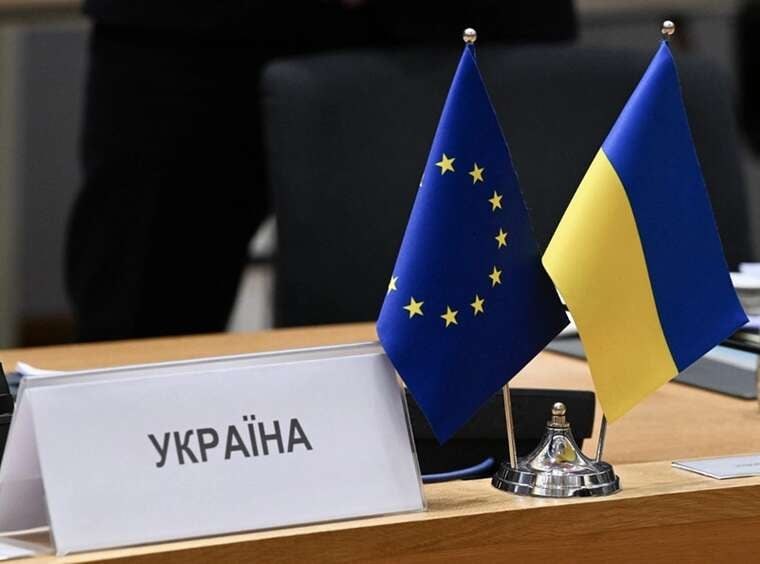
The European Union has sent Ukraine a new tranche of defence aid. The funds will be directed towards strengthening air defence and purchasing munitions ahead of the fourth winter of the full-scale war.

The third President of Ukraine published an open letter to the US President, calling for a refusal to trade diesel fuel with Russia and reminding him of the Budapest Memorandum.
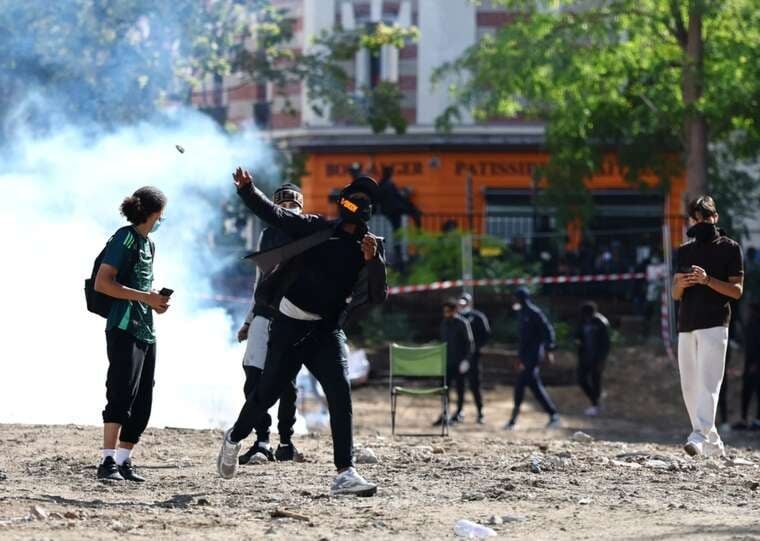
Footage shows an orchestra performing the communist anthem before a demonstration by school students in the French capital.
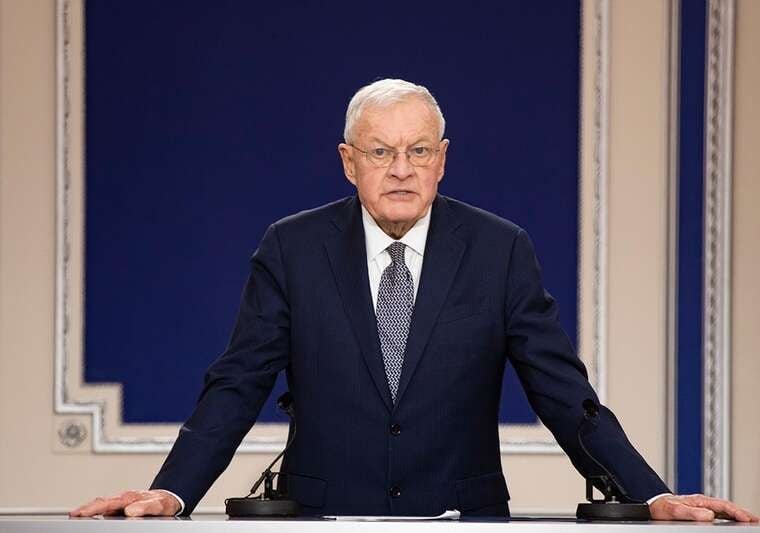
Former special envoy of Donald Trump, Keith Kellogg, acknowledged Russian oil refineries as legitimate military targets and supported Kyiv's attacks on the enemy's energy infrastructure.
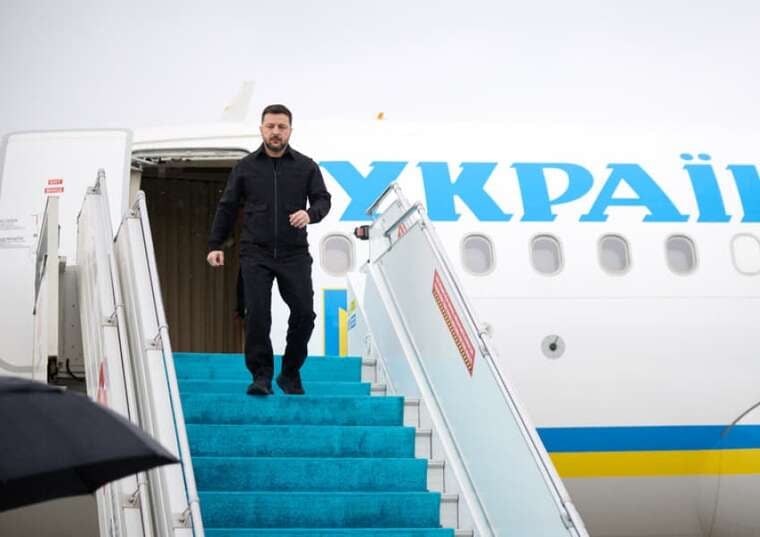
Ukrainian President made first flight since start of Poland scandal, departing from Rzeszow airport in Poland to UK capital.
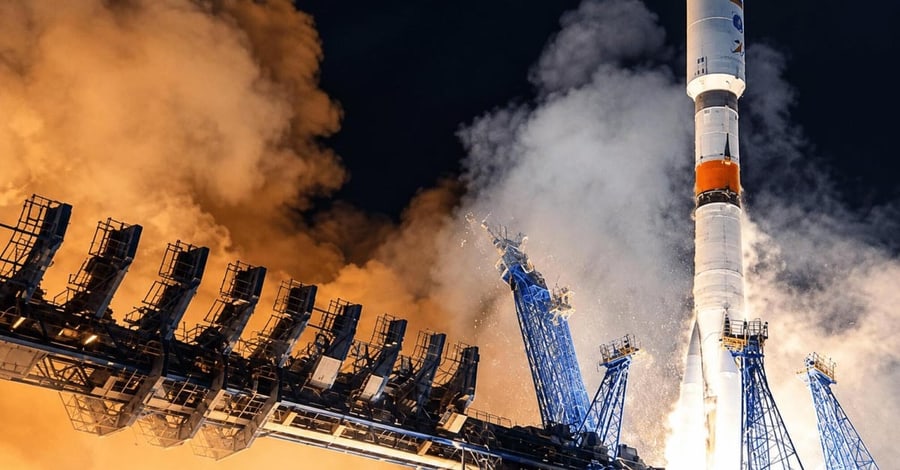
Russia's satellite internet system "Rassvet" has encountered new technical difficulties. Two spacecraft launched in July 2026 failed to reach their planned operational orbits. According to orbital monitoring data, they are gradually losing altitude at a rate of approximately 1.6–1.7 km per day. If trajectory corrections are not made, spacecraft No. 23 may deorbit on 29 October, and No. 17 on 1 November 2026, UNN reports.
These malfunctions are part of a series of problems arising during the deployment of the network, which Moscow positions as an alternative to Western systems. For Ukraine, this project is of critical importance, as Russian military forces have already tested "Rassvet" for communications over Ukrainian territory.
The "Rassvet" network is being developed as a low Earth orbit system intended to ensure Russia's technological independence. However, as the publication Janes notes, Ukrainian military intelligence recorded the use of the first group of satellites from this network by Russian forces for communications over Ukraine for several hours.
Intelligence also noted the potential capability of the system to transmit data in real time and to control reconnaissance and strike drones. This poses a security threat, as an independent network allows Russian forces to coordinate actions and reduce dependence on commercial systems controlled by Western companies.
Meanwhile, the Institute for the Study of War (ISW) cautions against overestimating current capabilities. According to analysts' assessments, the existing constellation does not yet provide constant, large-scale coverage, and technical problems with the second batch of satellites may complicate the full deployment of the system.
Satellites No. 17 and No. 23 belong to a batch of 16 spacecraft launched by Bureau 1440 in July 2026. After being placed into low Earth orbit, they were supposed to ascend to the required altitude using onboard propulsion systems. However, some of the spacecraft failed to reach their target orbits.
According to ISW data, by the end of August, no satellite from the second batch had yet reached the expected operational altitude. This is not the first case: in June, satellite No. 4 from the first serial batch, launched in March, deorbited. The exact technical causes of the malfunctions have not yet been established, but recurring difficulties pose risks to the stability of the network.
According to Russian plans, the commercial launch of the "Rassvet" service is scheduled for 2027. By 2030, the constellation is planned to be expanded to 292 satellites. Currently, 38 spacecraft have been launched under the programme: six experimental and two serial batches of 16 satellites each.
The loss of three satellites out of the 32 in the serial batches is an additional burden on the programme. This is not only the cost of the equipment but also the need to spend time and resources on manufacturing, launching, and commissioning new satellites. Meanwhile, there is insufficient data to claim that the launch of the commercial service in 2027 has already been derailed.
The project is funded by approximately 102.8 billion rubles from the federal budget and 329 billion rubles in private investments. The total estimated investment exceeds 430 billion rubles. For Moscow, this system is of strategic importance, as it allows control over communication channels for both civilian and military needs.
On 7 October, Bureau 1440 conducted a public five-minute video call between Adygea and Moscow using the "Rassvet" system. This confirms that the project can already provide connectivity under certain conditions. However, a single demonstration does not prove the network's ability to operate stably over a large territory and ensure continuous connectivity for a large number of users.
If Russia aims to use "Rassvet" for military communications, it must ensure the stability of the system and sufficient coverage. Failed launches and the loss of satellites may significantly complicate the achievement of this goal.
Comments
No comments yet. Be the first!