Mayor's report on the capital's energy readiness
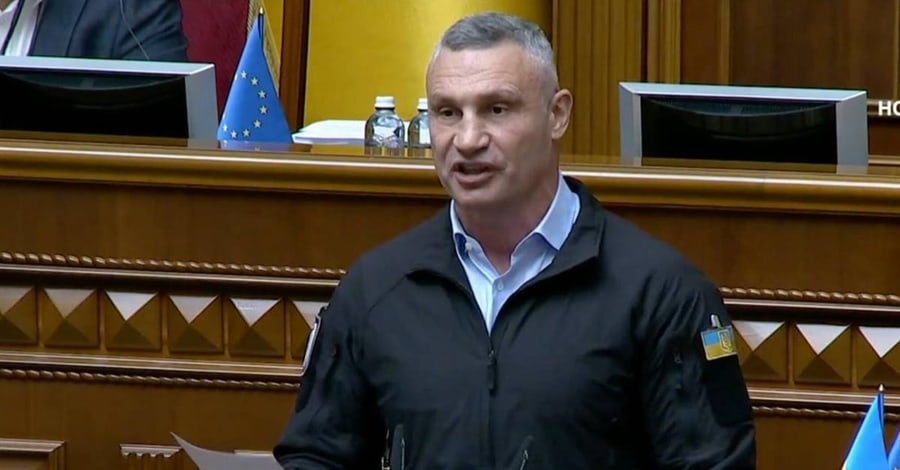
On 14 October, Kyiv Mayor Vitali Klychko addressed the plenary chamber of the Verkhovna Rada. The main topic of his report was the city's preparation for the heating season and ensuring the energy resilience of its infrastructure. The capital's leader emphasised that, despite Russian attacks on infrastructure, the city had been increasing its backup power and heat supply sources.
In addition to reporting on the technical condition of municipal services, Klychko used the opportunity to critically assess the actions of the central government. Specifically, the mayor posed pointed questions regarding responsibility for organising air defence and protecting key energy facilities.
Backup capacities: generators and water supply
According to data provided by the mayor, nearly 700 generators of various capacities have been prepared for Kyiv's heat and water supply facilities. Additionally, 70 mobile portable boiler houses have been brought into service. The city has already completed the construction of three diesel power plants and one backup water intake.
Klychko paid particular attention to the state of Kyivvodokanal. Currently, the enterprise has 103 generators at its disposal, but it is awaiting the delivery of additional high-capacity systems being manufactured abroad.
Regarding the housing stock, over 6,000 units of equipment were purchased under energy resilience programmes. This list includes generators, inverters, and battery packs.
Status of medical and educational institutions
The mayor detailed the provision of autonomous power to socially important facilities. All educational institutions have backup energy sources, with 285 of them equipped with high-capacity generators.
480 generators have been installed in the capital's hospitals. To ensure water supply, own boreholes have been drilled in 15 medical facilities, while work on this is ongoing in six others. Autonomous heat supply from own boiler houses has been provided for 11 hospitals. By the end of the current year, such a system is planned to be implemented for another ten medical institutions.
Klychko noted that, despite staff shortages and problems with service payments, the city continues to repair infrastructure and support the operations of municipal enterprises.
Mayor's stance on city protection
During his speech, Vitali Klychko rejected accusations directed at local authorities, stating that the security of the capital from air attacks and the protection of energy infrastructure cannot be placed solely on the shoulders of municipal self-governance.
«Можна що завгодно говорити, вішати на Кличка хоч третю світову… Але не тільки в мене питання: де протиповітряна оборона для захисту столиці? Де захист об’єктів "Укренерго"? Де мільярди, які на це виділяли?» (You can say whatever you want, pin even World War III on Klychko... But it is not just me who has questions: where is the air defence to protect the capital? Where is the protection of Ukrenergo facilities? Where are the billions allocated for this?) — stated the mayor.
He also refuted claims that other cities had prepared better for winter than Kyiv. According to the mayor, problems related to the freezing of payments are felt by communities across Ukraine. Klychko also spoke about pressure on local self-governance, mentioning the removal of community heads, criminal proceedings, and accusations he considers groundless.
Context of the summons to parliament
Klychko's summons to the Verkhovna Rada took place the previous day, on 13 October, when parliament supported the proposal of People's Deputy Maryana Bezuhla. The decision to summon the mayor to report on the implementation of the energy resilience plan and preparation for the heating season was voted for by 151 deputies, with eight voting against.
This initiative emerged against the backdrop of criticism from the central government regarding the pace of Kyiv's preparation for winter conditions. Prior to his parliamentary speech, Klychko emphasised that the city provides information on the implementation of necessary measures but does not bear responsibility for air defence and cannot unilaterally prevent the consequences of Russian strikes on the power system.
Concluding his report, the mayor emphasised that Kyiv will be able to withstand the challenges thanks to the joint efforts of residents, municipal service workers, and the military.
As is known, the capital is more than 95% dependent on external electricity supply, and its own generation is insufficient even for critical infrastructure. Volodymyr Omelchenko, Director of Energy Programmes at the Razumkov Centre, believes that Kyiv has not prepared for a possible disconnection from Ukraine's unified power system.
If in winter Kyiv remains without electricity for up to 20 hours a day, and temperatures drop to -10°C, the capital may experience large-scale water supply disruptions and freezing of in-building systems. In the worst-case scenario, this could lead to a municipal collapse in high-rise buildings. Meanwhile, Kyivvodokanal will attempt to maintain water drainage, as a prolonged shutdown of the sewage system carries the risk of sanitary and epidemiological consequences.
Comments
No comments yet. Be the first!