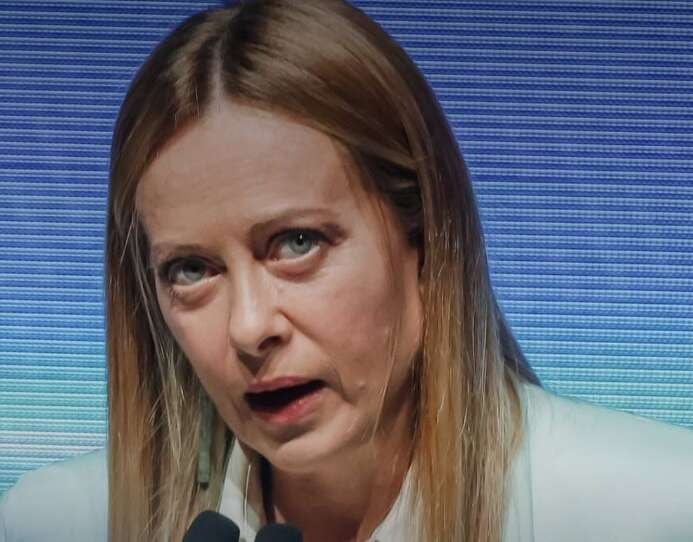
Giorgia Meloni: The capitulation of freedom's defenders is not peace
The Italian Prime Minister emphasised that supporting Ukraine helps achieve a just peace, rather than contradicting this process.
The Italian Prime Minister emphasised that supporting Ukraine helps achieve a just peace, rather than contradicting this process.

A company with minimal capital and a one-person staff won the ARMA competition to manage "Morshynska" assets. Experts and MPs suspect document falsification and a conflict of interest.
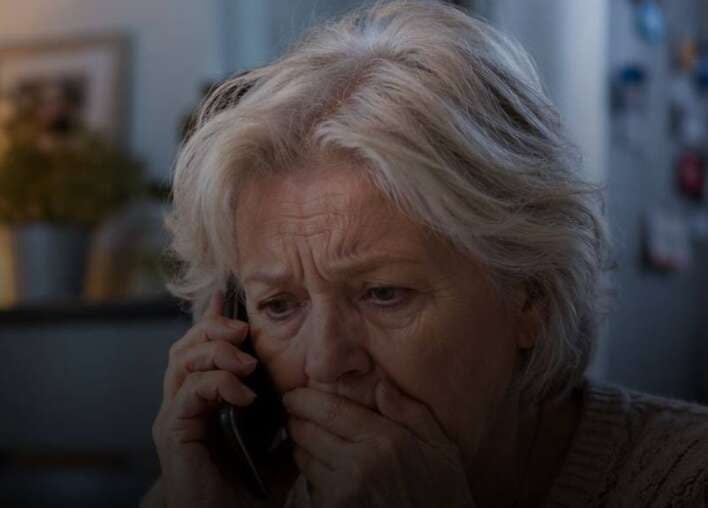
Criminals call citizens, claiming their loved ones have been hospitalised, and use emotional pressure to obtain funds.
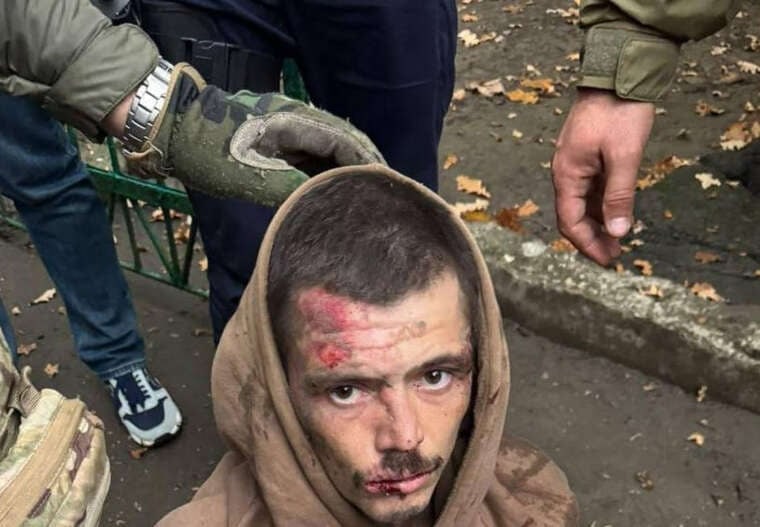
Law enforcement officers identified and detained a man allegedly involved in the murder of five Ukrainian servicemen near Kharkiv.
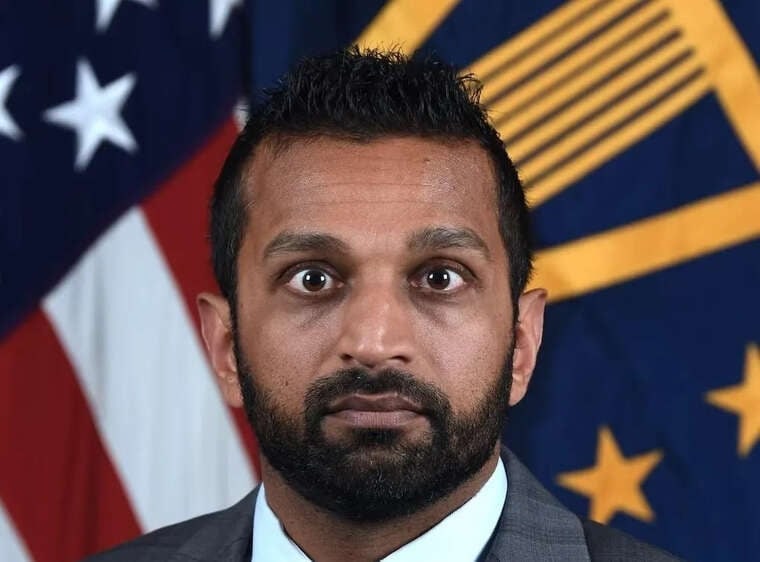
According to press reports, the head of the US FBI is in Russia for negotiations.
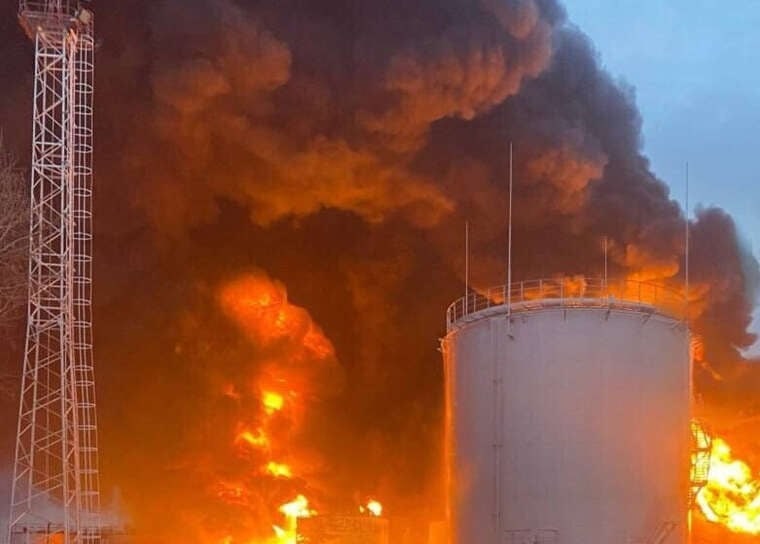
President's Adviser Dmytro Lytvyn refuted Russian Deputy Prime Minister Alexander Novak's claims about attacks on oil refineries.

A monitoring resource warned that the elevated threat of shelling at military-themed events persists throughout October in Kyiv and other cities.

European Commission representative Thomas Renier explained that the basic functions of the IRIS satellite network will become available to Ukraine no earlier than 2029, while the system will only reach operational readiness by 2033.

While the country is at war, some politicians have turned shared suffering into a source of profit. People’s Deputy Mykola Tyshchenko, known for his scandals, is currently at the centre of a criminal case. The NABU and the SAP have notified him of suspicion of demanding over one million US dollars (51 million hryvnia) for “protection” of illegal call centres, laundering illegal income and providing false information in his declaration.
According to the investigation, the key instrument for money laundering became the All-Ukrainian Charitable Foundation “Road to Peace” (Way of Peace), which Tyshchenko managed together with his ex-wife and financial partner Alla Baranovska.
On 3 July this year, at the High Anti-Corruption Court (VAKS), a prosecutor disclosed materials of covert investigative actions and call transcripts demonstrating the mechanism of the scheme.
Court materials contain official letters of gratitude from Tyshchenko’s foundation addressed to Yehor Vasyllovych Levchenko. The prosecutor did not specify that a man with this name is also known as Yehor Burkin (“Mexican”), who is considered the organiser of the international syndicate “Khimprom” and is on the run.
The foundation expressed gratitude to Levchenko for “irrevocable assistance” in the amounts of 40,000 euros, 60,000 dollars and 80,000 euros (approximately 8.8 million hryvnia), allegedly for organising charitable events. However, investigators found that these funds may have ended up in the MP’s pockets. The acknowledgements were issued backdated: for example, the date in the document was May, while the event took place in June. The prosecution believes this was an attempt to legalise funds of unknown origin.
The second aspect of the case concerns the purchase of vehicles for the front line. Details became known after the examination of the phone of businessman Volodymyr Sytak, a long-time partner of Tyshchenko. In the correspondence, Alla Baranovska discussed with him the withdrawal of 40,000 dollars from charitable contributions.
To reassure foreign donors who demanded reports, the defendants decided to artificially inflate expenses using fictitious receipts. The prosecutor read out Baranovska’s instructions on forging documents in court:
«Виталичка, еще вопрос: за транспортировку мы можем какой-то чек нарисовать, что мы там ещё "двушку" потратили на транспортировку. Машины как-то через фонд добавить, это тоже. Или не можем никак нарисовать такой чек?» (Vitalichka, one more question: for transportation we can draw up some receipt that we spent another “two” on transportation. Add the cars somehow through the foundation, that too. Or can we not draw up such a receipt in any way?)
When Sytak assured that a third-party Romanian company was used for cover, the discussion of the fictitious budget continued:
«Значит, на счету 20, еще 40 ты даешь наличными. Итого у нас бюджет 60. Но для того, чтобы нам сделать чек 100, нам еще нужно положить 40 на счет, но я их тебе потом верну». (So, there is 20 in the account, you give another 40 in cash. Total our budget is 60. But for us to make a receipt for 100, we still need to put 40 into the account, but I will return them to you later.)
Baranovska also cared for a “presentable” look for the media, demanding photo sessions where four cheap cars would look like a value of 100,000 dollars:
«Ты понимаешь, что это будет очень мало. Четыре этих маленькие машины, они как-то будут смотреться совсем не очень. Понимаешь, мне надо это сфоткать, но так, чтобы это выглядело на $100 тысяч. Вот это четыре…, но никто не поверит, что они стоят по $25 тысяч. Просто фото нужны большие, понимаешь? Так как по фотке четыре маленькие не потянут визуально на сотку баксов». (You understand that this will be very little. These four small cars, they will look quite bad somehow. You understand, I need to photograph this, but so that it looks like $100 thousand. Here are four…, but no one will believe that they cost $25 thousand each. Just big photos are needed, you understand? Because in the photo four small ones will not visually pull for a hundred bucks.)
She ordered to remove third-party stickers from the cars, replacing them with crosses and the foundation’s logos, and to wait for Tyshchenko’s arrival, who was coded as “NN”:
«Итого, будет 90 — машины, доставка, и где-то 25 евро отдать НН… У машины чеки ты сделай на 100. Сможем типа маленькие по 20, большие по 30. Это более-менес подходящая цена… О, главное, чтобы было… могут быть проверки, чтобы все было идеально… А приедет НН, и мы должны их пофоткать». (Total, it will be 90 — cars, delivery, and somewhere 25 euros to give to NN… For the cars make receipts for 100. We can do like small ones for 20, big ones for 30. This is more or less a suitable price… Oh, the main thing is that there is… there may be inspections, so that everything is perfect… And when NN arrives, we must photograph them.)
The investigation has documents where the value of the cars is indicated at the level of 15-16 thousand dollars. In the end, Baranovska reminded her partner: «40 вернуть не забудь, а то мне оторвут голову» (Don’t forget to return the 40, or they will tear my head off).
The VAKS judge set bail for Tyshchenko at 10 million hryvnia, which was paid by controlled business structures. The MP told journalists about a targeted campaign against him.
Similar defensive rhetoric was chosen by the First Deputy Chairman of the Odesa Regional Council, Oleh Radkovskyi. Recently, he was detained for demanding 50,000 US dollars from an entrepreneur for issuing construction permits. The SBU documented the crime after receiving the first part of the bribe — 10,000 dollars.
Previously, Radkovskyi became a figure in another scandal regarding the embezzlement of humanitarian aid. According to the prosecution and media, official recipients of free cargo from abroad were charitable foundations, including “Ridny Bereh”, “Doloni Pivdna” and “Volonterski Kryla”.
The “Ridny Bereh” foundation, founded by Radkovskyi together with Mykhailo Pozhyvanov, was allegedly the main one in forging documents. The essence of the scheme lay in the commercial sale of new clothes and shoes that were imported as free aid. From October last year to April this year, the goods were brought to a warehouse in Odesa, and then sold at the “7th Kilometer” consumer goods market.
Radkovskyi and his ally Serhiy Veselov published photo and video reports on the distribution of aid on social networks, using only a minimal part of the goods, while according to the documents they “distributed” everything.
Law enforcement officers established that in this way they sold over 50 tonnes of aid in 11 batches for a sum of over 40 million hryvnia. Over 60 searches were conducted, black accounting and goods were seized. The main suspects, including a former customs officer and a foundation representative, were taken into custody. Radkovskyi has not yet been notified of suspicion.
At the local self-government level, a scheme for profiting was also uncovered. Valerii Khomytskyi, the Head of the Berezanska Settlement Council, who was previously caught demanding a 200,000 hryvnia bribe, was detained in a case of misappropriation of funds.
The investigation established that at the end of December 2022, the settlement council concluded a contract with sole proprietor Volodymyr Oleksandrovych Pohadaiev for the supply of 10 petrol generators for a sum of 1,299,000 hryvnia. Pohadaiev did not buy this equipment. His firm received the generators free of charge from the charitable foundation “Svitlii Spravy” as humanitarian aid for Resilience Points, but sold them to the community at the full commercial price.
The net losses for the community amounted to over 700,000 hryvnia. While the court was sending Khomytskyi into custody, MP of the Mykolaiv Regional Council Volodymyr Pohadaiev closed his sole proprietorship. He has not yet been notified of suspicion.
The founders of the “Svitlii Spravy” foundation in 2020 were Viktoriia Arakhamia (wife of MP Davyd Arakhamia) and Hanna Zamazeieva, who previously headed the Mykolaiv Regional Council and now heads the State Agency for Energy Efficiency and Energy Conservation of Ukraine.
Comments
No comments yet. Be the first!