
Kazakhstan concludes investigation into $426m payment scheme for online casinos
Kazakhstan's Financial Monitoring Agency has referred case materials to court regarding illegal payments for seven gaming brands.
Kazakhstan's Financial Monitoring Agency has referred case materials to court regarding illegal payments for seven gaming brands.

Political technologist Oleg Posternak claims that Ukrainian anti-corruption fighters have become a privileged group that ignores legal norms, applying them only to others.
Pre-trial investigation completed in case regarding receipt of funds under green tariff for electricity allegedly generated in occupied territory of Zaporizhzhia region.

First Deputy Speaker of the Verkhovna Rada called the Central Election Commission's proposal to organise voting in buses logistically convenient.
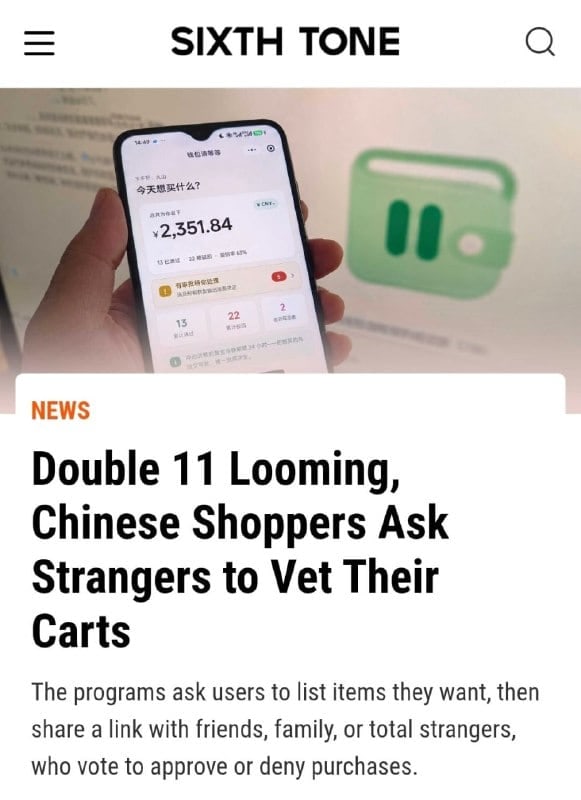
The popularity of apps designed to prevent impulse buying has surged in China during the major shopping festival. Users share product lists with friends and random people to get an objective assessment.

Following the appointment of a new acting head of the state enterprise, a struggle against the independent audit has erupted. The former director and the head of the State Forestry Agency are involving influential structures to protect their interests.

Taiwanese carrier Starlux earned the title of the world's cleanest airline due to hygiene and eco-friendliness. Singapore Airlines took first place in the overall ranking and several other categories.

An 800-year-old German fortified structure over 1,000 square metres in size is being transferred to private ownership for a nominal price.
During the world's largest shopping festival, "Double Eleven" (Double 11), Chinese shoppers are witnessing a rapid rise in the popularity of applications designed to prevent impulse spending. The mechanics of such services are simple: users create a list of desired items with prices and publish it for friends or even strangers, who vote on whether the purchase should be made.
According to reports by Chinese media published last week, dozens of similar mini-programs have appeared on platforms such as WeChat and Alipay. This trend began following the success of the WeChat mini-program "Still Want to Buy?" (Chinese: Hai Mai Me) in August this year. By Thursday, related hashtags had gathered tens of millions of views on the platform Douyin — the Chinese equivalent of TikTok.
The Double Eleven festival, also known as Singles' Day, was launched by e-commerce giant Alibaba on 11 November 2009 as a 24-hour event. It later evolved into a month-long campaign covering all e-commerce platforms and starting approximately in mid-October.
The popularisation of such tools coincides with growing financial awareness among young Chinese consumers. According to a report published in May by Irish consultancy firm Accenture, 82% of Generation Z in the country — over 230 million people — have started saving or cutting spending on unnecessary items.
The history of anti-impulse apps dates back to the launch of the "Still Want to Buy?" programme in August. It was developed by a 29-year-old programmer working under the pseudonym Qiancheng. Three days after launch, the app gained over 75,000 daily active users, and the total number of registered accounts exceeded 500,000 by mid-September. According to Qiancheng, over 85% of the audience consists of women under the age of 24.
The developer said the idea emerged after his girlfriend suggested using automated office procurement approval systems — the same ones employees go through to get permission for work purchases — to manage personal shopping decisions. He also added that he often feels regret after impulse buys.
«Зараз важко заробляти гроші, тому я вважаю, що варто дозволити людям, яким ми довіряємо, допомогти нам приймати кращі рішення щодо витрат» ("It is hard to earn money now, so I think it is worth allowing people we trust to help us make better spending decisions"), said Qiancheng.
However, the "Still Want to Buy?" mini-program was discontinued on 31 October, likely due to targeted complaints from online trolls. Qiancheng told local media that he is applying to relist the programme and is developing an independent app to expand functionality.
The WeChat mini-program "Wait, Wallet" offers similar features but allows users to seek advice from complete strangers.
In October, 20-year-old student Lin Yinjie from Fujian province in the east of the country created a similar app using AI tools — the Alipay mini-program "Wait a Minute". This service allows users to log items and prices, setting a "cooling-off" period during which friends help them decide on the purchase. Currently, the programme is used mainly by Lin and her friends; a broad audience has not yet formed.
Lin told the publication Sixth Tone that she previously placed orders mindlessly while scrolling through shopping apps and social media.
«Як студентка з обмеженим бюджетом, я знаю, як легко бажання купувати речі може тихо висмоктати гаманець» ("As a student with a limited budget, I know how easily the desire to buy things can quietly drain the wallet"), she noted.
«Покупка за 9,9 юаня ($1,50) здається незначною, але перш ніж ти встигнеш зрозуміти, ти вже витратив сотні юанів» ("A purchase for 9.9 yuan ($1.50) seems insignificant, but before you know it, you have already spent hundreds of yuan"), Lin added, explaining: «Багато речей, які я думаю, що мені дуже потрібні, виявляються речами, про які я більше не дбаю через кілька днів» ("Many things I think I really need turn out to be things I no longer care about after a few days").
Over the past week, according to Lin, her tool helped save over 80 yuan, which she would have spent on buying camera memory. «Це схоже на обмін "непотрібних витрат" на те, що мені дійсно потрібно» ("It is like exchanging 'unnecessary expenses' for what I really need"), she summarised.
Public reactions to these apps are mixed. While many users report receiving practical advice through mini-programs, others note unwanted side effects.
«Коли я переглядаю запити інших людей, я сама починаю бажати купити ці товари» ("When I look at other people's requests, I myself start wanting to buy these items"), one user wrote on Douyin. «Це перетворилося на стрічку рекомендацій товарів» ("It has turned into a feed of product recommendations").
Comments
No comments yet. Be the first!