
Kharkiv LLC "Bullet" sees 500-fold turnover growth amid three court cases
Kharkiv company with eight employees becomes largest drone supplier via Prozorro, increasing revenue from 5.65 million to 2.91 billion UAH over two years.
Kharkiv company with eight employees becomes largest drone supplier via Prozorro, increasing revenue from 5.65 million to 2.91 billion UAH over two years.
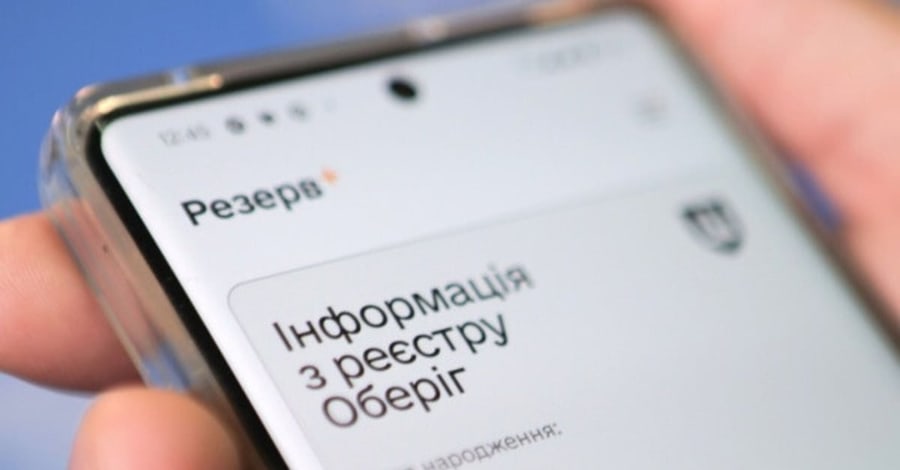
Having a deferment status in the "Reserve+" app does not guarantee border crossing for all categories of men. The right to leave depends on the specific grounds for exemption from mobilisation.
The Air Force detected a jet-powered drone moving towards the capital. Following explosions in the Darnytsia district, the machine's debris fell on open ground.

Acting head of Zaporizhzhia Regional Military Administration Mykhailo Semikin reported a fatality in the settlement of Kushuhum and provided overall casualty statistics for the past 24 hours.

According to the Institute for the Study of War, damage to the crossing may restrict the passage of large vessels through the strait and force Moscow to rely more heavily on land supply routes.
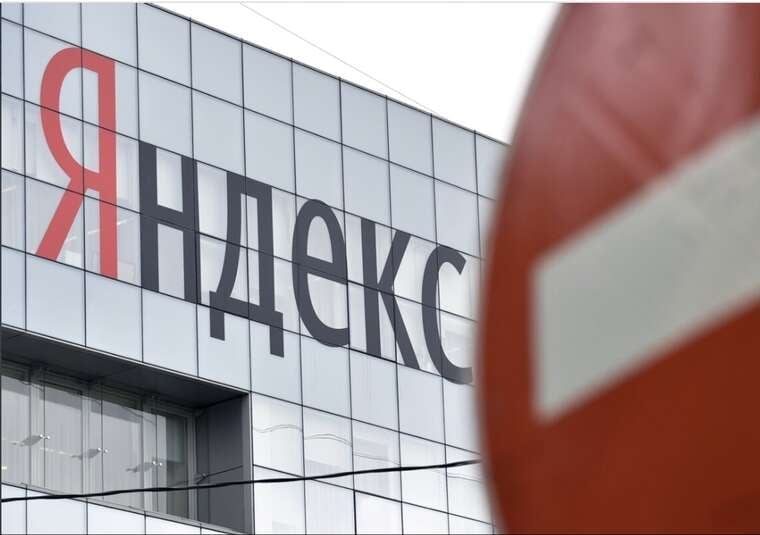
International law professors Marco Milanovic and Michael Schmitt argue that attacks on the server capacities of Yandex, Sberbank and VK may violate humanitarian law norms, as their military use has not been proven.

Following yesterday's shelling of the Northern and Southern bridges, the capital faced serious problems with movement between the banks of the Dnipro.
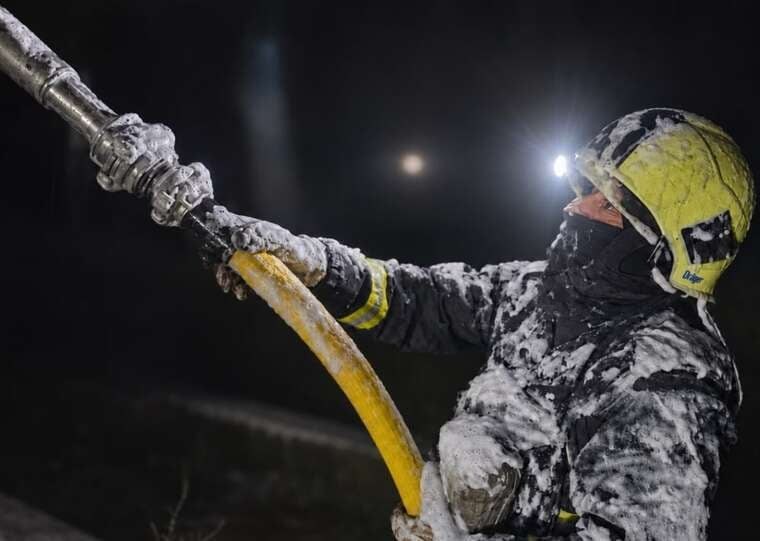
Russian troops attacked industrial facilities in Zhytomyr region on the night of 18 November. According to the head of the Regional Military Administration, the fire was contained and extinguished, with no casualties.
International law professors Marco Milanovic and Michael Schmitt published an analysis on the legal portal Just Security, in which they expressed doubts about the lawfulness of Ukrainian strikes on Russian data centres. In their view, such actions may contravene international humanitarian law, as Kyiv has not provided evidence that these objects were directly used for military purposes.
The authors remind that, in accordance with international humanitarian law norms, a civilian object acquires the status of a permissible military target only under two conditions: its actual use for military purposes and the existence of a concrete military advantage from its destruction. The experts emphasise that the dissemination of propaganda in itself does not turn infrastructure into a lawful target for an attack.
To illustrate this thesis, the authors refer to the conclusions of the commission that investigated the bombing of Yugoslavia by NATO forces in 1999. It was then noted that propaganda activity does not make media a permissible target for a strike.
Ukraine struck the data centres of the companies Yandex, Sberbank and VK. The official justification for these actions was based on the need to counter Russian propaganda and bots, as well as on the fact that it was a response to previous Russian attacks on Ukrainian data centres.
After the strike on Yandex's infrastructure, Volodymyr Zelensky stated: "стало трохи легше дихати в багатьох соціальних мережах" (it became a bit easier to breathe in many social networks), as the number of bots, hate and provocations had decreased. However, according to the experts' assessment, international law prohibits striking civilian objects in retaliation, even if the adversary itself violates these rules.
The authors paid particular attention to the strike on VK's data centre. Ukraine claimed that the company serves the needs of the Russian army and the defence-industrial complex. However, the lawyers point out that this statement concerns the company as a whole, not the specific object that was attacked.
The situation with Sberbank's data centre raises even more questions, as it was under construction at the time of the strike. To consider it a military target, precise data on the planned military use of the object after commissioning is required.
"The arguments put forward by Ukraine do not allow Russian data centres to be classified as military targets," the authors conclude. They also note that even confirmed military use of a data centre does not automatically make a strike on it lawful. It is necessary to take into account the possible damage to civilian infrastructure, including banking systems, communications and other services.
An additional argument against the effectiveness of such strikes is the existence of data backup. The experts cite an example: after Russian strikes, Ukrainian providers quickly restored operations thanks to reserve capacities in Europe. If military information was also stored abroad, the destruction of servers might not have brought a significant military advantage, which substantially reduces the military effect of such actions.
In conclusion, the experts emphasise that Russia is waging an aggressive war against Ukraine and has repeatedly violated international humanitarian law. However, this does not relieve Ukraine of the obligation to comply with the rules of conduct of hostilities.
"The fact that Ukraine is a victim of aggression does not exempt it from responsibility for unlawful attacks during military operations. Each violation of these norms weakens the positions that Ukraine has so hard-won. The justifications that Ukraine has so far put forward regarding its strikes on Russian data processing centres — corresponding actions and suppression of disinformation — have no legal basis. We hope that Ukraine has more substantial arguments, supported by factual evidence, at its disposal than those it has presented so far," the authors of the article write.
Comments
No comments yet. Be the first!