
Chancellor Merz's approval rating falls to record low of 13% amid growing dissatisfaction
INSA poll shows support for Friedrich Merz and the German governing coalition has hit an all-time low, while opposition AfD retains the lead.
INSA poll shows support for Friedrich Merz and the German governing coalition has hit an all-time low, while opposition AfD retains the lead.
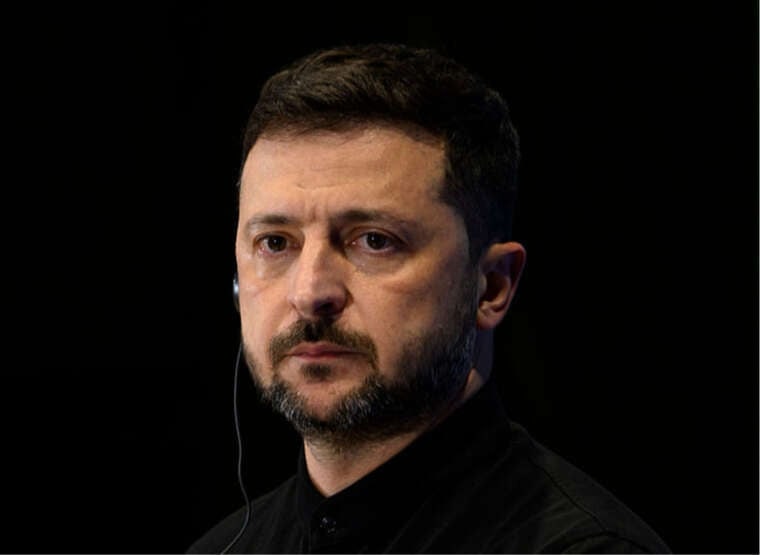
The President noted that despite a generation surplus, Russian attacks on networks and stations create electricity shortages in Kyiv, Dnipropetrovsk and other regions.
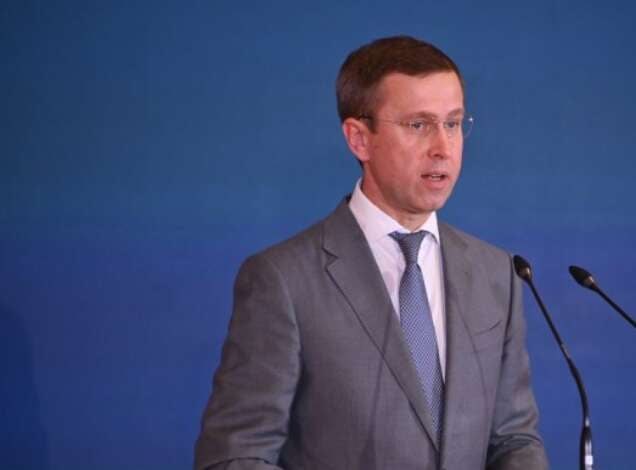
Prime Minister Serhiy Koretskyi announced that World Food Programme funds have been allocated across six regions to improve student nutrition.

Water pressure has normalised on both banks of the Dnipro in the capital. Water supply and sewage systems are once again operating in standard mode.

Law enforcement is investigating the disappearance of a vehicle transporting high-value microelectronic components from California to Texas. The truck was disguised as a food delivery vehicle.

A significant quantity of weapons and ammunition was found during the inspection of the attacker's car, who opened fire in Krakow.

Valeriy Markus revealed that his wife previously held the position of detective at the National Anti-Corruption Bureau of Ukraine.

Power outages have begun in Dnipro due to Russian attacks on energy infrastructure, affecting approximately 60,000 consumers.

The United Kingdom has expanded its space surveillance capabilities by placing its second military satellite, named Titania, into orbit. This spacecraft became the country's second military object in orbit after Tyche, which was launched in 2024. This was reported by Sky News.
According to the publication, the launch took place last month from California using a SpaceX rocket. The satellite was developed and manufactured in Hampshire as part of a joint project between the UK Defence Science and Technology Laboratory (Dstl) and BAE Systems.
In size, Titania is comparable to a standard washing machine, with a mass of approximately 100 kilograms. The spacecraft travels at a speed of 27,000 kilometres per hour, completing a full orbit around the planet in roughly 90 minutes.
UK Defence Minister Wes Streeting emphasised that the new satellites will enable military personnel to detect potential threats more quickly, thereby enhancing the state's security level. He also noted that plans are in place to launch two similar spacecraft.
The satellites will be managed by the UK Space Command, which is headquartered at RAF High Wycombe.
In addition to the satellites, the British Ministry of Defence is testing the Inaros space sensor system, designed to track the situation in orbit. The system itself is planned to be deployed across three sites in different regions of the world.
Chief of the General Staff of the Royal Air Force, Air Chief Marshal Harv Smit, underscored the importance of space surveillance for maintaining the country's military advantage. In his words, Tyche and Titania will perform this function, and they will later be joined by Juno and Oberon.
Wes Streeting added that both Titania and the Inaros system are products of British engineering. The creation of these technologies was made possible by state investment in the space sector, the total volume of which has exceeded £3 billion.
The launch of the new satellites occurred shortly after the unveiling of the UK's first space squadron. As Sky News recalls, in September, the Commander of the Royal Air Force stated that space has become a domain of combat operations.
Comments
No comments yet. Be the first!