
Journalists uncover hidden assets of MP Vatsak: $3.5m car fleet and state losses
Investigation reveals network of luxury cars in Gennadiy Vatsak's circle and series of violations in his business causing multi-million losses to state budget.
Investigation reveals network of luxury cars in Gennadiy Vatsak's circle and series of violations in his business causing multi-million losses to state budget.
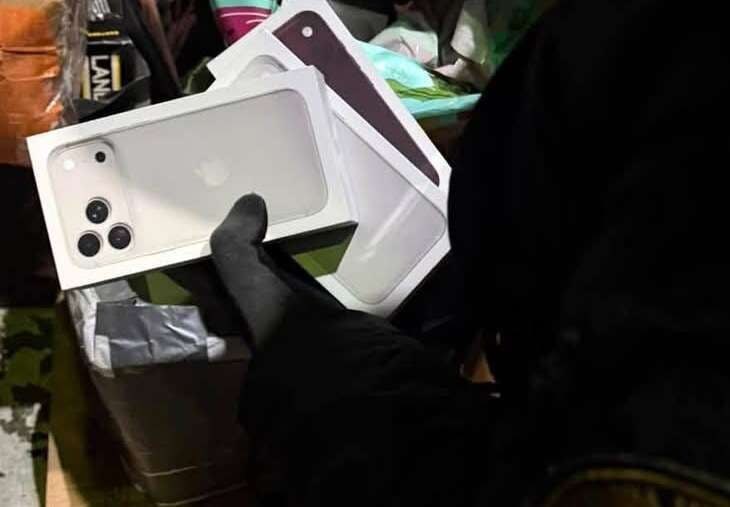
Law enforcement officers discovered a contraband batch of electronics in a minibus crossing the state border via the Krakovets – Korchova checkpoint.

A court in Chernihiv has sentenced the head of a military medical commission to prison for establishing and leading an organised group that issued fictitious medical certificates.

Officers Mykola Savchenko and Ihor Voloshko rescued a woman and her grandson from the rubble after a Russian shelling. During the evacuation, Savchenko lay on top of the child to protect him from a new UAV launch.
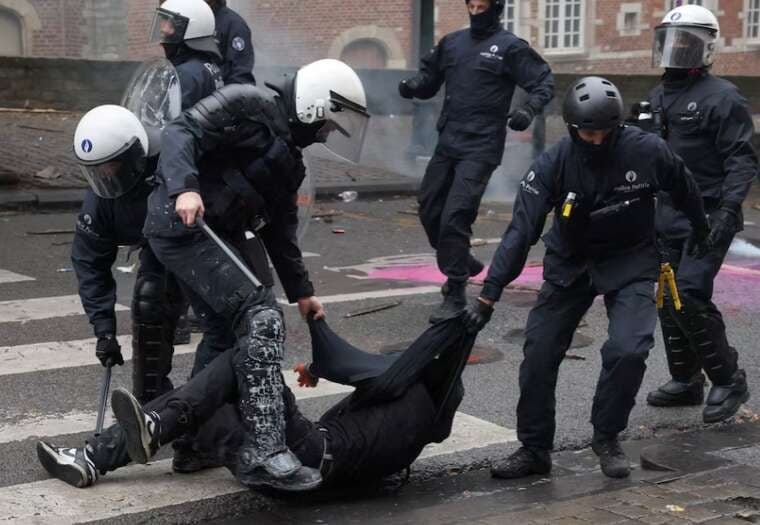
Mass march in Canada for affordable education ended in riots. Police used tear gas, and three demonstrators were detained.

Major tech giants are financing their own clients to purchase their services. The IMF has allocated $1.4 trillion to such cyclical deals.

The Ukrainian tennis player secured a victory in the final round of the group stage with a score of 6:3, 3:6, 6:1 and will continue her campaign at the tournament in Indian Wells.
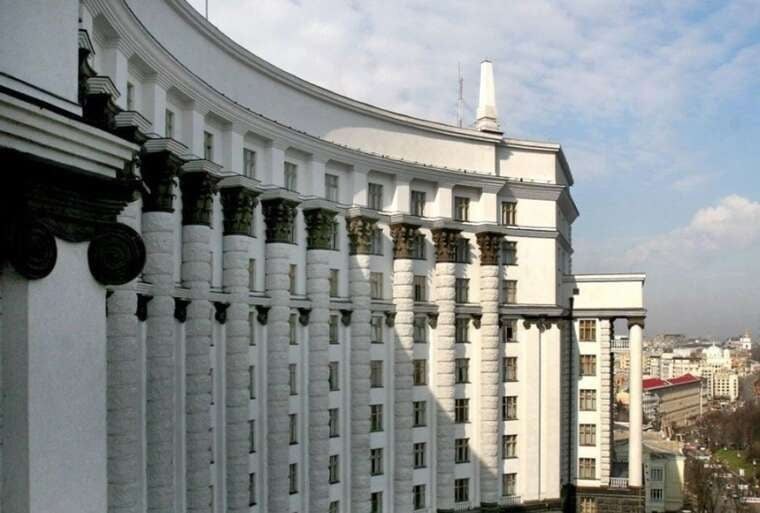
The Cabinet of Ministers approved a bill on updating the strategy, which provides for the restoration of war-damaged territories and the integration of EU requirements.
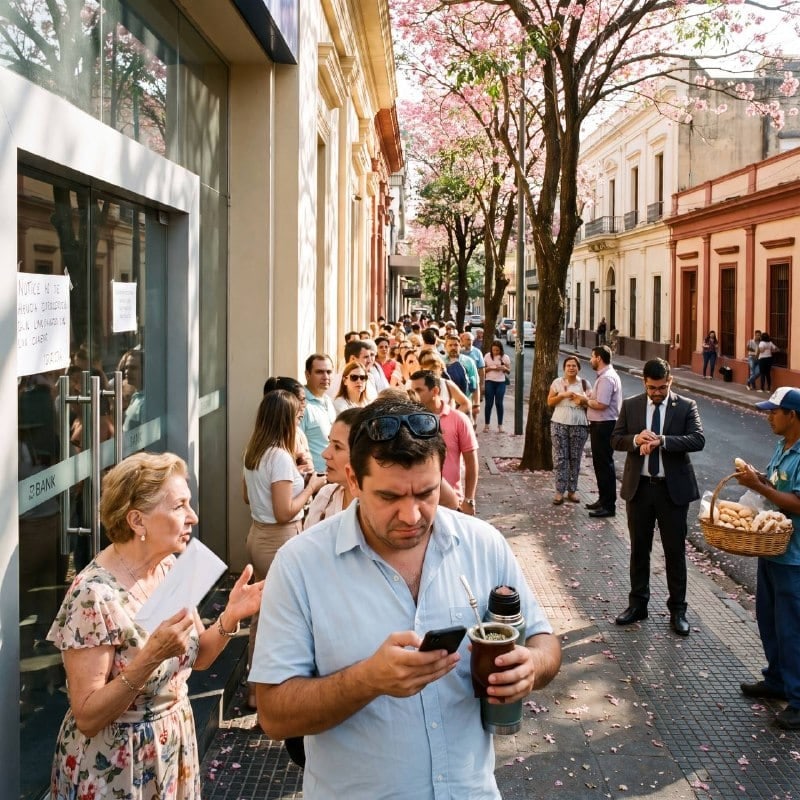
On 3 November, approximately three million residents of Paraguay found that they had no access to their funds. This happened the day after the central bank's board unanimously decided on the evening of 2 November to take Ueno Bank under control. The bank, which is the country's largest digital financial institution and one of the largest overall, served approximately 60% of the adult population. Currently, all operations are suspended: customers cannot withdraw or transfer money.
Just before the collapse, a week before the closure, the institution announced the raising of $100 million in new capital. However, financial indicators told a different story: the capital adequacy ratio fell to 5.56%, which is less than half of the statutory minimum of 12%.
According to the prosecutor's office, in 2025–2026 the bank issued loans and overdrafts to companies within its own holding on terms that did not correspond to standard risk assessments. As early as June, the central bank had warned Ueno about excessive lending to enterprises within its own group. Currently, charges have been brought against 27 individuals. Founder and largest shareholder Miguel Vazquez has been detained, and the prosecutor's office is seeking his preventive detention.
The biggest blow has been dealt to public finances. Between $800 million and $850 million in public funds were held at Ueno Bank. Of this amount, approximately $380 million belongs to the state pension fund IPS. Through this bank, 32,000 pensioners received their pension payments. The fund assures that payments will continue as usual, customers are being transferred to another bank, and a lawsuit is being prepared.
The bank belongs to the Grupo Vázquez holding. The incumbent president of the country, Santiago Peña, was a business partner of this group until March 2025. Additionally, the incumbent president was listed among the holding's shareholders as recently as last year.
Central Bank Governor Carlos Carvalho, who previously managed the financial company that grew into Ueno, has resigned. The regulator emphasises that Carvalho did not participate in decisions regarding Ueno. President Peña stated that those responsible would face justice "without exceptions or privileges". The opposition is preparing an impeachment procedure, but carrying it out requires the votes of the ruling Colorado Party, which controls both chambers of parliament.
Depositors are guaranteed compensation of up to 228.3 million guaraní per person, which amounts to approximately $38,000. This sum covers the needs of about 97% of customers. The remaining 3%, that is, over 80,000 people, risk greater losses. The first payment is promised to be up to 10 million guaraní (around $1,700), but no specific date has been given.
A similar situation recalls events in Ukraine in December 2016, when PrivatBank was nationalised. At that time, the National Bank stated that 97% of corporate loans had been issued to companies linked to the bank's owners. The hole in capital was filled with state funds. The mechanics remain unchanged: a bank collects deposits from the population and the state, and then lends these funds to its own structures.
When analysing any financial institution, it is worth paying attention to exactly whom it lends to, whether it has received warnings from the regulator, and who stands behind the shareholders. Answers to these questions are often available in open sources long before the institution is closed. A bank that systematically lends to its own structures is effectively holding funds not for customers, but for owners.
Comments
No comments yet. Be the first!