
Budapest once again blocks opening of final negotiation clusters for Ukraine
Hungarian delegation at Brussels meeting refused to approve screening results, stalling progress in Kyiv's EU accession.
Hungarian delegation at Brussels meeting refused to approve screening results, stalling progress in Kyiv's EU accession.
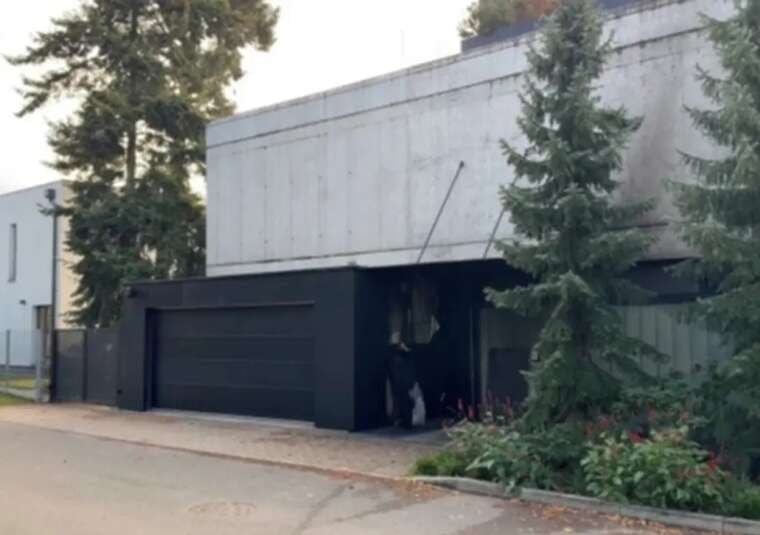
In the Kunratice district, fire damaged the facade of Martin Drda's private house. Investigators are considering versions ranging from technical malfunction to deliberate arson.

Russian dictator's aide claims Finnish and Norwegian leaders conveyed Kyiv's readiness for a meeting to Moscow. Meanwhile, official Kyiv and Oslo do not confirm agreement on a visit to Russia.

Compliance with the salary threshold of three minimum wages is a key criterion for retaining deferment for most employees of critical enterprises.

Olha Vraholeva, head of a restaurant chain, died in Odesa. Law enforcement are considering the version that Zakhary Zarychanskyi, son of the establishments' owner Inara Zarychanskyi, was driving the motorcycle.

The Public Health Centre released statistics on acute respiratory viral infections for the period from 28 September to 18 October 2026, noting a moderate seasonal increase in indicators.

Mikheil Saakashvili shared an image of his young child, confirming the funding of her upkeep and the gifting of property in Kyiv.
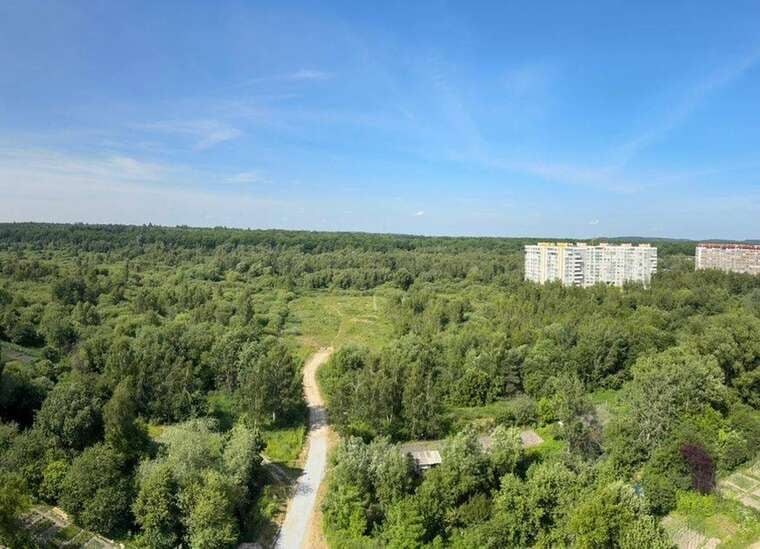
Riel Corporation plans to develop a residential complex on 10.3 hectares of former industrial land. The educational facility is promised to be built only after the first buildings are occupied.
The Architectural and Urban Planning Council of Lviv reviewed the urban planning calculations for the development of a 10.3-hectare plot located between Horodnytska, Promyslova, and Zhovkivska streets. On the site of the former Svitannok leather factory, Riel Corporation intends to construct a large-scale residential complex comprising 2,106 apartments and 23,100 square metres of apartments.
According to the urban planning calculations, most residential buildings will have 7–8 floors, although certain sections will reach a height of 16 floors. The old production buildings are planned for demolition, while only a few historical structures and the water tower will be preserved. The infrastructure will include 36,600 square metres of commercial space, an underground parking lot for 1,800 cars, and shelters for dual use.
The project is initiated by Riel Corporation, founded by Rostyslav Melnyk, the son of Leonid Melnyk, the former head of the regional headquarters of the Party of Regions. The company has previously faced issues with the public due to an incident involving the demolition of a historical building associated with composer Yaroslav Yaroslavchenko.
The main point of discussion regarding the project is the situation with educational institutions. As early as 2024, the city authorities approved the construction of a school for 720 students and a kindergarten for 50 places. However, as the chief architect of the project stated, the school will be built only after the construction and occupancy of the first residential sections.
While their own school remains only a prospect, future residents are advised to rely on an educational facility in the neighbouring Veza residential complex, which the same developer has only just begun to build. This creates a risk that apartments will be sold and occupied significantly earlier than a solution to the question of children's education is found.
Although the urban planning calculations do not yet guarantee the implementation of the project in this exact form, a question arises: will the social infrastructure keep pace with the development? Housing can be sold in advance, but once thousands of people have moved in, it will simply be impossible to add a school to the master plan.
Comments
No comments yet. Be the first!