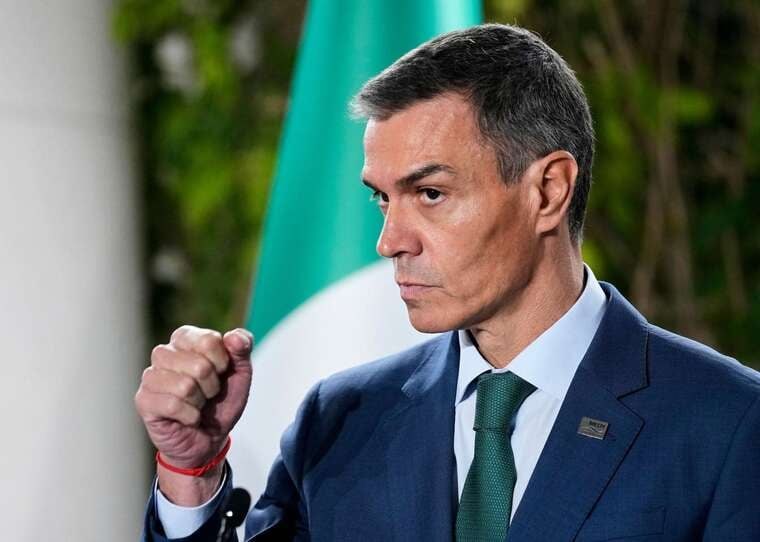
Pedro Sanchez calls early parliamentary elections in Spain for 29 November
The Spanish Prime Minister announced snap voting amid social protests and the failure of government housing initiatives in parliament.
The Spanish Prime Minister announced snap voting amid social protests and the failure of government housing initiatives in parliament.
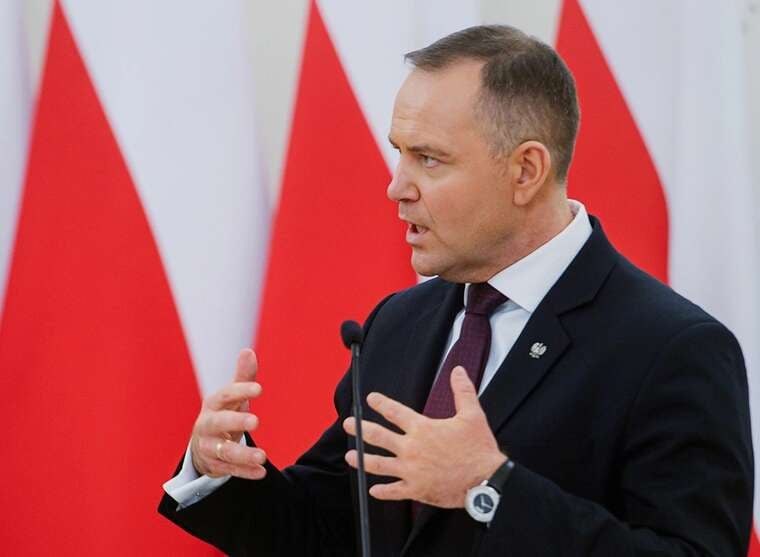
In Warsaw, it was emphasised that support for Ukraine is a component of Polish security. The presidential administration also pointed to historical and economic factors complicating relations with Kyiv.

High-ranking sources revealed that the strategic document defining the goals and timelines for the Ukrainian Armed Forces is currently under review by the National Security and Defence Council.

The Pension Fund of Ukraine warns that a lack of fund movement on a card may lead to the suspension of payments. Experts advise diversifying savings to protect against fraudsters and technical failures.
Patrol police detained an apartment resident who, while intoxicated, frightened neighbours by firing shots from a balcony.

bird developers explain that the increase in housing rental offers in the capital is due to interface changes, not an outflow of residents.

Intelligence data indicates that the Russian Federation is transitioning to its own turbojet engines from Tatarstan in new modifications of strike UAVs, while also upgrading navigation systems.

The former Brovary Aluminium Plant was renamed "Profhimtrade" and re-registered in Zhytomyr Oblast. The bankruptcy procedure was initiated by a company whose head has corporate ties to the business group of the Suprunenko brothers.
The habit of leaving all received funds on a bank account without any transactions can create serious difficulties for elderly citizens. Financial institutions carefully monitor the activity of their clients, and any suspicion of non-compliance may lead to temporary restrictions on access to one's own savings.
In particular, the Pension Fund of Ukraine notes that if a person resides in a temporarily occupied territory and no expenditure operations are recorded on their account for six months, the pension payment may be suspended.
To avoid additional checks by the bank, it is sufficient to perform at least one transaction per month. However, apart from the risk of payment suspension, elderly clients often become targets for fraudsters. Quick access to funds via card makes them vulnerable to various manipulations.
It is worth noting that keeping the entire amount exclusively in cash is also not an optimal solution, as paper money is not protected from theft and does not generate financial income.
Card blocking most often occurs not because of the fact of receiving a pension, but due to strict requirements of bank financial monitoring. If a financial institution records atypical transfers, a sharp change in client behaviour, or identifies outdated personal data, access to funds is temporarily restricted. In such cases, the bank will require updating information or confirming the source of funds.
Financial experts traditionally advise applying the principle of "diversification", that is, distributing savings between different forms of storage:
Comments
No comments yet. Be the first!