
Identity of 20-year-old co-pilot killed in West Palm Beach plane crash confirmed
Relatives confirmed that 20-year-old Natalia Filgueiras Gadelha was on board the crashed Learjet business jet. A total of nine people died in the incident.
Relatives confirmed that 20-year-old Natalia Filgueiras Gadelha was on board the crashed Learjet business jet. A total of nine people died in the incident.

On 3 November 2026, a series of reports of potential explosives on board four passenger aircraft was recorded in Europe. All aircraft landed safely, but one airport in Poland was suspended from operations as a result.
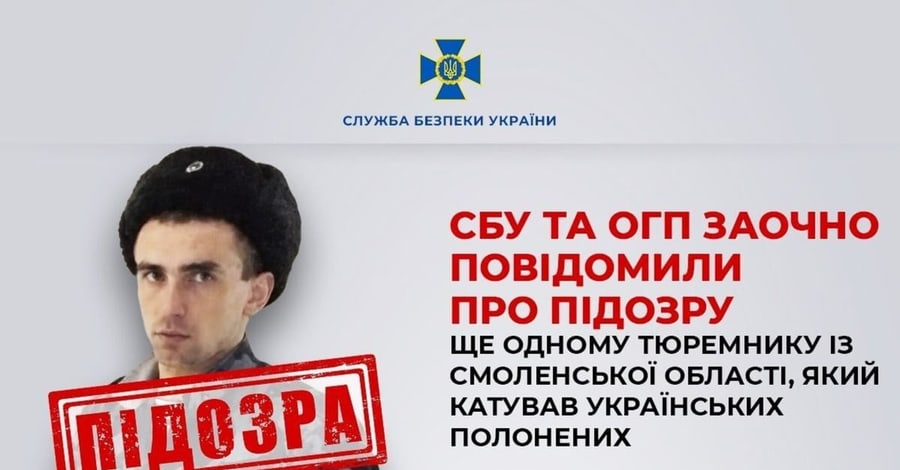
According to the investigation, the staff member at the Vyazma detention centre personally beat Ukrainian servicemen and used an electric shock device, then left them without medical assistance.

The White House has announced a speech by the First Lady of the United States regarding the humanitarian mission in Oleshky. The event will be attended by representatives of Russia and Ukraine.

Brent price remains near $105–106, while the author's assessment indicates that reaching $120 is realistic. Bitcoin shows increased risks due to outflows from ETFs.

Amendments to the DBN requiring a review of navigation systems and room accessibility have entered into force. Operators need to check the location and condition of information signs.

Official channels in Iran are broadcasting recommendations requiring citizens to shelter for 24 hours to avoid the effects of radioactive fallout.

The Security Service of Ukraine has restricted the entry of a journalist who expressed a critical stance towards support for Ukraine for a period of three years on security grounds.

People's deputies Maksym Pavlyuk and Serhiy Ionushas submitted bill No. 16190 to the Verkhovna Rada. This document contains proposals to amend existing anti-corruption procedures. Specifically, the text provides for adjustments to the rules of civil confiscation of unjustified assets, as well as changes to approaches regarding financial oversight of officials' activities.
Experts from the organisation MEZHA, who examined the text of the initiative in detail, noted that it contains risks for the functioning of the anti-corruption system in Ukraine.
One of the key provisions of the bill is granting officials the right to pay the value of an unjustified asset within 30 days instead of its gratuitous transfer to the state. Representatives of MEZHA claim that such a decision could become a tool for officials to retain housing, vehicles, and other property acquired with funds of illegal origin, provided they simply pay its value.
In addition, the document proposes reviewing the asset value threshold to which the civil confiscation mechanism applies. For property acquired in 2026, this limit may increase from the current 1.5 million hryvnia to 2.3 million hryvnia. Experts warn that due to such an increase, some assets currently subject to recovery will fall outside the scope of this mechanism.
The bill also contains a proposal to abolish the obligation for officials to notify the National Agency on Corruption Prevention (NACP) about significant changes in their financial status, as well as about opening accounts in foreign banks. MEZHA believes that abandoning such reporting will complicate the prompt detection of large financial transactions and acquisitions. This will also hinder the verification of whether declarants' actual expenditures correspond to their official income.
Additionally, the document proposes granting NACP the authority to independently file lawsuits for the recovery of unjustified assets in court without the involvement of the Specialised Anti-Corruption Prosecutor's Office (SAP). The organisation MEZHA warns that this may create constitutional risks and lead to an excessive concentration of powers in a single body: it would be responsible for detecting assets, assessing the evidentiary base, and filing lawsuits.
MEZHA analysts emphasise that each of the proposed changes individually weakens a specific element of the anti-corruption system. In combination, however, these provisions may significantly complicate the process of detecting and confiscating officials' unjustified assets.
The civil society organisation called on People's deputies not to support bill No. 16190 in its current form. MEZHA insists on the need to remove those provisions that, in their assessment, pose risks to the anti-corruption system.
Comments
No comments yet. Be the first!