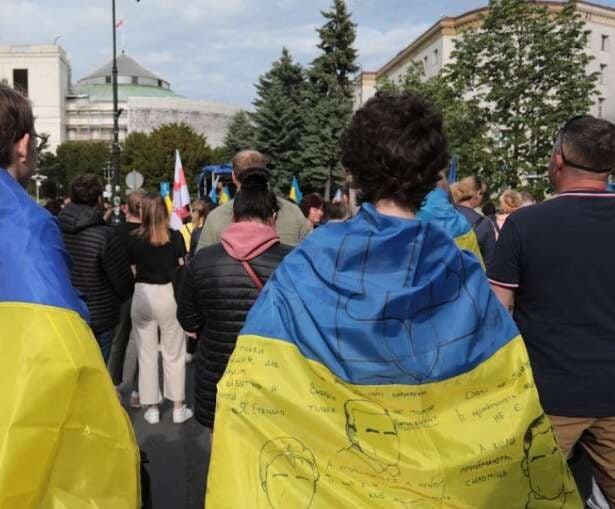
German publication Der Spiegel has published an investigation dedicated to the transformation of public attitude towards Ukrainians in Poland. The journalists characterise Ukrainian citizens as "model immigrants", yet they note an alarming trend of growing xenophobic sentiments and threats directed at them.
Attack in Jarosław as a trigger for discussion
The trigger for the publication was an incident at a church in the city of Jarosław. According to the publication, 31-year-old Ukrainian citizen Igor M. took out a kitchen knife before Mass and attacked those present. As a result, five people were injured, including four clergy members. One of the injured priests died.
«Українці — зразкові іммігранти в Польщі. Тепер їм погрожують символами шибениць» ("Ukrainians are model immigrants in Poland. Now they are threatened with symbols of gallows"), Der Spiegel states. The authors of the material also consider the possibility that the topic of Ukrainian refugees may become key for Polish right-wing political forces.
Shift in public sentiment
After February 2022, Poland demonstrated "unprecedented solidarity" with Ukraine. However, over time, attitudes towards refugees began to transform. In 2022, 92% of Poles expressed support for accepting Ukrainian refugees. The situation has now changed: 52% of those surveyed believe that Poland should not accept new Ukrainians.
In addition, statistics indicate a rise in hostility: since the beginning of the year, Ukrainians have recorded approximately one-third more cases of hate crimes.
Strengthening of security measures
As an illustration of the changing situation, Der Spiegel cites the example of the Ukrainian House in Warsaw. If previously one could freely enter the facility, now its doors are constantly closed. Staff of the institution have installed surveillance cameras and developed special procedures in case of threat.
In 2024, images of gallows and pro-Russian slogans repeatedly appeared on the building's facade. In winter 2025, the institution also received a letter with a bomb threat.
Causes and consequences
At the same time, Der Spiegel emphasises the positive image of Ukrainians as "model immigrants", citing their level of Polish language proficiency, employment, and contribution to the Polish economy.
Among the causes of the shift in public sentiment, the magazine cites the rapid transformation of Poland into a country of mass immigration, historical disputes between Poland and Ukraine, and political rhetoric.
According to Der Spiegel, anti-Ukrainian propaganda has over time ceased to be a phenomenon characteristic only of the far-right political spectrum and has become more noticeable in Polish politics ahead of upcoming parliamentary elections.



Comments
No comments yet. Be the first!