
Wes Streeting: adversaries could attack Britain by 2030, 1000 days remain
The UK Defence Secretary stated that the country must urgently rebuild its army, as potential enemies are approaching the capability to strike.
The UK Defence Secretary stated that the country must urgently rebuild its army, as potential enemies are approaching the capability to strike.

Polish regions have terminated agreements with Lviv, citing the city council's decision to dedicate 2027 to the UPA and Roman Shukhevych.

The MP explained that reducing the number of defence industry workers protected from conscription will not increase mobilisation resources, as this sector covers a small share of all exempted individuals.
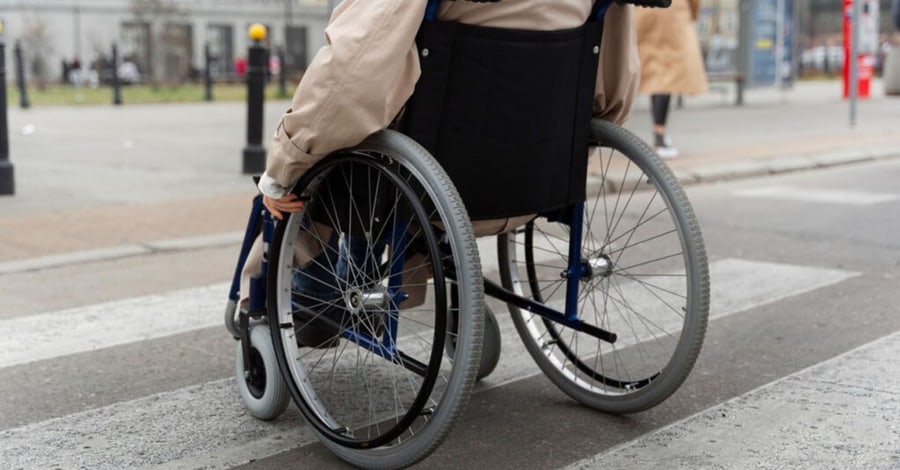
We examine the current rules for the permanent assignment of Group III disability in Ukraine. The list of diseases that grant the status and the mechanism of pension payments.

President enacted the National Security and Defence Council decision of 25 September 2026, which provides for the construction of engineering obstacles to protect cities.

During a border crossing at the Orlivka checkpoint, law enforcement officers found a large sum of cash hidden in the structural cavities of the vehicle.

Agro-holding Kernel reduced oil sales by 48% and grain exports by 54% in the first quarter of fiscal 2027. The company attributes this to attacks on maritime infrastructure.

A 20-year-old officer from a unit of the Main Directorate of the National Police in Kyiv, driving an Audi, hit two pedestrians in Kamin-Kashyrskyi district. Blood alcohol level of 2.07 per mille detected; criminal case opened.
In Ukraine, the status of a Group III disabled person can be granted without a time limit. This decision is made in the presence of specific medical indicators, such as stable vision or hearing impairments, limb amputations, or the consequences of serious surgical interventions. The final amount of financial support depends on individual parameters: insurance record, salary level, and the presence of additional payments.
Group III disability is assigned to individuals who have moderate impairments of body functions that limit their daily activity. Following the reorganisation of the medical and social expert commissions (MSEC) system, the authority to make decisions has been transferred to expert teams for assessing an individual's daily functioning.
For certain diagnoses, the law provides for the possibility of establishing disability without setting a date for re-examination. The relevant list of conditions was approved by a resolution of the Cabinet of Ministers of Ukraine dated 21 January 2015, No. 10. However, the mere fact of having a specific disease does not guarantee the automatic assignment of a group; the decision is made taking into account the general state of health and compliance with the criteria.
Legislation identifies several key categories of medical indicators that allow disability to be established permanently.
Impairments of sensory organs and speech
Pathologies of the nervous system and motor functions
Amputations and impairments of limb functions
Consequences of operations and diseases of internal organs
For many of the listed conditions, there are additional criteria, in particular the degree of functional impairment and the results of rehabilitation measures.
The Group III disability pension is calculated individually. As a general rule, its amount is 50% of the old-age pension that would have been calculated for the specific individual. However, the final sum may differ depending on minimum state guarantees and the right to additional payments.
An insurance record is required for the assignment of a pension for Group II and III disability. Its duration depends on the person's age at the time of status establishment: from 1 to 15 years. For example, if disability was established before the age of 23, one year of insurance record is sufficient under general rules. For older age categories, the requirements gradually increase.
Persons with Group III disability have the right to work officially and receive a pension simultaneously. The fact of employment itself is not a ground for terminating payments. However, work may affect the right to certain allowances or minimum state guarantees if the law establishes additional conditions for their receipt.
It is important to note that military-liable persons with Group I, II, and III disability have the right to a deferment from mobilisation. This rule remains in force from 1 September 2026. To maintain the status, it is important that disability data remains current in state registers. A summons itself does not mean automatic mobilisation, and information about the deferment can be verified, in particular, in the Reserve+ application.
Before submitting documents for disability assignment, it is recommended to check the current version of the regulatory list and ensure that the specific state of health meets the criteria for permanent status establishment.
Comments
No comments yet. Be the first!