
SBU dismantles coffee shop network selling banned THC disguised as CBD
Law enforcement detained 17 individuals who sold vapes containing narcotics through "Bob Marley" venues and online stores, disguising them as legal supplements.
Law enforcement detained 17 individuals who sold vapes containing narcotics through "Bob Marley" venues and online stores, disguising them as legal supplements.

According to the authors of the publication, an establishment providing intimate services may be operating in the Delmar residential complex in central Dnipro. It concerns an apartment on the 15th floor of the building at 72B Dmytro Yavornytskoho Avenue.

Internet provider "Mereja Lanet" announced the temporary closure of its Customer Service Centre in the capital. The company assured that technical works and user support continue in online mode.

A Russian journalist reported the appearance of a dish priced at 270 rubles in a menu, which is effectively a classic Kyiv cutlet but under a different name.

Former Vice President of the Kyiv Boxing Federation, Volodymyr Mykulenko, revealed details of the scheme by which Kyrylo Shevchenko and his associates seized assets of Swiss investors on the Desna River using forged documents.

Investigation revealed work costs inflated by 475,700 UAH and overpayment for modular structure of 1.74 million UAH. Suspicion served to former utility head and contractor executives.

Vladimir Zhuravlyov's lawyer said his client has applied to Croatian authorities for political protection, citing the lack of guarantees of a fair trial in Germany.

According to an expert, Russian citizens are actively buying housing in the occupied city thanks to preferential credit programmes.
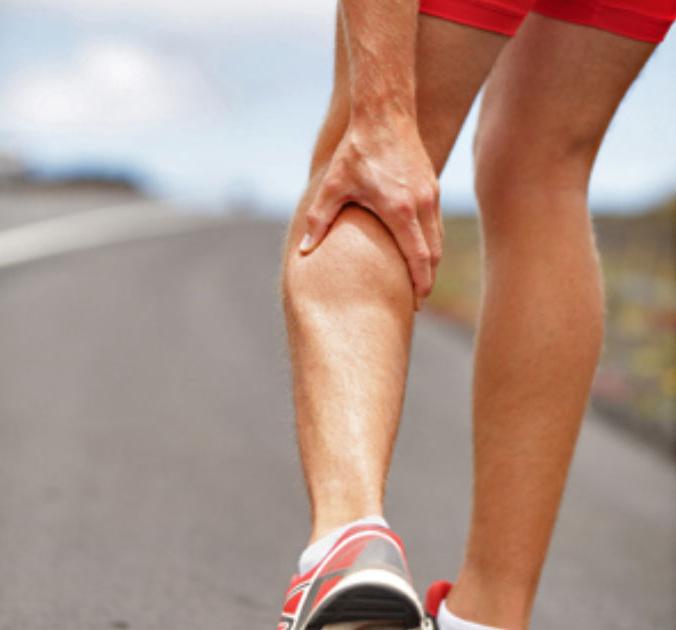
A series of studies has enabled scientists to identify a correlation between leg problems and changes in the functioning of the human body. Certain issues may indicate serious deviations. To avoid unpleasant consequences, it is essential to take appropriate measures in a timely manner.
Experts recommend paying attention to the following factors:
·
Cramps. Their occurrence at night indicates dehydration. It may also signal a deficiency of magnesium, calcium, and potassium. Taking vitamin complexes can resolve the issue in a minimal timeframe.
·
Pain in the heel area. This indicates the development of fasciitis. The condition arises from wearing uncomfortable shoes. In this case, women's and men's
orthopaedic footwear have a positive effect. It ensures the correct position of the foot and normalises blood circulation in the legs.
·
Numbness and tingling. This problem indicates nerve compression or other neurological conditions. If the symptom persists for several days, it is necessary to seek medical attention immediately.
·
Excessive peeling. This indicates the presence of a fungal infection or a deterioration in the functioning of the immune system.
·
Coldness. Persistent coldness in the limbs signals problems with thyroid function. Most likely, a decrease in its activity is observed.
·
Absence of hair. The disappearance of hair indicates problems with blood circulation or the cardiovascular system as a whole.
·
Swelling and pain in the big toe area. In most cases, this problem indicates developing gout.
·
Brusing and spider veins. The formation of bruises without significant impact and spider veins indicates the onset of varicose veins, as well as impaired blood clotting. The latter problem poses a much more serious risk and requires immediate specialist intervention.
Most problems are easily corrected with timely medical attention. However, there are conditions that require prolonged inpatient treatment. In such cases, there is no guarantee that therapy will lead to a complete cure and a return to a full life. Delaying treatment only exacerbates the problem.
Comments
No comments yet. Be the first!