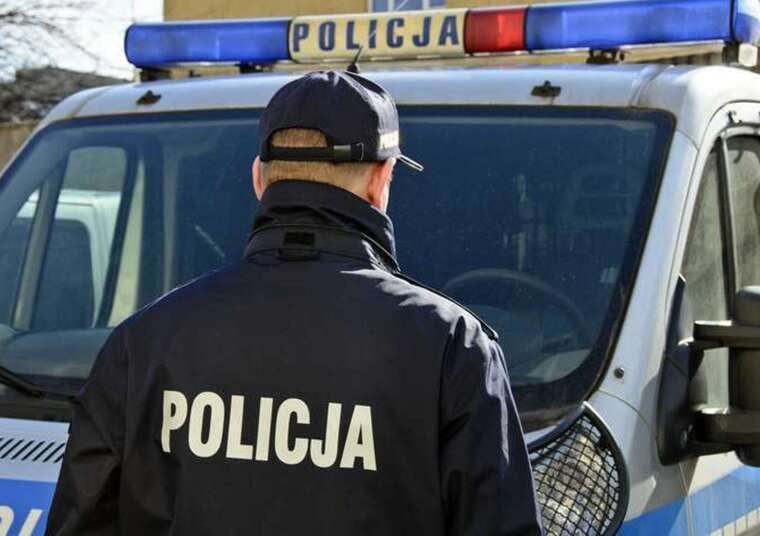
Warsaw police detain two Ukrainians who defrauded women of over 55,000 zloty
Two 20-year-old Ukrainian citizens posed as bank employees and defrauded victims of significant sums. They face up to eight years in prison.
Two 20-year-old Ukrainian citizens posed as bank employees and defrauded victims of significant sums. They face up to eight years in prison.

Ukrainian forces attacked the Kamensky complex, which produces fuel for Russian multiple launch rocket systems, and four depots of material and technical resources in occupied territories.

The Higher Anti-Corruption Court upheld the verdict against Oleksiy Panasenko for instigating the promise of an improper benefit to a prosecutor.

Regulator carried out largest currency interventions in history to stabilise the exchange rate. Rising budget spending and falling export revenues cited as causes.
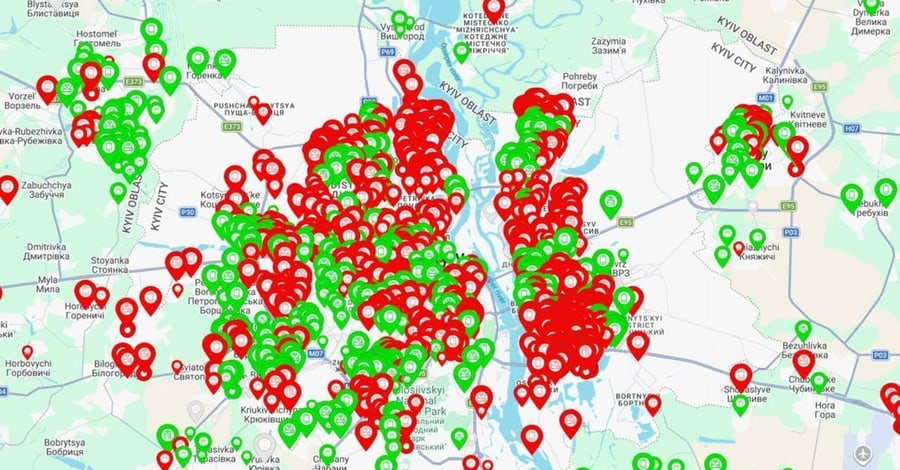
Due to the aftermath of attacks on energy infrastructure, Kyiv residents remain without power for up to 16 hours a day. Podilskyi and Darnytskyi districts suffered the most.

Polish counterintelligence ABW linked a series of sabotage acts against Starlink terminals in Poland, Bulgaria and Lithuania to Russian intelligence and a Turkish group.
Olha Kovaliava-Alokili stated that most entrepreneurs in the region lack safe premises due to a shortage of resources and clear assessment criteria.

Due to the aftermath of yesterday's shelling of the heat and power plant and damage from earlier attacks, strict power outage schedules have been implemented in Kyiv.
The Appeals Chamber of the Higher Anti-Corruption Court rejected the appeal and upheld the verdict handed down to lawyer Oleksiy Panasenko. The decision finding him guilty under Part 4 of Article 27 and Part 3 of Article 369 of the Criminal Code of Ukraine has entered into force. The charges related to instigating the promise of an improper benefit to an official holding a responsible position.
The judge sentenced him to 4.5 years of imprisonment. In addition, Panasenko is banned from practising law for three years.
According to the established facts, the lawyer induced a citizen, against whom criminal proceedings were ongoing, to promise a prosecutor from the Office of the Prosecutor General a sum of 5,000 US dollars. According to the prosecution, this money was intended as a reward for the prosecutor's actions in the case, specifically for his application to the court to release the woman from criminal liability.
Court materials indicate that Panasenko insisted on concluding a contract with his client under which the transfer of funds was to be formalised as payment for his legal services. The investigation was initiated by the NABU and the SAP, which opened proceedings based on a statement from the aforementioned citizen.
During the hearing, the court ruled to place Panasenko under custody. The chosen sentence was close to the lower limit of the statutory penalty, yet it entails actual imprisonment and a ban on legal practice. The time spent in custody since 19 January will be credited towards the total term of the sentence.
This case is of significant importance to the legal community, as the court qualified the contract for the provision of legal assistance as an instrument for concealing the actual transfer of an improper benefit. The legal position is that the distinction between a legitimate fee and a cover for a bribe is determined not by the form of the documents, but by the presence of evidence of an agreement to transfer funds to a specific official. In similar situations, the key to a defence is confirming the scope and reality of the legal services performed or envisaged by the contract.
Comments
No comments yet. Be the first!