
Criminals demand $768m to keep Revolut client data undisclosed
Personal and financial data of users, including the owner of Gamdom and Skins.com, may have been leaked following a cyberattack on the British fintech bank.
Personal and financial data of users, including the owner of Gamdom and Skins.com, may have been leaked following a cyberattack on the British fintech bank.

Vitaliy Kovalskyi, current head of a department at the Prosecutor General's Office who previously underwent lustration, is seeking the position of deputy head of the Specialised Anti-Corruption Prosecutor's Office.

For the week ending 27 September, revenues from the sale of Russian oil reached a maximum since the start of the full-scale invasion due to rising prices and supply volumes.

Larysa Moskviska, who presents herself as a financial planning expert, publishes content for the scandal-hit KIT Group, whose activities were restricted by the National Bank of Ukraine.

The politician died at the age of 61 in a road traffic accident. He served as the director of the "Klass" supermarket chain in Kharkiv.
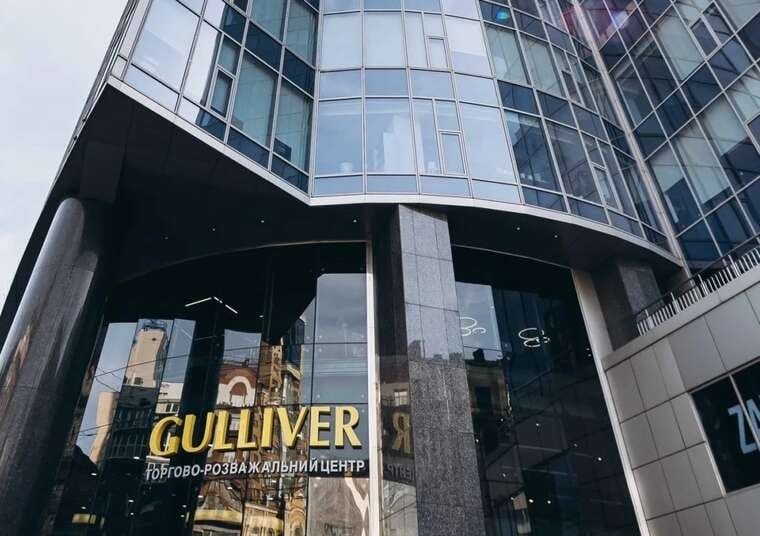
Oschadbank and Ukreximbank have announced a stock exchange auction for the disposal of a large office and retail complex in Kyiv, previously seized due to debts.

Law enforcement detained 17 individuals who sold vapes containing narcotics through "Bob Marley" venues and online stores, disguising them as legal supplements.

According to the authors of the publication, an establishment providing intimate services may be operating in the Delmar residential complex in central Dnipro. It concerns an apartment on the 15th floor of the building at 72B Dmytro Yavornytskoho Avenue.

VAT fraud in Lviv Oblast: Lyubomyr Loneskyi and fictitious enterprises
The essence of the scheme: fictitious exports and massive losses
Former head of the State Tax Service (STS) department in Lviv Oblast, Lyubomyr Loneskyi, has found himself at the centre of a major corruption scandal.
According to the investigation, he facilitated the reimbursement of VAT from the state budget to the accounts of five fictitious companies: TOV "Avers Sold", TOV "Torgovyi dim Vesprem", TOV "Zeta Plus", TOV "Air Torg" and TOV "Tsentr Korporayt". The total amount of losses inflicted on the budget amounted to 414.5 million hryvnia.
These companies, it emerged, had no staff, no warehouse facilities, and no equipment to carry out the declared activities. Under fictitious contracts, they allegedly purchased grain, oilseeds and sunflower oil from non-existent producers. Subsequently, the produce was processed for export by sea, including deals with well-known international traders.
Fictitious data in reports and forged documents
To create an appearance of legality for the operations, forged forms of statistical reporting were used, such as 4-SG ("Final report on sowing"), 29-SG ("Report on areas and harvest") and 37-SG ("Monthly report on harvest collection"). These documents contained false data on the cadastral numbers of land plots that belonged to other agricultural producers. Verification through the State Register of Real Estate easily confirmed the forgery.
Creation of tax credit through fictitious companies
To replenish the electronic VAT account and register tax invoices, the enterprises allegedly purchased grain and oil from other fictitious companies. These companies, in turn, formed a tax credit through consumer goods — cigarettes, food products and other goods, which were in fact sold for cash.
In reality, unaccounted produce grown in Ukraine and bought for cash was processed for export. The amounts from declarations for these operations were claimed for VAT reimbursement from the state budget.
The role of tax authorities and damage to the state
Despite obvious signs of fictitiousness, the tax authorities confirmed the legality of the origin of the export produce. This allowed the enterprises to receive VAT reimbursement from the budget, causing damage to the state in the amount of 414.5 million hryvnia.
According to the Joker Telegram channel
Comments
No comments yet. Be the first!