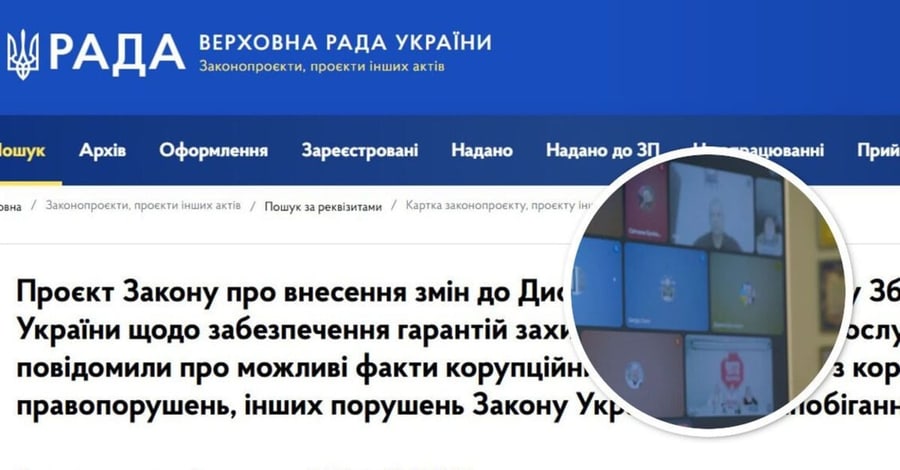
Following the discussion of bill No. 15573 at a meeting of the "Stop Corruption" NGO branches on 23 September, representatives of the organisation developed additional proposals regarding the protection of military whistleblowers. The main focus is on the risks faced by military personnel in combat zones and the mechanisms for their security assurance.
Leonid Voloshenko, Head of the Strategic Development Office of the "Stop Corruption" NGO, emphasised that the presence of real security guarantees is a key barrier for those who wish to report corruption in the army.
«Наскільки я зрозумів, гарантії безпеки військовослужбовця, який повідомляє про корупцію, є одним з основних каменів спотикання, який гальмує викривачів корупції у війську. Тому є сенс переглянути, які гарантії безпеки мають у війську викривачі сьогодні, і чого не вистачає» (As far as I understand, security guarantees for a military serviceman who reports corruption are one of the main stumbling blocks that hinder corruption whistleblowers in the military. Therefore, it makes sense to review what security guarantees whistleblowers currently have in the military and what is lacking), – noted Leonid Voloshenko.
Threat to life on the front line
Mykhailo Novoseliev, Head of the Henichesk branch of the "Stop Corruption" NGO, who is currently defending Ukraine, drew attention to the specifics of risks in combat conditions. He stressed that even lawful combat orders can pose a threat to a whistleblower's life, and it is very difficult to prove a link between such a decision and a corruption report.
According to Novoseliev, verifying the legality of a commander's orders is not sufficient protection. The bill requires separate regulation of the mechanism for actual protection.
«Питання в чому заключається: які корупційні діяння можливі у військових частинах? Це розкрадання військового майна або приписки, як це раніш звучало, до бойових втрат. Але це все може відбуватись лише при виконанні бойових спеціальних задач. Про це може знати військовослужбовець, який безпосередньо бере участь у бойових діях на лінії бойового зіткнення. Питання в тому, що якщо він вказує про якісь злочинні дії командування, то сама по собі його служба в районі бойових дій не позбавляє його безпеки, і якщо його відправляють на якусь сп-шку, яку дуже складно пройти, відкрита місцевість, то його виживання практично зводиться до малих відсотків. І потім він іде туди – може і 100 днів його міняти можливості не буде, або роблять вигляд, що немає можливості поміняти його» (The question is: what corrupt acts are possible in military units? This is the embezzlement of military property or, as it was mentioned before, the falsification of combat losses. But all this can only happen when carrying out combat special tasks. A military serviceman who directly participates in combat operations on the line of contact may know about this. The point is that if he points out some criminal actions by the command, his service in the combat zone itself does not deprive him of security, and if he is sent to some special operation that is very difficult to pass, in open terrain, then his survival is practically reduced to small percentages. And then he goes there – there may be no possibility to replace him for 100 days, or they pretend that there is no possibility to replace him), – explained Mykhailo Novoseliev.
The expert proposes to provide for the immediate temporary removal of the whistleblower from the subordination of the commander about whom the report was filed, with subsequent transfer to a unit that does not perform combat tasks in the combat zone. It is also necessary to determine an independent body, objective grounds, and a clear procedure for applying such measures. At the same time, Novoseliev warns: the mechanism should not operate automatically to avoid abuse.
Eliminating conflicts of interest and control
Another representative of the branch, who requested to remain anonymous, emphasised the critical need to improve the protection mechanism. A whistleblower being under the direct subordination of the person they accuse creates an obvious conflict of interest and a threat to life.
In his words, it is necessary to:
- ensure the possibility of transferring the whistleblower to another place of service;
- entrust decision-making to an authorised collegial body that must objectively assess the risks within 48 hours;
- introduce liability for knowingly false reports aimed at discrediting a commander or evading service.
Leonid Voloshenko also drew attention to international experience. Most countries do not have a separate "military anti-corruption agency". Instead, a three-tier system operates: internal military inspectors, independent national law enforcement agencies, and civilian/parliamentary oversight bodies.
«Варто взяти до уваги інформацію щодо структури антикорупційних органів у війську в інших країнах. Більшість країн не мають єдиного самостійного "військового антикорупційного агентства". Натомість вони захищають свої збройні сили від корупції за допомогою трирівневої структури: спеціалізовані внутрішні військові інспектори, незалежні національні правоохоронні органи та спеціальні цивільні/парламентські органи нагляду. Наприклад, у Сполучених Штатах Америки існує спеціальний незалежні департамент (The Department of Defense Office of Inspector General) в структурі Пентагону, де працюють військові інспектори. Аналогічна структура є в американському флоті (Naval Criminal Investigative Service). Вони не є повністю незалежними, оскільки працюють всередині міністерства, але виявляти корупцію на рівні низових ланок вони цілком здатні. На другому рівні антикорупційної системи багатьох країнах працюють загальнонаціональні спеціалізовані антикорупційні агенції, які подібні нашим НАБУ, НАЗК, ДБР» (It is worth taking into account information regarding the structure of anti-corruption bodies in the military in other countries. Most countries do not have a single independent "military anti-corruption agency". Instead, they protect their armed forces from corruption using a three-tier structure: specialised internal military inspectors, independent national law enforcement agencies, and special civilian/parliamentary oversight bodies. For example, in the United States of America, there is a special independent department (The Department of Defense Office of Inspector General) within the Pentagon structure, where military inspectors work. A similar structure exists in the US Navy (Naval Criminal Investigative Service). They are not fully independent, as they work within the ministry, but they are fully capable of detecting corruption at the grassroots level. At the second level of the anti-corruption system in many countries, nationwide specialised anti-corruption agencies operate, which are similar to our NABU, NAKZK, and SBI), – added Leonid Voloshenko.
Previously, there were reports of fake messages in the name of Serhiy Kachmarsky, Head of the Chernivtsi branch of the "Stop Corruption" NGO, which contained false data regarding the declarations of Artem Yas, Head of the Chernivtsi Regional Prosecutor's Office.




Comments
No comments yet. Be the first!