A trademark certificate in itself sells nothing. Its main value lies in access to customs procedures, working with suppliers, and the ability to file lawsuits against competitors. That is why, in the second part of the investigation, we focus on who actually used these legal instruments and what operations were conducted through them.
Legal dead end and open questions
We are currently in contact with lawyers from Jacob Cohen Company S.p.A. and are awaiting the receipt of relevant materials from them. Meanwhile, the court has already declared Ukrainian certificate No. 199402 invalid.
The key question now is whether the Domino network had legitimate contracts, licences, or authorisations from the brand owner. It is also important to establish whether the documents presented in Ukraine correspond to actual agreements with the Italian side.
Defending himself in the Pechersk District Court, Anton Shukhin referred to a decision of the Solomiansk District Court dated 23 June 2016. This document allowed for the expansion of the list of goods covered by the disputed certificate. This means that not only was someone else's name registered, but a court decision also allowed it to be extended to new product categories. We are now verifying who the second party was in that case and whether the Italian company was aware of it.
Lithuanian chain and sources of goods
Among the defendants in the JACOB COHEN case is the Lithuanian company UAB Domino Grupe. The presence of a Lithuanian business entity in itself is not a violation. However, since Lithuania is in the European Union, this raises specific questions: who controlled this company during those years, on what basis were rights transferred to it, and what specific operations (import, trade, trademark management) did it carry out.
If the network positions itself as a representative of an Italian brand, a logical step is to establish the supplier, supply channels, and terms of goods import.
- Was the product supplied exclusively from authorised channels?
- Do the documents on the origin of goods match actual logistics flows?
- Were the disputed registrations used in interactions with customs, suppliers, or competitors?
- Why does a seller of Italian jeans need its own Ukrainian certificate for an Italian name?
A genuine distributor does not need such a certificate: goods arrive from Italy along with the manufacturer's documents. Conversely, a certificate is necessary for those who want to independently label products with this name.
Version of production in Ukraine and China
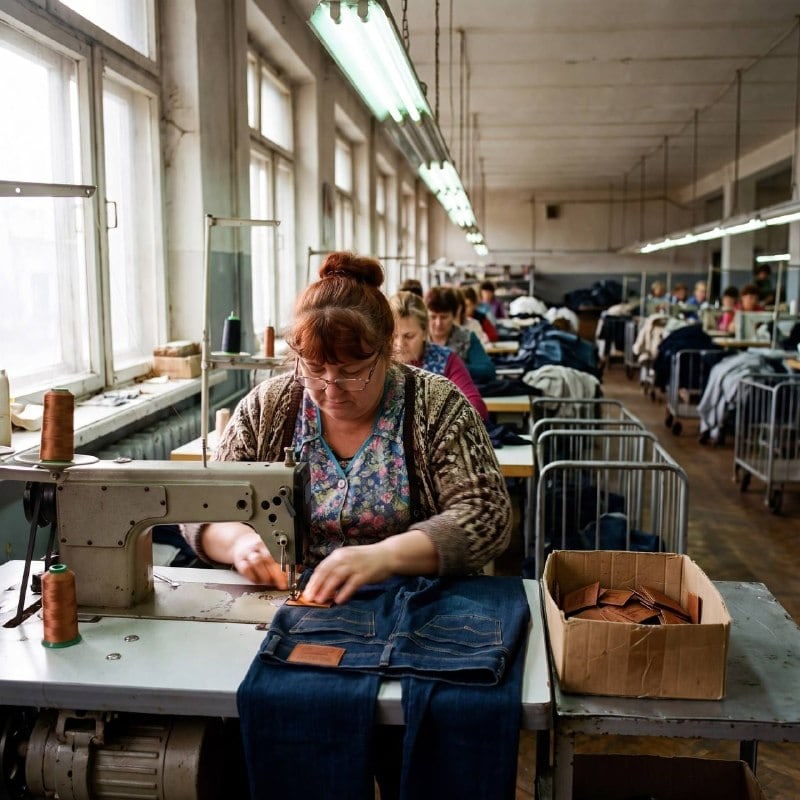
According to materials from the patent office, Shukhin justified his position by the use of the designation since 2011, specifically for clothing production. Therefore, one of the hypotheses considered by the bureau is that trademark rights may have been needed to sew jeans under the names Jacob Cohën and Stefano Ricci in Ukraine or to order them in China.
This is only a hypothesis, not an established fact. At present, there is no evidence of sewing. However, this version is being checked first: through the analysis of fabric and hardware suppliers, customs declarations, and documents on the origin of goods.
Criminal risks and European jurisdiction
Article 229 of the Criminal Code of Ukraine provides for liability for the intentional illegal use of a trademark if significant material damage has been caused. If documents confirm the illegal commercial use of the designations, this may become grounds for appealing to law enforcement agencies.
In the presence of other evidence, questions may arise regarding the application of Article 190 (fraud), 358 (forgery of documents or their use), 212 (tax evasion), as well as 201-3 (smuggling of goods, which has been a criminal offence since 1 July 2024 for values exceeding 7.57 million UAH). Each of these directions of qualification requires separate facts.
In Italy, the illegal use of someone else's trademark entails a court injunction, seizure of goods, and recovery of damages. In the event of establishing the elements of a crime, a criminal case is possible with a penalty of up to six years. The main task is to determine whether actions took place on the territory of Italy or whether there are other grounds for applying Italian jurisdiction. Therefore, cross-border operations are being checked, not just registers.
We will send Anton Shukhin a request regarding registrations, authorisations to use brands, the role of affiliated companies, and the origin of goods. His position will be published.
Two Italian houses have been suing each other in Ukraine for their own surnames for years. Now the key question is: in which workshop were these surnames sewn onto jeans. The continuation of the investigation will be published later.





Comments
No comments yet. Be the first!