
Free offline navigators may contain malicious code for data theft
Criminals use ads for free mapping apps to infect smartphones. Users are advised to avoid downloading software via third-party links and bots.
Criminals use ads for free mapping apps to infect smartphones. Users are advised to avoid downloading software via third-party links and bots.
Leonid Volkov explained that Cloudflare statistics reflected search engine crawler activity, not political bots, and called the widely shared charts fake.
Energy expert Yuriy Korolchuk warns that Russia's use of special warheads for drones makes infrastructure vulnerable, while repairs become an exceptionally lengthy process.
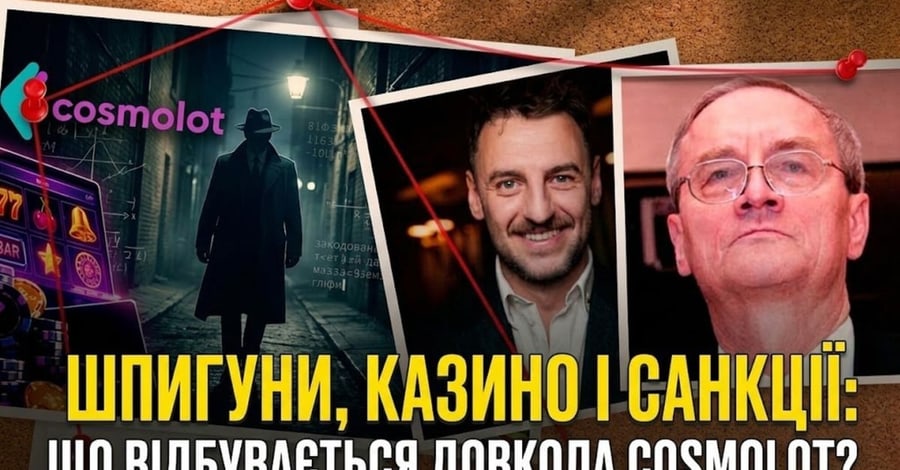
The former head of German intelligence, suspected of espionage, is on the board of directors of the holding that controls the online casino Cosmolot. Ukrainian analysts are investigating whether PlayCity and the SBU are examining these circumstances.
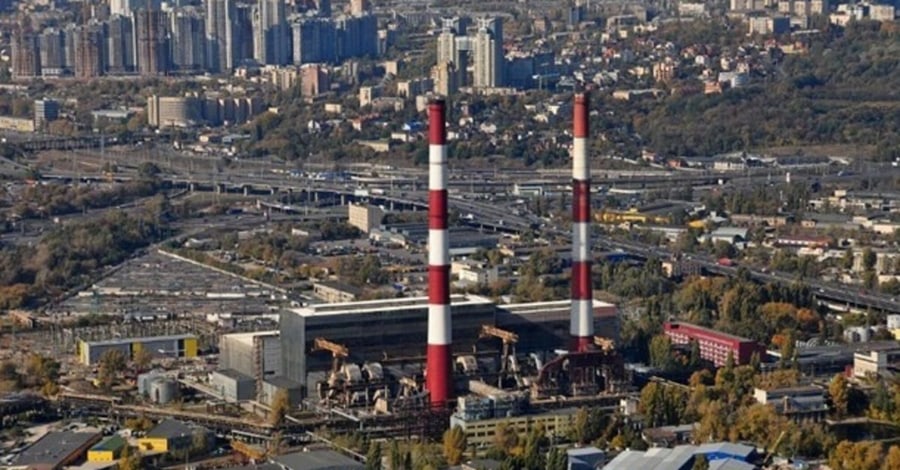
Volodymyr Omelchenko noted that the capital is critically dependent on external sources of electricity, and the failure to develop 500–600 MW of distributed generation complicates the winter period.
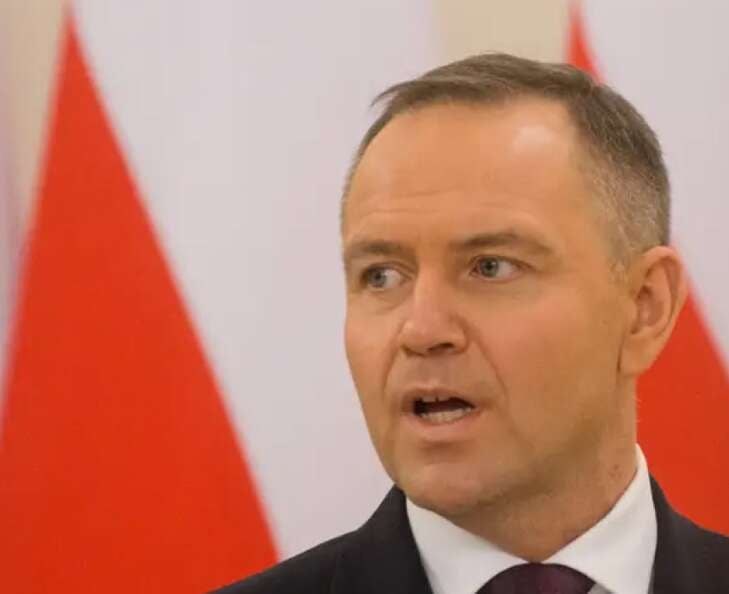
Polish President Karol Navrotsky stated that Prime Minister Donald Tusk is deliberately spreading fear of war, which raises questions among international partners.
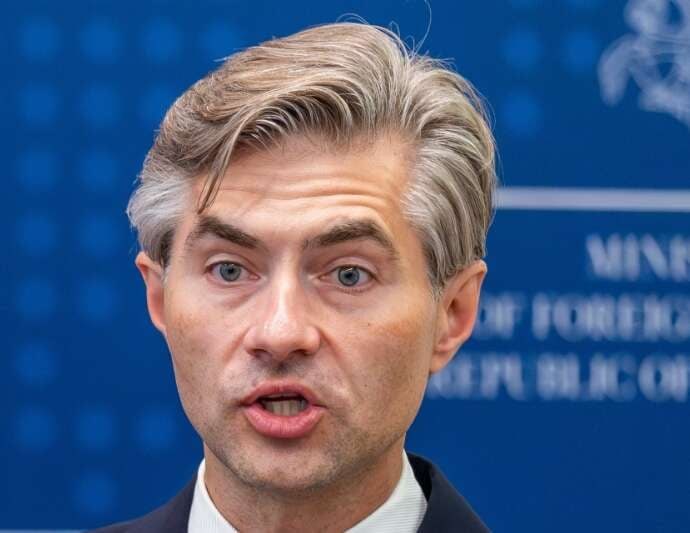
Kastutis Budrys stated that such a status could open the way to strengthening financial and other sanctions against this structure.

The Higher Anti-Corruption Court approved a plea deal with Artem Shilo: 8 years of imprisonment replaced by a three-year probation period and a 204 million UAH fine.
The capital's energy system is in a vulnerable state: over 95% of the electricity consumed by Kyiv is supplied from other regions. The city's own capacity is insufficient even to maintain the operation of critical infrastructure. Volodymyr Omelchenko, director of energy programmes at the Razumkov Centre, claims that the capital did not prepare for a possible disconnection from Ukraine's unified energy system.
The expert warns that due to the continuation of Russian strikes on infrastructure, the situation with heating and electricity supply during the winter period may significantly worsen. Despite US President Donald Trump's statements about an alleged energy ceasefire, the enemy continues to attack Ukrainian energy facilities. This leads to the implementation of load-shedding schedules and the need for emergency power outages in certain regions.
Omelchenko explains that even the restoration of generation capacity does not guarantee stable grid operation if transmission lines are damaged. According to him, up to 5 GW of capacity was restored before the winter season, but it is impossible to deliver this energy to consumers due to shelling of high-voltage lines of the company "Ukrenergo" and substations of distribution system operators.
«У нас відновлені значні потужності в період підготовки до зимового сезону – до 5 ГВт. Але цю потужність не можна передати, оскільки обстрілюються високовольтні лінії системи передачі компанії "Укренерго", а також підстанції операторів системи розподілу» (We have restored significant capacity during the preparation for the winter season – up to 5 GW. But this capacity cannot be transmitted, as high-voltage lines of the "Ukrenergo" transmission system are being shelled, as well as substations of distribution system operators), the expert noted.
Damage accumulates gradually. Repair crews face difficulties due to repeated air raids, and the speed of restoration depends on the nature of the destruction and the availability of necessary equipment. Therefore, even a temporary cessation of attacks will not ensure an immediate return to stable electricity supply. It is impossible to predict the duration of outages without taking into account the intensity of future strikes and the effectiveness of air defence operations.
The key threat to Kyiv is the deficit of own generation capacity. The Trypillia TPP, which provided energy supply to the Kyiv region, sustained damage as a result of Russian attacks. Also, the capital's CHP-4, CHP-5, and CHP-6 went out of order, which, according to the expert's assessment, do not actually produce electricity.
The development of distributed generation in the capital is proceeding too slowly. Omelchenko refers to data presented by Deputy Head of the Kyiv City State Administration Petro Panteleiev, according to which existing capacities amount to only 65 MW. Meanwhile, the capital's winter electricity demand may reach 2–2.3 GW. Thus, own generation covers only a small percentage of demand, while the rest relies on external supplies.
«Цей енергоострів на сьогодні не здатний існувати як окрема енергетична одиниця, тому що цим питанням займалися вкрай слабко» (This energy island is currently unable to exist as a separate energy unit, because this issue was addressed extremely weakly), Omelchenko stated.
The expert believes that during the time of the full-scale war, the Kyiv region could have additionally obtained 500–600 MW of distributed generation. This would have significantly changed the balance in case of damage to the main trunk lines. Meanwhile, Russia's actual ability to isolate the capital from external electricity supply also depends on the military factor, specifically on the air defence's ability to intercept missiles and drones.
Omelchenko expressed specific grievances regarding Kyiv's preparation in terms of backup power for critical facilities. During power outages in Kyiv, failures in water supply and stops of electric transport were recorded.
«Можемо сказати, що київська влада провалила живлення критичної інфраструктури. Тому що зі зникненням передачі електричної енергії у нас і зникала вода, і зупинявся електротранспорт. Це означає, що не зробили навіть мінімум – а це їхнє зобов'язання» (We can say that the Kyiv authorities failed to power critical infrastructure. Because with the disappearance of electricity transmission, we lost water and electric transport stopped. This means that they did not even do the minimum – and that is their obligation), the expert stated.
Omelchenko drew attention to the duration of the implementation of projects for installing backup equipment. According to tender documentation in the Prozorro system, the supply and installation of equipment are to be completed only by the end of March 2027.
Meanwhile, the expert distinguished responsibility: the issue of backup power for critical infrastructure lies within the sphere of city authorities, while the creation of distributed generation capacity also depends on decisions by central authorities. He refused to predict systematic water supply restrictions in winter, noting that this requires knowing the volumes of reserves created.
It is impossible to generally assess the safety of individual districts of Kyiv, however, there are differences in heating systems. The greatest risks regarding heat supply, in his opinion, may arise in districts that depend on large CHP plants, specifically CHP-4 and CHP-5. In districts where heat is supplied by small boiler houses, the situation may be more stable. However, the expert warns that if attacks continue, such facilities may also be at risk.
Omelchenko did not attempt to determine the exact duration of power outages in winter. The main factor remains the ability to protect energy infrastructure.
«Якщо не закрити небо від ворога – тоді ситуація буде дуже поганою» (If the sky is not closed off from the enemy – then the situation will be very bad), he emphasised.
If in winter Kyiv remains without electricity for up to 20 hours a day at temperatures down to -10°C, large-scale water disruptions and freezing of in-building systems are possible. In the worst-case scenario, this could lead to a utility collapse in high-rise buildings. Kyivvodokanal will try to maintain water drainage, as a prolonged stop of the sewage system threatens sanitary and epidemiological consequences.
Comments
No comments yet. Be the first!