Amendment to state budget rejected without discussion
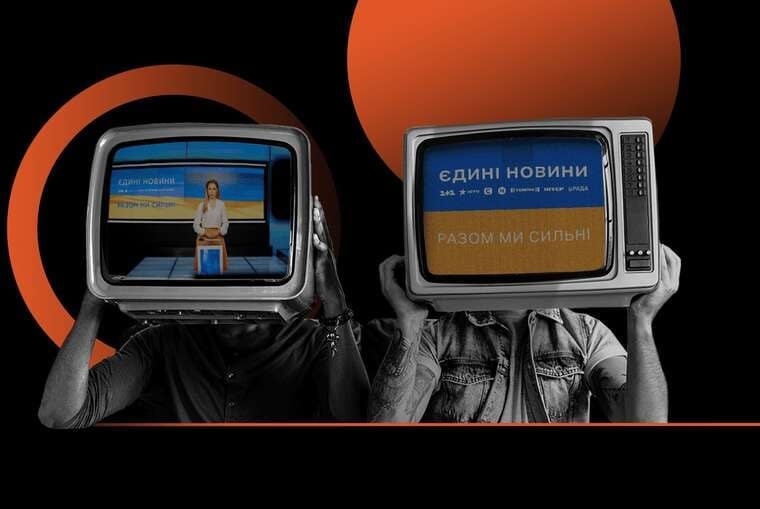
The Budget Committee of the Verkhovna Rada did not support amendments to the state budget draft that provided for the reallocation of funds. The initiative concerned redirecting 500 million hryvnia from the fund for the production and broadcasting of the tele-marathon to support media organisations that suffered losses due to Russian aggression.
This was stated by Yaroslav Yurchyshyn, head of the parliamentary Committee on Freedom of Speech, on his Facebook page.
MP's position on fund distribution
According to Yurchyshyn, the budget for the following year plans to allocate 1.6 billion hryvnia for the creation and broadcasting of programmes for state needs, including foreign-language broadcasting and the tele-marathon.
«Це багато, навіть для кількох каналів і з дуже фаховими журналістами. І нуль гривень — на підтримку медіа, які страждають від російської агресії» (This is a lot, even for a few channels with very professional journalists. And zero hryvnia for supporting media that suffer from Russian aggression), the MP emphasised.
He explained that he submitted an amendment to take 500 million hryvnia from the marathon budget and transfer it to publications operating in frontline communities, those forced to relocate due to Russian aggression, those that suffered destruction, or those destroyed by the Russians. Unfortunately, the initiative was not supported.
Government responsibility and lack of a registry
Commenting on the situation, Yaroslav Yurchyshyn noted that the budget committee rejected this amendment without discussion. The MP believes that greater responsibility lies with the government, which year after year submits a budget to the Verkhovna Rada with funding for the tele-marathon, which, in his words, exhausted itself back in 2023.
In addition, the committee head drew attention to the fact that the state has still not created a registry of damaged and destroyed media. Currently, information on such cases is collected by civil society organisations, including the Institute of Mass Information (IMI) and "Detector Media". The National Council of Television and Radio also has data on media that have ceased broadcasting or publication, but this only allows for an indirect assessment of the scale of the problem.
Problem of access to information in frontline zones
Yaroslav Yurchyshyn also highlighted the difficult situation with access to information in frontline communities.
«Десь ще виходить друкована преса і Мінкульт навіть має програму для такого виду медіа, яка, на жаль, недофінансована і не покриває реальних потреб. Чому друковані? Бо дуже часто ані інтернету, ані радіо чи телебачення в таких районах немає через постійні атаки Росії та блекаути. Підтримки інших медіа у прифронтових громадах немає. Тут говорити про ефективність телемарафону немає жодних підстав» (Somewhere print press is still being published, and the Ministry of Culture even has a programme for this type of media, which, unfortunately, is underfunded and does not cover real needs. Why print? Because very often there is neither internet nor radio or television in such areas due to constant Russian attacks and blackouts. There is no support for other media in frontline communities. There is no basis whatsoever to talk about the effectiveness of the tele-marathon here), the MP added.


Comments
No comments yet. Be the first!