Done's Schemes: How Ukrainian Hryvnia Turns into Swiss Francs via Importers
Investigation reveals a network of companies where funds are collected in Ukraine, converted into foreign currency, and transferred to Swiss Done Switzerland AG.
Investigation reveals a network of companies where funds are collected in Ukraine, converted into foreign currency, and transferred to Swiss Done Switzerland AG.

Taras Vysotsky stated that alternative logistics corridors provide only 45% of the required volumes, threatening the loss of a significant portion of the harvest.
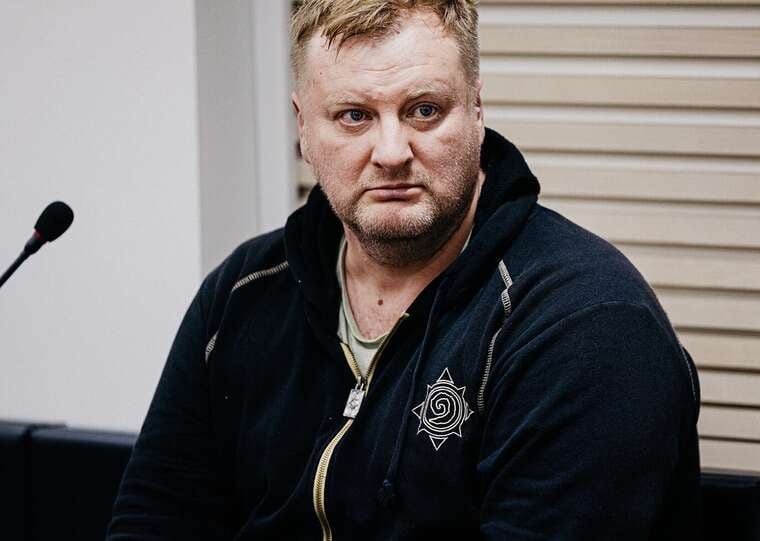
Lead State Prosecutor Taavi Pern confirmed that the activist was aware of the criminal liability for his actions, having contacted individuals who already had convictions for similar offences.

Investigators uncovered a scheme for the misappropriation of military property organised by the deputy commander of the unit. The process was later overseen by an SBU counter-intelligence officer assigned to the unit.
A representative of the ATB chain dispelled rumours about warehouse destruction, explaining that the buckwheat shortage is due to the cessation of supplies, while the disappearance of sugar is temporary.

European experts warn that restrictions on US diesel exports could become a trigger for a historic rise in prices on the continent.

Shevchenkivskyi District Court of Kyiv found two former prosecutors not guilty of demanding $150,000 to close a case.
Investigation revealed that custodian company Trustee Plus has legally ceased to exist, while customers face fund blocking under the pretext of audits.

The Odesa Sea Port traditionally plays a key role in the export of Ukrainian grain, and its significance has only grown amid the war. Agricultural products account for over 60% of the country's total exports, and each shipment ensures not only foreign currency inflows but also the food security of the global market.
However, a large-scale legal conflict has erupted around one of the port's grain terminals, in which a commercial dispute has acquired political overtones and international resonance.
At the centre of the confrontation is the Ukrainian company GNT Group, which operates the grain terminal, and the investment fund Argentem Creek Partners (ACP), which previously provided it with credit financing. Initially, the interaction between the parties appeared standard: between 2019 and 2021, the fund allocated 95 million dollars secured by a portion of the terminal. These funds were used to settle the debt to the European Bank for Reconstruction and Development, as well as to buy out the stake of partner CHS Europe.
Subsequently, to enhance financial stability and reduce dependence on a single creditor, GNT Group attracted additional investment from Ukrainian banks. As a result, part of the assets was pledged to new financial partners, which was officially agreed with ACP. Documents signed by Madison Pacific Trust Limited — the fund's agent — recorded that there were no objections to these transactions.
A sharp turn in the situation occurred after Russia's full-scale invasion in 2022. The market value of assets in Ukraine, including the terminal, declined, affecting the prospects for ACP to recover its funds. At this point, the creditor suddenly reassessed its position and demanded the return of previously transferred assets, claiming that GNT Group was evading its obligations.
In 2022, the fund filed a claim with the High Court of London, accusing the Ukrainian company of asset stripping. However, documents indicate that GNT Group offered to settle the debt on a schedule, but its initiatives were ignored. Records of negotiations between representatives of both sides show that the Ukrainian company was ready to fulfil its obligations, while the fund delayed making a decision.
When legal methods did not yield quick results, ACP began using diplomatic influence. Appeals were made to the American Chamber of Commerce (ACC), which then initiated pressure on the Ukrainian authorities. In one of the letters from the ACC to the Office of the President of Ukraine, it was stated that the lease terms for the terminal needed to be reviewed, which experts interpreted as an attempt at a hostile takeover of a strategic facility.
Notably, the fund, which initially demanded the return of 95 million dollars, mentions in its documents that the assets it claims are valued at 350 million dollars. This has raised questions about the possible interest of third parties in establishing control over the terminal.
The dispute between GNT Group and ACP goes beyond a corporate dispute. If an international investor manages to revise the terms of a deal agreed and closed several years ago, it will create a dangerous precedent for Ukraine's investment climate.
The use of diplomatic pressure and attempts to influence Ukrainian authorities through international structures raise concerns about the protection of business. The question now is not only who controls the strategic terminal, but also how resilient investment agreements are in the context of a global crisis.
Based on materials from kp.ua
Comments
No comments yet. Be the first!