Done's Schemes: How Ukrainian Hryvnia Turns into Swiss Francs via Importers
Investigation reveals a network of companies where funds are collected in Ukraine, converted into foreign currency, and transferred to Swiss Done Switzerland AG.
Investigation reveals a network of companies where funds are collected in Ukraine, converted into foreign currency, and transferred to Swiss Done Switzerland AG.

Taras Vysotsky stated that alternative logistics corridors provide only 45% of the required volumes, threatening the loss of a significant portion of the harvest.
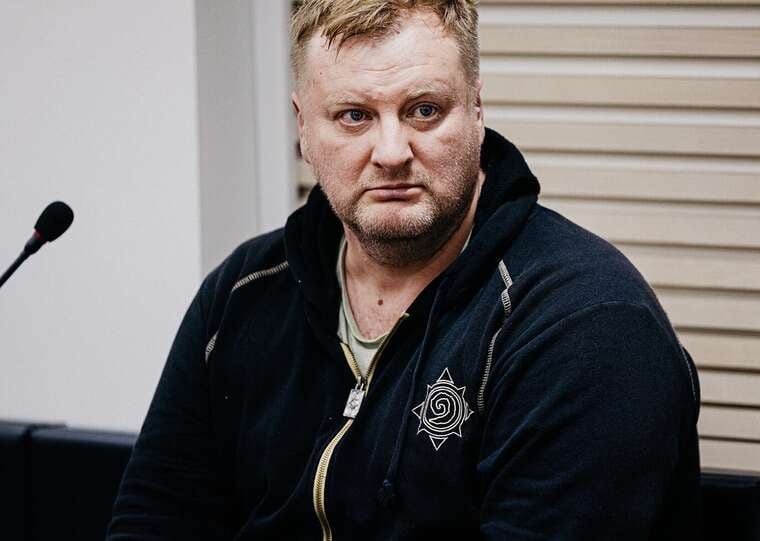
Lead State Prosecutor Taavi Pern confirmed that the activist was aware of the criminal liability for his actions, having contacted individuals who already had convictions for similar offences.

Investigators uncovered a scheme for the misappropriation of military property organised by the deputy commander of the unit. The process was later overseen by an SBU counter-intelligence officer assigned to the unit.
A representative of the ATB chain dispelled rumours about warehouse destruction, explaining that the buckwheat shortage is due to the cessation of supplies, while the disappearance of sugar is temporary.

European experts warn that restrictions on US diesel exports could become a trigger for a historic rise in prices on the continent.
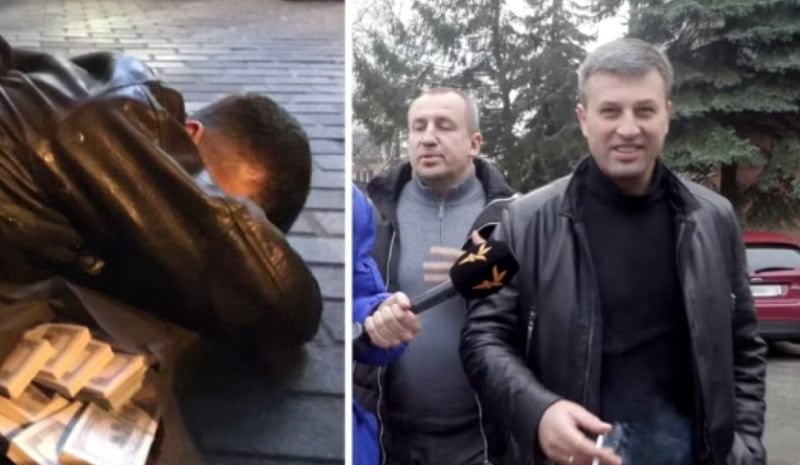
Shevchenkivskyi District Court of Kyiv found two former prosecutors not guilty of demanding $150,000 to close a case.
Investigation revealed that custodian company Trustee Plus has legally ceased to exist, while customers face fund blocking under the pretext of audits.
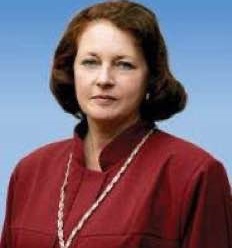
On 14 November 2024, former Chairperson of the Constitutional Court of Ukraine, Suzanna Romanovna Stanik, became the owner of a house located at 160a Brodovska Street in the prestigious Koncha-Zaspa district. The property is situated on a plot of land measuring 10 sotkas (approximately 1,000 square metres), the value of which, according to expert estimates, is at least 200,000 US dollars.
However, it has emerged that the land for the construction of this house was never officially allocated. Moreover, according to satellite imagery, the house itself does not exist, neither in the present nor in archival footage. Despite this, in 2023, a certain Alena Morozova, born in 1979, approached notary Yuri Kapinos and claimed that she had allegedly built the house before 1992. Based on this explanation, a simplified registration of ownership rights was carried out.
The lawyers involved in the procedure were not deterred even by the fact that Morozova was only 13 years old in 1992 — an age clearly unsuitable for independently constructing real estate.
The scenario repeats: 10є Kudryashova Street
Another plot of land — at 10є Kudryashova Street — also turned out to be owned by Suzanna Stanik. The land area is 7.61 sotkas (cadastral number 8000000000:72:184:0025). According to the documents, there should be a house on the plot; however, as in the previous case, no structure has been detected there, either previously or currently.
The acquisition scheme is virtually a mirror image — and it has an unofficial name: the "toilet scheme".
The "toilet scheme": how Kyiv land is seized
According to journalistic investigations and open court materials, the described scheme involves several key stages:
Court decision: district courts (in particular, in Zaporizhzhia) issue rulings within a few weeks recognising ownership rights to fictitious objects — most often "toilets" allegedly built before 1992. The land beneath them was never allocated, and the "objects" exist only on paper. An example is the ruling in case No. 34708392.
Registration in the registry: based on the court decision, state registration of ownership rights is carried out.
Application to the city administration: the fictitious owner requests the allocation of a land plot through free privatisation.
Transfer of land: the city council, disregarding the absence of actual construction, allocates the land into ownership. According to several investigations, decisions are often lobbied through mafia structures linked to Denis Komarnytskyi, who has previously been implicated in similar cases.
Final act: the plots end up in the hands of "distinguished people" — representatives of the former judicial and political elite, including Suzanna Stanik.
Where does the money come from, Suzanna Romanovna?
According to sources, the plot on Kudryashova Street cost Stanik 5 million hryvnia. Meanwhile, the origin of these funds remains unclear. The wealth and business activities of the former judge raise questions, especially given the level of her previous official income.
The Stanik family's love for capital land, it seems, is not limited to the two cases described. There are grounds to believe that other plots acquired through a similar scheme may be owned by relatives and affiliated parties.
According to the Joker Telegram channel
Comments
No comments yet. Be the first!