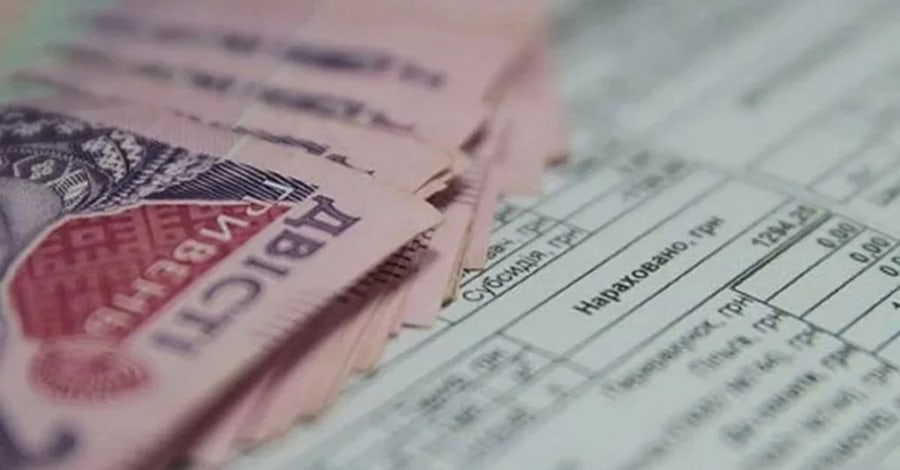
The return of cold weather poses a risk of significant increases in housing maintenance expenses for Ukrainian families. Although state prices for key energy carriers remain stable, the final amount on the winter utility bill usually exceeds the summer one. The main reason for this is the need for intensive heating of premises, which automatically increases the volumes of gas and electricity consumption.
Electricity price stability until April 2027
For household consumers, the electricity tariff remains at 4.32 UAH per kWh (VAT included). The government consolidated this decision in Cabinet of Ministers Resolution No. 1245 dated 7 October 2026, which amends Resolution No. 483 dated 5 June 2019. The document extends the mechanism of special obligations in the electricity market until 30 April 2027.
The Ministry of Energy confirmed that this tariff will apply throughout the entire 2026–2027 heating season.
Estimated monthly electricity costs under the standard tariff (excluding subsidies and multi-zone meters) are distributed as follows:
- for consumption of 150 kWh — 648 UAH;
- for consumption of 250 kWh — 1,080 UAH;
- for consumption of 400 kWh — 1,728 UAH;
- for consumption of 500 kWh — 2,160 UAH.
It is worth noting that an identical price per unit of energy does not guarantee equal bills throughout the year. In winter, Ukrainians actively use electric heaters, water heaters, and other devices to maintain warmth. Payments rise particularly sharply in buildings where electricity is the primary source of heating.
Preferential electricity tariff: conditions and limitations
Certain categories of consumers are entitled to a reduced electricity price — 2.64 UAH per kWh. This tariff applies from 1 October to 30 April inclusive.
The benefit is available to:
- residents of housing equipped with electric heating installations in the established manner;
- consumers in multi-apartment buildings without gasification, where centralised or autonomous heating systems using other types of fuel are absent or not functioning.
Important limitation: the preferential price applies only if monthly consumption does not exceed 2,000 kWh.
If the consumption volume falls within this limit, all electricity used is charged at 2.64 UAH. For example:
- 1,500 kWh will cost 3,960 UAH;
- 2,000 kWh — 5,280 UAH.
If a household exceeds the limit by even one kilowatt-hour, the calculation changes: the entire monthly volume (not just the excess) will be charged at the standard tariff of 4.32 UAH. Thus, for consumption of 2,100 kWh, the payment will amount to 9,072 UAH.
The presence of a standard electric heater in an apartment does not in itself grant the right to the benefit. The housing and the consumer must meet the requirements of Cabinet of Ministers Resolution No. 483.
Gas tariffs: fixed price and distribution rules
The cost of natural gas for the population also remains stable. On 28 September 2026, the Ministry of Energy announced that the government had extended the special obligations in the gas market until 31 March 2027. This decision aims to maintain price stability for consumers and heat supply enterprises.
In addition, Law No. 2479-IX dated 29 July 2022 establishes a moratorium on gas price increases for defined categories of consumers. The ban applies during the state of war and for six months after its termination. The price cannot exceed the level applied as of 24 February 2022.
For "Naftogaz of Ukraine" clients under the "Fixed" tariff plan, the gas price is 7.96 UAH per cubic metre (VAT included). According to the company's official data, this tariff applies from 1 May 2026 to 30 April 2027 inclusive.
Calculations at this price look as follows:
- 10 cubic metres — 79.60 UAH;
- 100 cubic metres — 796 UAH;
- 200 cubic metres — 1,592 UAH;
- 300 cubic metres — 2,388 UAH.
The specified price already includes the cost of gas transportation, but the distribution service is charged separately.
For families using gas exclusively for cooking or heating water, expenses may be modest. In contrast, owners of private houses with gas boilers face the highest bills precisely due to heating. The amount depends on the living area, quality of insulation, outdoor temperature, and boiler efficiency.
The 7.96 UAH tariff is valid for Naftogaz's "Fixed" plan. Clients of other gas supply companies need to check the terms of their individual contracts.
Why gas distribution is paid for even without consumption
In addition to the payment for fuel consumed, consumers receive charges for gas distribution. This service is provided by gas distribution system operators.
The cost of this service does not depend on the amount of gas used in the current month. It is based on the annual ordered capacity and the operator's tariff. For calculation, consumption volumes from the previous gas year (from 1 October to 30 September) are taken into account, including minimum volumes defined by the Gas Distribution Systems Code.
The annual payment is divided into 12 equal parts. That is why distribution must be paid for monthly, even if gas was not used during a certain period.
Law No. 2479-IX prohibits increasing gas distribution tariffs for household consumers during the state of war and for six months after its termination.
Centralised heating: factors affecting the bill
For residents of multi-apartment buildings with centralised heat supply, the largest seasonal expenses are related to heating.
There is no single heating tariff for all of Ukraine. Heat energy prices are set by authorised bodies for specific enterprises. At the same time, Law No. 2479-IX extends the moratorium on increasing heat energy tariffs and supply services for the population. The restriction applies during the state of war and for six months after its cessation.
Even without tariff changes, the amount on the bill may vary. Charges depend on:
- the volume of heat consumed;
- the living area;
- the presence and readings of meters;
- rules for distributing heat energy between apartments.
If a building has a commercial metering node, its readings are used to determine total consumption, which is then distributed among residents according to the current methodology.
The colder the weather, the more heat the building requires, so payments increase in frosty months even when the heat carrier price remains unchanged. Building technical characteristics also affect costs: wall insulation, window condition, and the operation of internal heating systems. As a result, owners of apartments of the same area in different buildings may pay different amounts.
Water supply and sewage: is a price increase possible
Unlike electricity, no general tariff for cold water and sewage has been established for all Ukrainians. Prices depend on the specific enterprise and decisions by the regulator or local authorities.
The legislative moratorium on increasing certain utility tariffs does not extend to cold water and sewage. However, this does not imply an automatic price increase in every settlement.
According to the National Commission for State Regulation of Energy and Public Utilities (NCRECUP), for the population served by enterprises with tariffs set by the Regulator, prices in the 2026 tariff decisions have been maintained at the level of 24 February 2022.
If tariffs are determined by local authorities, one should refer to the decisions of the relevant self-governance body. Current data on service costs in various settlements (including as of 1 October 2026) is published by the Ministry of Development of Communities and Territories of Ukraine.
The amount on the bill depends on tariffs and the quantity of water used (by meter or by norms). For example, if the total cost of the two services is 40 UAH per cubic metre:
- for 5 cubic metres, 200 UAH must be paid;
- for 10 cubic metres — 400 UAH.
This is a hypothetical calculation, not an established price for a specific city. Consumers may also be charged for subscription service if provided for in the contract.
Hot water: limitations and costs
Legislative restrictions on tariff increases apply to consumers of centralised hot water supply. In accordance with Law No. 2479-IX, the cost of this service for the population cannot be increased during the state of war and for six months after its termination.
The bill is formed depending on the current tariff and the volume of hot water used.
The situation is different in apartments with electric water heaters. In such cases, heating water increases electricity consumption, while cold water and sewage are paid for at the respective tariffs. Thus, even without centralised hot water supply, costs for heating water will be reflected in utility bills through increased electricity consumption.
Examples of winter utility cost calculations
Total expenses depend on the heating method and consumption volumes.
Example 1: Apartment with centralised heating.
A family uses 250 kWh of electricity and 10 cubic metres of gas per month.
- for electricity (250 × 4.32) — 1,080 UAH;
- for gas (10 × 7.96) — 79.60 UAH.
Together for these two resources — 1,159.60 UAH. To this amount, heating, water, sewage, gas distribution, and other services must be added.
Example 2: Private house with a gas boiler.
250 cubic metres of gas and 200 kWh of electricity were consumed per month.
- for gas (250 × 7.96) — 1,990 UAH;
- for electricity (200 × 4.32) — 864 UAH.
In total, the two energy resources will cost 2,854 UAH. This excludes payment for gas distribution, water, and other expenses.
Example 3: House with electric heating (with benefit).
Owners entitled to the preferential price will pay 3,960 UAH for 1,500 kWh of electricity. Without the benefit, the same volume at the 4.32 UAH tariff would cost 6,480 UAH.
All amounts cited are calculation examples, not average expenses for Ukrainian families. Actual payments may vary significantly.
Subsidies for the heating season: deadlines and procedure for obtaining
Ukrainians who find it difficult to pay for utility services independently can use state support in the form of a housing subsidy. The procedure for its provision is defined by Cabinet of Ministers Resolution No. 848 dated 21 October 1995.
In October 2026, the Pension Fund recalculated subsidies for the 2026–2027 heating season. For most citizens who already received assistance, the calculation was performed automatically, including for households that were assigned a subsidy of 0 UAH during the non-heating period.
The amount of support is individual. It depends on income, household composition, other circumstances, as well as the cost of services within social norms and the mandatory payment share.
According to a Pension Fund clarification dated 10 November, when calculating the subsidy for October, heating costs are accounted for from the 16th, i.e., for 16 days. Citizens receive the payment for October in November, as funds are transferred for the previous month.
For those who have not previously applied for a subsidy, it is important to adhere to the deadlines:
- if the application is submitted by 30 November 2026 inclusive, assistance may be granted from the beginning of the heating period, but not earlier than the right to it arises;
- in case of an application from 1 December, the subsidy will generally be granted from the month of application submission.
Support can be arranged through Pension Fund service centres, its electronic services, the Centre for Administrative Services (TsNAP), or other channels provided for by law.
Which services will become the most expensive in winter
The greatest burden on the family budget in the 2026–2027 heating season will most likely be created by home heating.
- For apartments with centralised heat supply, the main seasonal expense will be the payment for heat.
- In private houses with gas boilers, the highest bills will be for natural gas.
- In housing with electric heating — for electricity.
At the same time, payments for cold and hot water, sewage, gas distribution, and other services are added to total expenses.
As of November 2026, the general electricity tariff is 4.32 UAH per kWh, and a preferential price of 2.64 UAH applies to defined categories of consumers under appropriate conditions. Naftogaz clients under the "Fixed" tariff pay 7.96 UAH per cubic metre of natural gas. Legislative restrictions on increasing gas prices and certain utility services remain in force.
Thus, higher winter bills do not necessarily mean tariff increases. First and foremost, their size will depend on the quantity of energy resources used, the heating method, the condition of the housing, and the family's right to a subsidy or benefits.


Comments
No comments yet. Be the first!