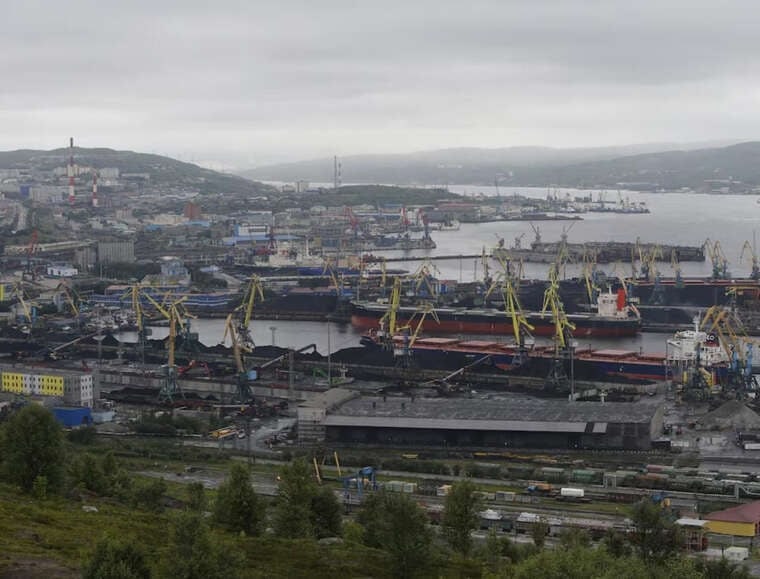
Russia ships grain via Arctic route for first time since war began
Amid the paralysis of Black Sea trade, Moscow is using the historic Arctic corridor to send grain to Morocco.
Amid the paralysis of Black Sea trade, Moscow is using the historic Arctic corridor to send grain to Morocco.
In Shepetivka district, the director of a private enterprise is suspected of organising the illegal extraction of peat without a permit. The court has seized his assets.

Regulator worsens inflation forecast to 12.5% and expects GDP contraction due to Russian attacks and delays in external financing.

The BRAMA Telegram channel reported on a new scam scheme where fraudsters create fake websites disguised as a UN programme to steal banking data and confirmation codes.

The Dniprovskyi Court in Zaporizhzhia found a citizen guilty of customs violations for declaring a vehicle as humanitarian aid for the Armed Forces of Ukraine, although the vehicle never entered the unit's inventory.

A preschool in the capital recommends parents keep toddlers at home during the cold period. This is linked to the risk of severe frosts and power and water supply disruptions.

Vote on restricting Russian-language content in Odesa's public space failed due to lack of votes.

The right to deferment from mobilisation does not depend on who finances the education. The key factors are adherence to the sequence of education levels and full-time or dual form of qualification acquisition.

The agreements reached by US President Donald Trump and Russian dictator Vladimir Putin regarding diesel fuel have yet to deliver the expected effect for consumers in the States. Instead of the predicted drop in costs, fuel prices in the country have, on the contrary, risen.
The Wall Street Journal reports on this situation. Journalists note that despite the signed agreements, the American market has not felt a price reduction, and market conditions have shifted towards higher diesel fuel prices.
Experts and analysts express serious doubts about whether Russia will be able to fulfil the obligations it has undertaken. The main obstacles to implementing the deals are cited as the current state of Russian oil refineries, as well as existing restrictions on fuel exports.
Thus, the agreements between Washington and Moscow have so far failed to ensure cheaper diesel on the American market, and Russia's ability to keep its promise remains in question.
Comments
No comments yet. Be the first!