
Ukraine officially acknowledges strike on Russian corvette near Benghazi
Kyiv confirms attack on warship in the Mediterranean. Cairo and Abu Dhabi remain silent, while Moscow threatens a response.
Kyiv confirms attack on warship in the Mediterranean. Cairo and Abu Dhabi remain silent, while Moscow threatens a response.

Bohdan Tseimeiko combines the position of head of the NGO "Protection of the Ukrainian People" with the role of deputy head of the association protecting the rights of bank and credit union depositors and creditors.
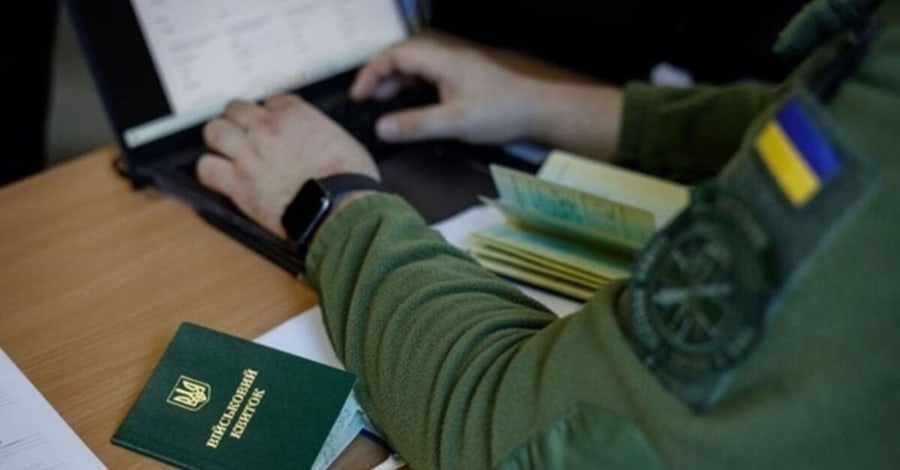
Rules clarified: part-time students and those pursuing a second education at the same level do not have an automatic deferment. The right to a deferment depends on the form of study and compliance with legislative requirements.

The leader of the French party "National Rally" is convinced that Ukraine's future does not envisage membership in the European Union.

State Enterprise of the Ministry of Defence "Defence Procurement Agency" signed contracts with LLC "T Balance" for the supply of three-seater buggies, despite the supplier's zero income and the absence of experience requirements.

The document, which is set to go to a referendum, no longer contains a reference to the 1990 Declaration. This is one of Azerbaijan's main demands.

In the Holosiivskyi district, a 50-year-old man pulled out a knife and injured a dog during a dispute with its owner.

The collapse of part of the Crimean Bridge has increased the load on the main 'Novorossiya' land route, causing serious traffic jams.
In Ukraine, clear explanations have been provided regarding which specific categories of students can expect a deferment from conscription, and who risks being mobilised even while studying. The key factor is not simply the possession of student status, but compliance with specific conditions enshrined in legislation. Individuals studying part-time or repeating an educational level do not receive an automatic deferment.
Current legal norms do not recognise part-time or evening study as grounds for a deferment. This means that liable persons who have chosen such forms of study may be conscripted on general grounds if they do not have other legal reasons for a deferment.
Restrictions also apply to those pursuing a second education at the same or a lower level. For example, if a person already holds a master's degree and enrolls in another master's programme, such study in itself does not grant the right to a deferment.
It is worth noting that the absence of a student deferment is not equivalent to automatic conscription. The decision on mobilisation also takes into account age, military registration status, health condition, and other circumstances provided for by law.
In accordance with Article 23 of the Law of Ukraine "On Mobilisation Preparation and Mobilisation", the right to a deferment is granted to students of professional, specialist pre-university, and higher education, provided that two requirements are met simultaneously:
A typical example: a student who enrolled in a full-time master's programme after completing a bachelor's degree may be entitled to a deferment. Conversely, re-enrolling in a bachelor's programme after obtaining the corresponding diploma does not meet the requirement for an increase in educational level.
Separately, the legislation provides for the right to a deferment for doctoral students and individuals admitted to residency training.
Part-time students do not receive a deferment solely on the basis of their studies. However, this does not mean that all of them are necessarily subject to mobilisation. A liable person may have other legal grounds for a deferment related to health condition, family circumstances, or the need to care for close relatives. In such cases, the right to a deferment is considered independently of the form of study.
To establish the right to a deferment, it is critically important that current information about studies is reflected in the Unified State Electronic Database on Education (EDEBO). It is these data that allow the determination of the form of study, educational level, and compliance with the required sequence.
If data are missing or contain errors in the database, the student must contact the educational institution to have them clarified. It is also advisable to ensure that the valid deferment is reflected in the military registration records.
Thus, possession of a student ID does not guarantee protection from mobilisation. Decisive importance is given solely to legislative conditions and proper confirmation of the right to a deferment.
Comments
No comments yet. Be the first!