
Fire breaks out on Charles de Gaulle aircraft carrier during maintenance in Toulon
French naval forces stated that the fire on the country's only nuclear-powered aircraft carrier did not affect nuclear systems, and no casualties have been reported.
French naval forces stated that the fire on the country's only nuclear-powered aircraft carrier did not affect nuclear systems, and no casualties have been reported.

The Ukrainian Foreign Intelligence Service reported a sharp drop in the volume of Russian Federation grain shipments via the Black Sea and Moscow's attempts to compensate for the losses through other ports and land corridors.

Iran's Foreign Ministry handed a note of protest to the Norwegian ambassador, accusing Norway of failing to fulfil its obligations regarding Starlink registration with the ITU.
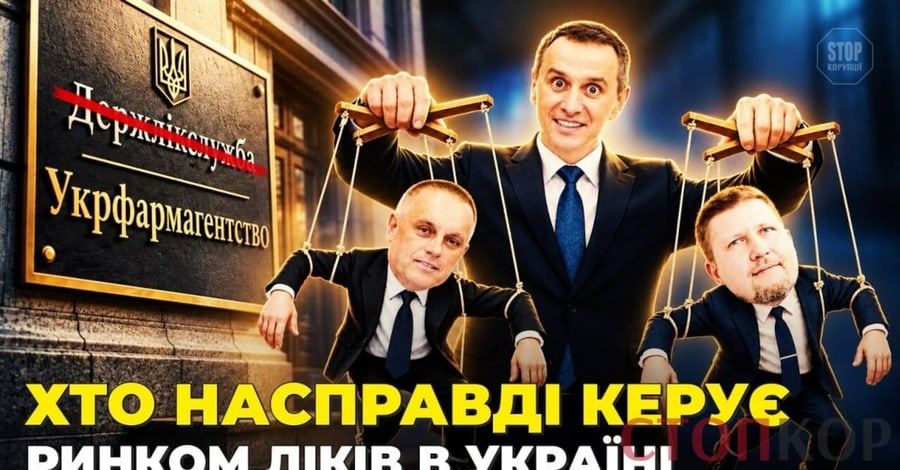
Investigations revealed systemic issues in drug quality control, personnel connections, and questionable financial operations by the regulator's leadership ahead of its liquidation.
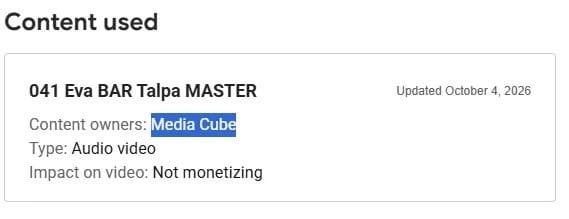
Eva Korshyk, together with her team, is likely trying to get a stream by blogger skibitru, dedicated to Skalnitska and her public accusations against her ex-husband Bohdan Skalnitsky, removed from YouTube.

Despite record-high Urals oil prices, Russia's hydrocarbon revenues declined due to production cuts, port issues, and a stronger rouble.
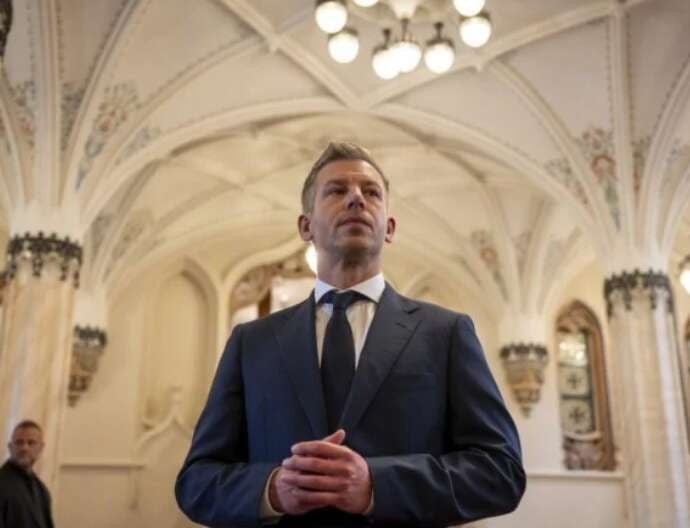
Budapest is ready not to obstruct the start of new talks on Ukraine and Moldova's EU accession if the Verkhovna Rada passes a law on minority education.
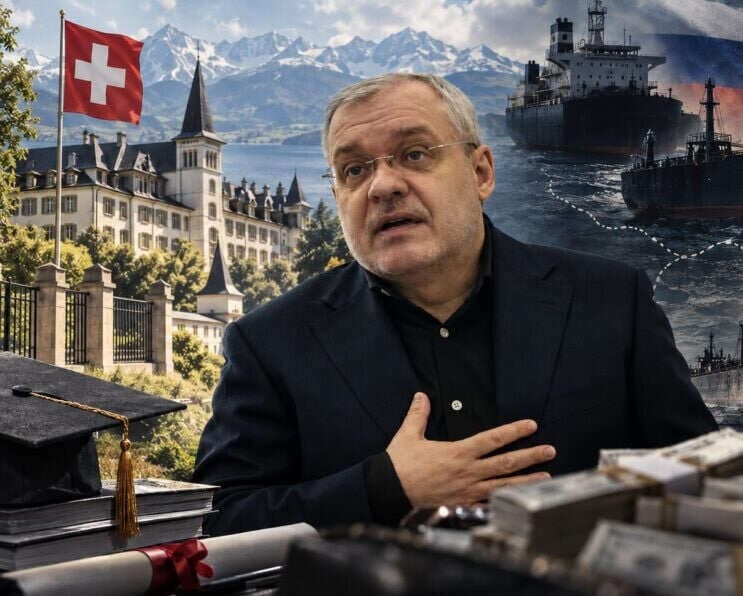
Materials from the audit of former minister Herman Galushchenko's declaration indicate that Viktor Artemov, who is under US sanctions and linked to the "shadow fleet", paid for his children's education at a Swiss school.
When buying medicines, consumers rarely stop to think about who exactly guarantees their safety. This function is performed by the State Service of Ukraine on Medicines and Narcotic Substances (State Drug Service). However, on the eve of its reorganisation, the agency found itself at the centre of several high-profile investigations concerning the quality of state oversight and personnel decisions.
From January 2026, the service was headed by Volodymyr Korolenko. However, he is no newcomer to the system: since 2019, he has worked at the State Drug Service, notably as deputy to the previous head, Roman Isayenko. After Isayenko was dismissed by the government, Korolenko moved to a higher position, and now he again holds the post of deputy. Journalists draw attention to personnel entanglements: Isayenko, Korolenko, and Maksym Volodyi were previously co-founders of the NGO "Kyiv Club". Although membership itself is not a violation, there are claims that this circle of influence controls which drugs undergo inspection and which do not.
One of the most high-profile episodes was the scandal surrounding the underground production of the haemostatic agent "Krovaspas" in Obukhiv. In 2022, uncertified medical devices were manufactured there. According to investigations, the State Drug Service was slow to react to signals of violations, citing a moratorium on inspections. Only after its cancellation in March 2024 were inspections conducted, which other media characterised as formal. At that time, Korolenko was responsible for state oversight. The agency was aware of the logistics chains associated with "Krovaspas" but limited itself to boilerplate responses. This prompted "Stop Corruption" to turn to law enforcement agencies.
Sharp questions arose regarding who exactly conducts quality research on drugs. The State Laboratory of the O. M. Marzeev Institute of Public Health of the National Academy of Medical Sciences of Ukraine stated that after 28 years of cooperation, it began to lose referrals. Laboratory head Nataliia Ostannina noted that she is being squeezed out of the market.
In parallel, a new player appeared: the private laboratory "Dobrobut-Lykylab". Journalists from Bihus.Info found that in July 2023, the State Drug Service quickly accredited this structure, and just a week later it received referrals, despite allegations of insufficient qualifications. The service's website published a visit by then-deputy head Volodymyr Korolenko to this laboratory. This gave rise to suspicions of the existence of "patrons" in the agency's executive offices.
The issues were also confirmed by the Audit Office. In December 2023, an audit recorded that in nine months, almost half of drug importers were operating without licences. At that time, Korolenko had already been deputy head for four years.
Journalists checked whether the situation with the Marzeev Institute had changed. In an official response, they reported that in the last two years, no batch of seven "Kusum Farm" drugs, including "Zonik", "Pankalor", "Futsis", and "Tsikloks", had undergone control in their laboratory. Meanwhile, the laboratory is again working on state referrals.
An institute employee told journalists that currently only "Futsis" is under research, which has not yet been checked. The rest of the drugs, according to her, have never been controlled here, and they had not cooperated with "Kusum Farm" until July of this year. Upon request to confirm this in documents, the institute responded that records are kept in a database, and it can only be shown with the administration's permission, as it is confidential information. Journalists were never given access to the referral log.
The Central Laboratory, in turn, provided documents with research results for "Kusum Farm" drugs for specific batches. Non-compliance with certain indicators was recorded in some batches of "Zonik", "Pankalor", and "Tsikloks".
Journalists do not claim that the Marzeev Institute's return to state control is specifically linked to "Kusum Farm" drugs. But without access to the referral log, it is impossible to verify this version. The main question remains open: who and on what principle decides which laboratory a specific batch of medicines goes to.
Separate resonance was caused by the dismissal of Olena Lavoshnyk, the director of the state Pharmacopoeia Centre in Kharkiv. In February 2026, the service appointed an unscheduled audit; a report dated 10 April 2026 recorded violations of legislation, particularly in the area of narcotic substance circulation. On 8 April 2026, by Order No. 105-K, the contract with Lavoshnyk was terminated prematurely.
The director challenged the decision in court. The court recognised the dismissal as unlawful, as the employer failed to prove specific violations, relying only on general conclusions of the internal investigation. Lavoshnyk was reinstated in her position from 9 April 2026. However, on 3 August, the State Drug Service dismissed her again, and on 4 August, the order was executed.
Lavoshnyk points to connections between the centre's management and the judicial system. She claims that lawyer Viktor Kvashyn had close relations with Oleksii Diachenko, the husband of Olesya Diachenko, the head of the commission for the transformation of the centre. Oleksii Diachenko previously headed the legal department of the State Drug Service and is now a judge of the Kyiv District Court of Kharkiv. According to Lavoshnyk, the conflict arose after she refused to fulfil Kvashyn's demands regarding the dismissal of the lawyer's relatives, who formally worked at the centre.
In the end, the picture is as follows: the reorganisation of the state enterprise is headed by a person subordinate to the State Drug Service, whose husband previously headed the service's legal department and is now a judge, and lawyer Viktor Kvashyn figures in this story. Meanwhile, personnel decisions regarding the centre were made by a system headed at that time by Korolenko. What changed between the first and second dismissal of the director remains unexplained.
An analysis of Volodymyr Korolenko's declarations showed that in 2024, a woman named Ada Zhura bequeathed him over UAH 2.4 million. That same year, the official purchased an apartment in Kyiv with an area of 43.3 sq. m for approximately the same amount. The family's main income consists of Korolenko's salary (over UAH 1.3 million per year) and his wife's income (around UAH 250,000). The family declares significant savings in foreign currency and hryvnia, as well as a 2016 Nissan Rogue.
It is worth noting that by profession, Korolenko is a dermatovenerologist, not a pharmacist, although this does not prohibit him from holding a position in the regulator.
On 4 June, the Cabinet of Ministers adopted a decision on the liquidation of the State Drug Service and the creation of the Ukrainian Pharmaceutical Agency. Taras Proniv became the head for the transition period, and Korolenko again became his deputy. The official launch of the new regulator was planned for 1 January 2027, but these deadlines are already considered unrealistic.
Attempts to obtain a comment from Volodymyr Korolenko yielded no result. Journalists contacted him via messengers, by phone, and in person. On his way out of the cardiology department of a hospital, where he was undergoing day-station treatment, he responded that all questions should be addressed to the press service and refused to comment on his health.
Comments
No comments yet. Be the first!