
JD Vance activates political initiatives ahead of 2028 elections
The US Vice President is trying to attract Republicans disillusioned with Donald Trump's policies to his camp while maintaining loyalty to the President.
The US Vice President is trying to attract Republicans disillusioned with Donald Trump's policies to his camp while maintaining loyalty to the President.
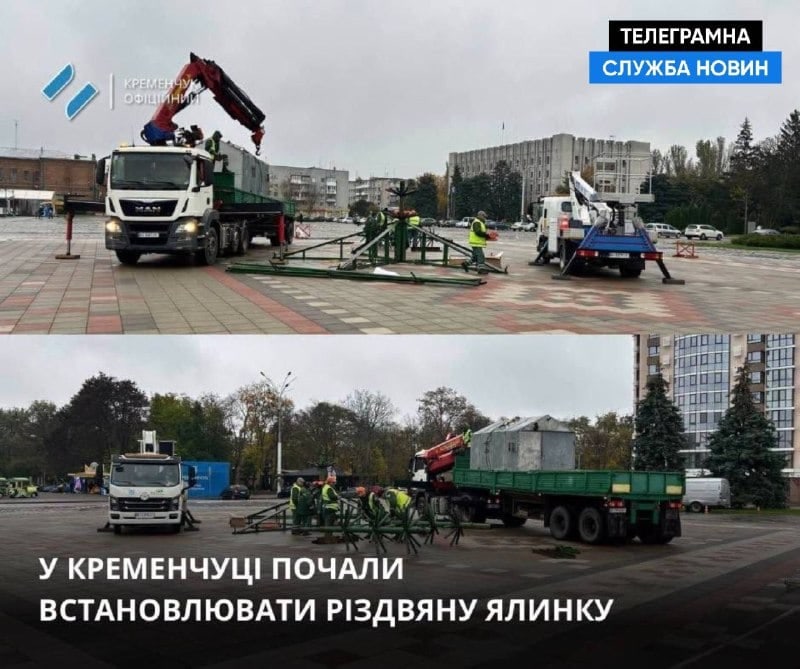
Local business funds the installation and illumination of the main Christmas tree, scheduled to be switched on on 4 December, despite residents still being without heat.

The programme to build 161 facilities for veterans is based on a private organisation's project. Experts point to suspicious tenders and the founders' links to former officials.
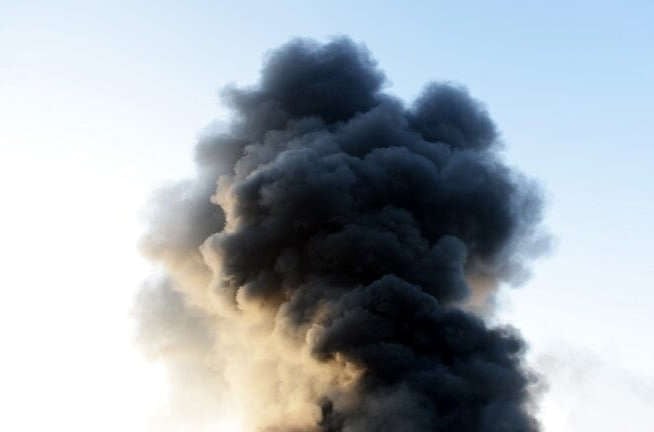
A fire broke out in the city following a strike by enemy drones. There is currently no information on casualties or the extent of the damage.
Polygon developers plan an exceptional network update to forcibly transfer nearly 70.5 million POL from fraudsters' addresses to Binance and Polymarket platforms.

The MP stated that underground protection has been installed for only three of the 84 energy facilities, while second-level shelters exist at only a third of the substations.

The Amazon founder stressed that his prior decade of experience helped him achieve success, with his time on Wall Street forming part of that journey.
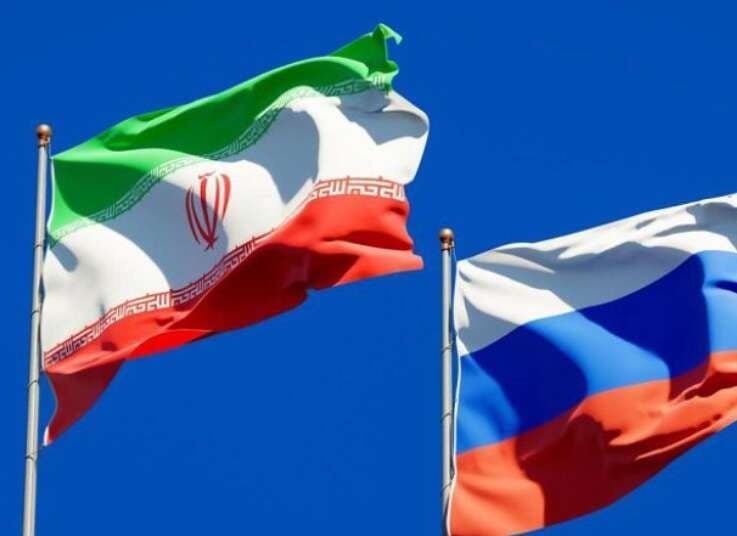
According to documents obtained by the Financial Times, Moscow has signed a deal with Tehran to supply systems for missiles actively used in the war against Ukraine.
Russia has decided to supply Iran with 90 launchers for modern guided LMUR missiles (also known by the code name "Izdeliye 305"). This weapon is actively used by the Russian army during the war against Ukraine. This is evidenced by internal documents from one of Russia's key defence enterprises, to which the publication Financial Times gained access.
The order was placed in 2024–2025. In the papers, the buyer was identified using the code name "K-10", which the state company "Rosoboronexport" traditionally uses to designate Iran. This data confirms the deepening of military-technical cooperation between Moscow and Tehran against the backdrop of Russia's full-scale invasion of Ukraine, which began in 2022.
The document that became the subject of the investigation is an annex to a letter from May 2024. Its author was the company "Vimpel" — one of Russia's leading developers of missile weapons and launch systems. In the letter, "Vimpel" emphasised the need for another Russian design bureau (KBM) to accelerate the supply of components for two types of launchers: APU-L and APU-305. Both these systems are primarily intended for installation on helicopters.
The document contained a warning that possible delays in production could jeopardise the fulfilment of nine contracts. The production schedule, attached to the letter, recorded seven Russian customers and two foreign buyers. Among the foreigners, China is mentioned, which ordered 192 APU-305 type launchers. The second buyer, designated by the code "K-10", was to receive 90 APU-L units. As noted by the publication's source and confirmed by internal Russian papers, the code "K-10" belongs to Iran.
The identification of Iran as the buyer is confirmed by a contract for the supply of Yak-130 combat trainer aircraft, which the Financial Times reviewed. In it, the buyer is directly indicated as "K-10, Iran". Another document — a 2023 production schedule of a subsidiary of the Russian state defence conglomerate "Rostec" — also contains a mention of six Yak-130 aircraft intended for "K-10". According to the plan, two aircraft were to be manufactured in the first half of the year, and another four in the second.
These data coincide with information from open sources. In 2023, the semi-official Iranian news agency Tasnim reported that Iran had received two Yak-130 aircraft. According to the Stockholm International Peace Research Institute (SIPRI), by the end of 2024, all six planned aircraft had been delivered.
It is worth noting that the document does not confirm whether the launchers intended for Iran were ultimately delivered. Both types of launchers (APU-L and APU-305) are designed to launch the Light Multi-Role guided missile LMUR. This weapon is designed to hit moving targets and allows the operator to adjust the flight trajectory.
The missile's speed is approximately 230 metres per second, allowing it to cover 14 kilometres in about one minute. Such characteristics make the LMUR significantly faster than drones and particularly effective for conducting surprise strikes and ambushes, as the enemy has minimal time to react.
According to the US Army's Worldwide Equipment Guide, APU-L launchers are integrated with Russian Mi-28 attack helicopters and are capable of carrying two missiles. APU-305 units are designed for one missile.
Iran already possesses Russian Mi-28 attack helicopters. In November 2023, Iranian Deputy Defence Minister Mehdi Farahi reported the completion of agreements regarding the integration of these machines into the Iranian armed forces. In January 2026, photographs of Mi-28 helicopters on the territory of an Iranian aviation facility appeared on the internet, visually confirming their presence in the country.
Previously, the Financial Times also reported on other aspects of military cooperation: Russia helped Iran develop supersonic cruise missiles, sold portable "Verba" air defence missile systems, and cooperated with Tehran on information that could potentially be significant for the creation of nuclear weapons.
Comments
No comments yet. Be the first!