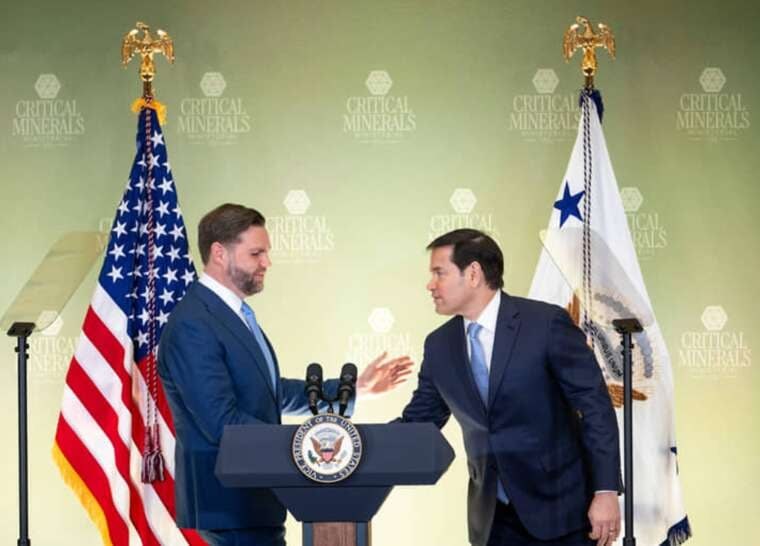
Although US Vice President JD Vance and Secretary of State Marco Rubio are considered the most likely candidates for the presidency after Donald Trump, their plans may fail due to controversial decisions by the current administration. These political moves, which Vance and Rubio themselves previously opposed, are now becoming a serious burden on their careers.
Loss of support and electoral risks
The decline in Trump's approval ratings has already led to Republicans losing their majority in Congress. According to the publication's assessment, the war with Iran, as well as the scandal surrounding Nvidia CEO Jensen Huang, demonstrate how difficult it will be for Vance or Rubio to run their own election campaigns.
The problem is not limited to the lack of support for the president's positions. Both cases touch upon fundamental aspects of their political identity.
Vance's position on the war with Iran
JD Vance positions himself as a representative of a new generation of Republicans who oppose American military interventions abroad. He criticised the war with Iran and, after the elections, named it one of the reasons for the party's defeat.
According to media reports, such criticism caused Trump's dissatisfaction. The president acknowledged that voters were angry over high prices caused by the war but emphasised that Vance had not directly expressed an opinion on the justification of the decision to start the conflict.
Last week, Vance was asked directly whether the war was worth the electoral defeat. He avoided a clear answer:
"I believe the president makes the decision, and he stated that he would do it again. My job is to support the President of the United States," Vance said.
Conflict over Jensen Huang and Rubio
Marco Rubio was traditionally considered a "hawk" on foreign policy in the Senate and a harsh critic of Russia and China. In 2020, Beijing even imposed sanctions against him.
In May, during a flight to China, Rubio warned Trump about Nvidia CEO Jensen Huang's links to probable Chinese espionage activities. However, later it was Vance who helped Trump restore Huang to his position as company leader.
When a journalist tried to ask Rubio about Huang's return, the Secretary of State simply turned around and left.
Wall Street Journal columnist Jerry Baker called on Rubio to leave the administration this week. In his opinion, the Secretary of State is forced to defend a policy that "shames, corrupts and weakens America" while assuring that he has nothing to do with it.
Prospects for 2028
Vance and Rubio found themselves on opposite sides in both conflicts. Rubio still actively defends the war with Iran, which could harm him if he participates in the 2028 elections, should the conflict remain unpopular among voters.
So far, neither of them has announced an intention to run. Vance plans to make a decision after New Year, possibly closer to the end of spring. Rubio hinted that he would not run if Vance participates in the election. The politicians have maintained friendly relations since their time working together in the Senate.




Comments
No comments yet. Be the first!