Payment suspension amid rising profitability
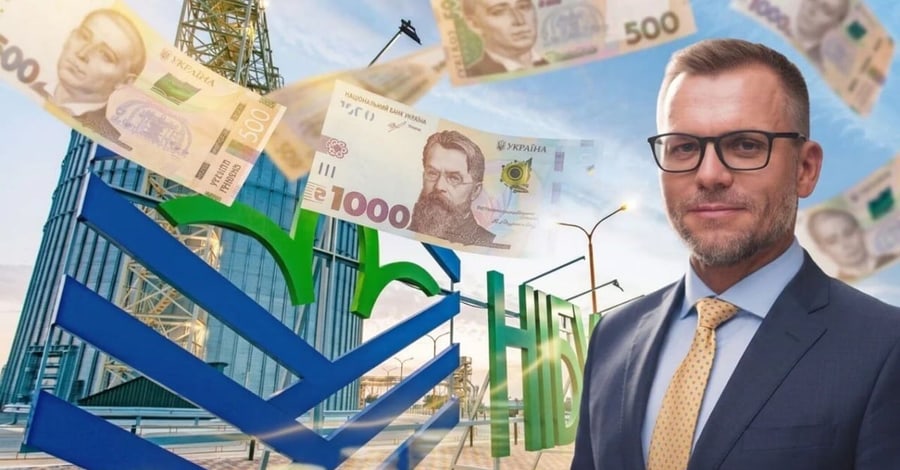
The agricultural company Nibulon, owned by Andrii Vadaturskyi, unilaterally ceased servicing its debt obligations to all creditors in the first quarter of 2026. The total volume of debt amounts to nearly $600m. This situation contrasts with the enterprise's financial indicators: according to reporting data, the company's revenue for the nine months of 2026 increased to 16.5 billion hryvnia, whereas for the same period last year it reached 13.1 billion hryvnia. In addition, Nibulon claims a 7% share in exports and over $70m in development investments during the years of war.
The company's CEO, Andrii Vadaturskyi, in an interview dated 20 November 2026, called Ukrainian agribusiness unprofitable, pointing out that logistics costs had increased tenfold. He also expressed dissatisfaction that banks assess risks "за стандартами мирного часу" (according to peacetime standards). Previously, on 23 October, in a conversation with the publication Latifundist, Vadaturskyi predicted the first bankruptcies in the agri-sector as early as spring.
Restructuring history and creditors' position
Liquidity problems are not a first-time occurrence. As far back as autumn 2022, with a debt of approximately $570m to 26 creditors, the company stopped payments to international banks. According to the owner, the company lost 68% of its assets, and the Mykolaiv terminal remains blocked. In July, Vadaturskyi reported that of the $241m EBITDA generated over four years of war, $234m went to banks. In 2024–2025, negotiations on restructuring took place with the International Finance Corporation (IFC), the European Bank for Reconstruction and Development (EBRD), the European Investment Bank (EIB), the ING syndicate, and state-owned banks. Expert in economics and banking, Academician Bohdan Danylyshyn, notes that the terms from state-owned banks were significantly softer than market terms.
In December 2025, then-finance director Mykola Hrubov reported the completion of the restructuring of the entire credit portfolio. However, already in early 2026, the company again halted payments. According to informed sources in the banking environment, as early as 2022–2023, creditors had proposed a formal "standstill" (moratorium) under a "pay interest if funds are available" model. In exchange for flexible debt servicing terms, banks demanded transparency: control over grain purchases and sales, logistics costs, and personnel efficiency.
Refusal of transparency and personnel rotations
Instead of offering transparency, the shareholder chose a 20-year long-term restructuring model developed with the participation of a financial advisor. This plan was based on optimistic assumptions and provided unequal terms for different creditors. It includes no contribution from the shareholder side—neither capital, nor asset sales, nor the attraction of an investor. For creditors, this effectively means a discount, as the money will be returned over two decades.
Financial market experts point to a number of problems in the company's management. First, there is no effective restructuring business model that takes into account real constraints, such as port blockades and the instability of railway transport. Second, the owner does not invest his own funds, which requires an appropriate and strict response from both the banking system and the National Bank of Ukraine. Third, high turnover is observed in the finance department. A key obstacle is also that the subject refused to allow the financial advisor inside the company. According to public data since August 2023, the position of finance director has been held by Iryna Levkivska, Ruslan Romanenko, and Mykyta Hrubov. According to source estimates, approximately five heads of the finance block have changed in four years.
Tax proceedings and market risks
An additional factor of uncertainty was the opening of a criminal case. On 3 September 2026, the police of Mykolaiv region initiated an investigation under Part 2 of Article 212 of the Criminal Code of Ukraine regarding possible tax evasion in 2017–2021. Currently, a pre-trial investigation is ongoing, no suspects have been named, and the presumption of innocence applies.
Creditors, who remember precedents with the companies Mriya and UkrLandFarming, perceive the current situation critically. In the banking environment, the possibility of a change in Nibulon's shareholder and the arrival of a strong investor, whom banks could support, is being discussed. Experts warn of the risk of a "domino effect," where the financial losses of the agricultural giant will fall on the shoulders of state-owned banks and the budget of a country at war.
Andrii Vadaturskyi previously publicly emphasised that he has a different management style than his father. However, the current behaviour of the management casts doubt on the company's priorities: is it a matter of saving a business affected by the war, or protecting the owner's private interests at the expense of creditors?




Comments
No comments yet. Be the first!