
Footage of destruction in frontline Sloviansk released
Footage showing damage and destruction in the Donetsk region city, located in close proximity to the front line, has appeared online.
Footage showing damage and destruction in the Donetsk region city, located in close proximity to the front line, has appeared online.

A 59-year-old Zaporizhzhia resident was found guilty of treason for passing data on the locations of armoured artillery boats to a Russian intelligence agency.

The Lviv District Administrative Court ruled that the adjustment of the customs value of a BYD SONG PRO vehicle, which increased its price by $6,600, was unlawful.

Valeriy Parshakov, a representative of "Granitline", intersects with the Karamanits brothers and their relatives through special permits for the extraction of useful minerals.
The European Union has presented details of a new sanctions package, which includes restrictions on war participants, the banking sector, and energy infrastructure.
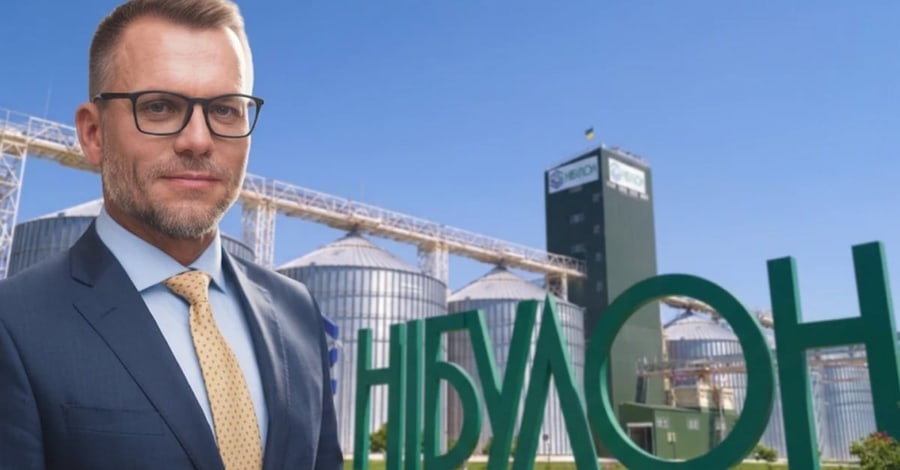
Academician of the National Academy of Sciences of Ukraine Bogdan Danylyshyn stated that selective lending to the agro-holding "Nibulon" on soft terms by state banks undermines trust in the financial system and threatens new recapitalisation from the budget.

Political scientist warns that mutual accusations between NABU, SAP and police have replaced the search for truth with internal conflicts.

According to World Bank data, the poverty rate in Ukraine stabilised at 41% in 2026. Meanwhile, financial difficulties are intensifying: one in four of the least well-off households has debts for utility services.
The agro-holding "Nibulon", which is one of the key players in the grain export market in Ukraine, accumulated significant debt even before the start of the full-scale invasion. According to data cited by public activist, economist, and academician of the National Academy of Sciences of Ukraine Bogdan Danylyshyn, the volume of the company's debt to 26 creditors, including IFC, EBRD, EIB, Crédit Agricole, and ING, exceeded 570 million US dollars.
In 2024–2025, the international consortium of creditors agreed to a restructuring of liabilities with the establishment of a preferential period. However, as Danylyshyn notes, Ukrainian state banks, which are under the direct supervision of the National Bank, also joined this process. The terms they offered to the agro-holding differed significantly from market conditions and were much softer.
In his appeal to the NABU dated 22 October 2026, Danylyshyn cites specific figures regarding the actions of domestic financial institutions. Thus, Sens Bank restructured a credit portfolio of approximately 27.6 million dollars (over 1.14 billion hryvnias) and postponed the repayment of the principal debt until November 2027.
Oschadbank increased "Nibulon's" share in its own credit portfolio from 4% to 14%, and also issued the company a new loan of 20.3 million dollars. Long-term preferential agreements with the agro-holding, according to the economist, were also concluded by Ukrgazbank and Ukreximbank.
While negotiations on restructuring were ongoing, the borrower's financial condition rapidly deteriorated. Danylyshyn cites data from the company's reporting: in 2021, "Nibulon" received 40.6 billion hryvnias in revenue and earned a net profit of 1.34 billion hryvnias.
As of 2025, under the management of Andrii Vadaturskyi's team, the situation changed radically. Revenue fell to 18.46 billion hryvnias, and the net loss reached 5.75 billion hryvnias. The company's total liabilities (23.88 billion hryvnias) exceeded the value of assets (21.81 billion hryvnias), and the liquidity ratio dropped to 0.33.
The economist also notes that in the first quarter of 2026, the company unilaterally ceased servicing debts to all banks, despite the fact that the repayment deadlines for the principal of the loans had not yet arrived.
The company itself explains the conduct of the restructuring as being "at the request of the government and in synergy with banks". Danylyshyn emphasises that banking supervision must remain independent of political requests.
Meanwhile, as the academician highlights, "Nibulon's" competitors acted differently under similar wartime conditions. The companies "Kernel" and MHP bought back eurobonds and fulfilled their financial obligations on time. In Danylyshyn's opinion, selective concessions to individual borrowers increase the cost of credit for diligent businesses, undermine the trust of international creditors, and create a threat of new recapitalisation of state banks at the expense of the budget in wartime conditions.
Bogdan Danylyshyn believes that the situation with "Nibulon" goes beyond the problems of a single company and demonstrates a general trend. In his view, the National Bank is increasingly deviating from market principles and strict risk management, moving towards "manual" management of lending and selective protectionism.
When state banks under the regulator's supervision provide preferential terms to a borrower whose indicators are deteriorating, and who subsequently stops paying, this creates a moral hazard for the entire banking system. Other market players may conclude that the rules are different for everyone.
Danylyshyn calls on the NBU to return to its constitutional mandate — ensuring stability and impartial banking supervision. He emphasises that in wartime, credit resources should be directed towards the reconstruction of the economy under transparent market rules, rather than being used to cover the management errors of individual companies. Decisions on problem debts, according to the academician, must be based on prudential requirements, not on "telephone law".
Several key aspects remain unresolved. How exactly did state banks assess the risks when agreeing to the preferential restructuring and the provision of new loans to "Nibulon"? Did the regulator react to the growth in the concentration of problem debt in these banks' portfolios? And who will cover the losses if the funds are not returned? If answers to these questions are not provided, the bill for others' debts, as Danylyshyn warns, may ultimately fall on the shoulders of the state budget.
Comments
No comments yet. Be the first!