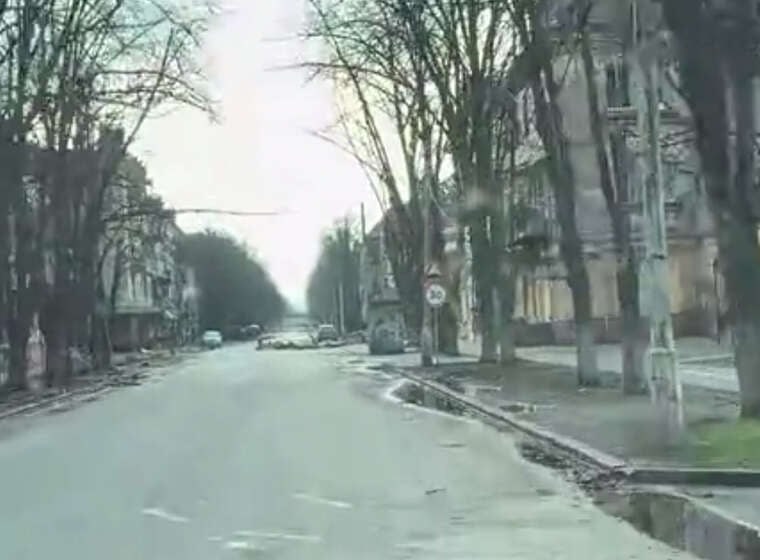
Footage of destruction in frontline Sloviansk released
Footage showing damage and destruction in the Donetsk region city, located in close proximity to the front line, has appeared online.
Footage showing damage and destruction in the Donetsk region city, located in close proximity to the front line, has appeared online.
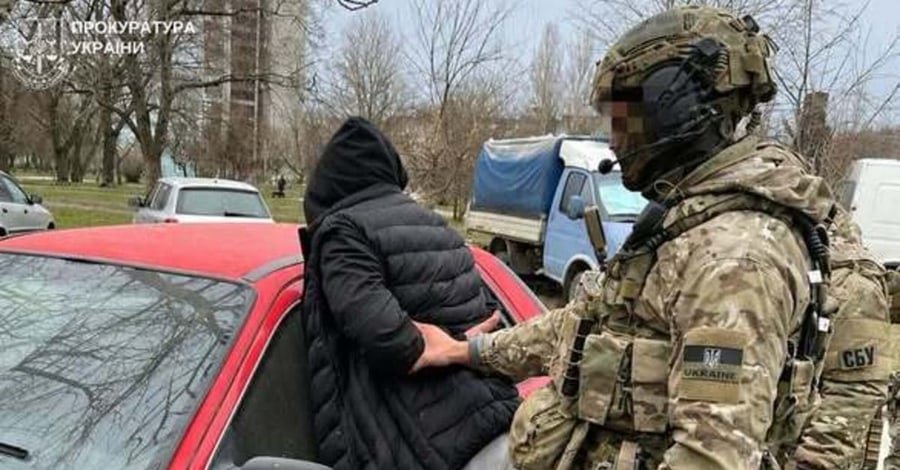
A 59-year-old Zaporizhzhia resident was found guilty of treason for passing data on the locations of armoured artillery boats to a Russian intelligence agency.

The Lviv District Administrative Court ruled that the adjustment of the customs value of a BYD SONG PRO vehicle, which increased its price by $6,600, was unlawful.

Valeriy Parshakov, a representative of "Granitline", intersects with the Karamanits brothers and their relatives through special permits for the extraction of useful minerals.
The European Union has presented details of a new sanctions package, which includes restrictions on war participants, the banking sector, and energy infrastructure.

Academician of the National Academy of Sciences of Ukraine Bogdan Danylyshyn stated that selective lending to the agro-holding "Nibulon" on soft terms by state banks undermines trust in the financial system and threatens new recapitalisation from the budget.
Political scientist warns that mutual accusations between NABU, SAP and police have replaced the search for truth with internal conflicts.
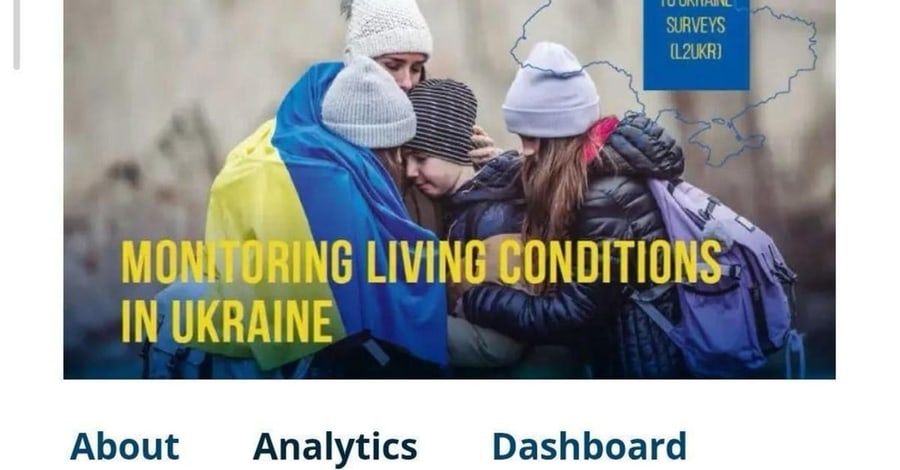
According to World Bank data, the poverty rate in Ukraine stabilised at 41% in 2026. Meanwhile, financial difficulties are intensifying: one in four of the least well-off households has debts for utility services.
Socio-economic indicators for Ukrainian society remain tense. According to preliminary calculations by the World Bank, approximately 41% of the country's population fell below the poverty line in 2026. This figure is almost unchanged from last year's data. Analysts note that the state's maintenance of pension and social assistance payment mechanisms acted as a brake on further growth of the indicator.
For a significant portion of citizens, state transfers are a critically important source of survival, covering expenses for food, medicine, and housing and utility services. However, even the presence of these payments does not guarantee full coverage of needs. The financial situation of many families remains fragile, as confirmed by the results of a survey conducted in the third quarter.
26% of Ukrainian families stated that they are completely devoid of savings. Among the 20% of least well-off households, the situation is even more critical: 35% of them have no savings at all. This means that any unforeseen expenses can become an insurmountable obstacle for such families.
Financial constraints directly affect the quality of life. Almost one in four families from the least well-off group was unable to pay for utility services on time within the 30 days prior to the survey.
A shortage of funds forces citizens to economise on basic needs. A quarter of the poorest families reported that during the month they consumed less food than they considered necessary. Another approximately 50% of representatives of this category were forced to limit their diet to only a few types of products.
Thus, behind the stable overall poverty indicator lies a deterioration in the daily well-being of the most vulnerable segments of the population. Economizing has already touched not just additional purchases, but what is necessary for survival: food, medicines, and utility services.
The approach of the cold season further exacerbates financial difficulties. Almost a quarter of internally displaced persons and almost a quarter of the least well-off families noted that during winter or a significant part of the cold period, they lacked heat in their homes.
The absence of savings makes heating costs extremely noticeable. Families are forced to choose between paying utility bills, buying groceries, and other necessary expenses. The war has already deprived many Ukrainians of their homes and jobs, and the lack of funds for the most basic needs only increases their social vulnerability.
The question arises not only of maintaining current payments but also of raising social standards in line with the real needs of the population. Particular attention is required for low-income families, IDPs, pensioners, and other categories of citizens who depend most on state support. Maintaining social protection in wartime remains a priority task, as behind the statistical figures stand millions of people for whom ensuring basic needs has become a daily challenge.
It was previously reported that the draft state budget for 2027 provided for an increase in the minimum wage and subsistence minimum by more than 10%, while the document does not provide for a separate guaranteed increase in the monetary remuneration of military personnel.
Comments
No comments yet. Be the first!