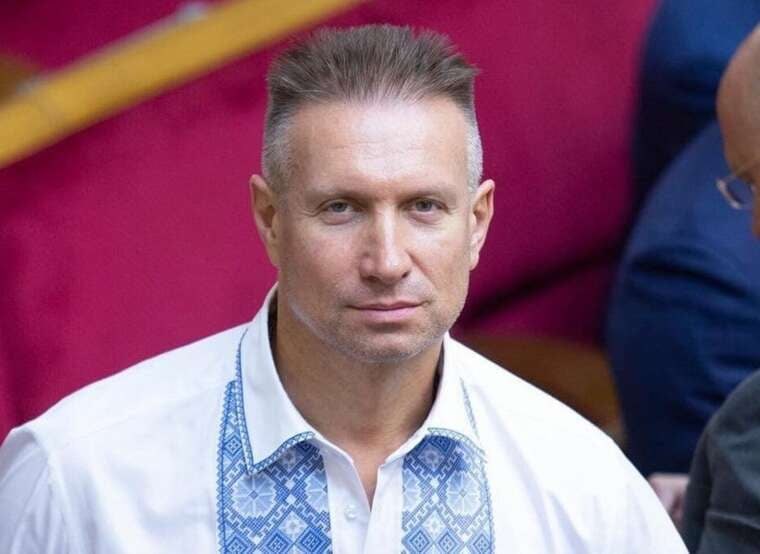
Journalists uncover hidden assets of MP Vatsak: $3.5m car fleet and state losses
Investigation reveals network of luxury cars in Gennadiy Vatsak's circle and series of violations in his business causing multi-million losses to state budget.
Investigation reveals network of luxury cars in Gennadiy Vatsak's circle and series of violations in his business causing multi-million losses to state budget.
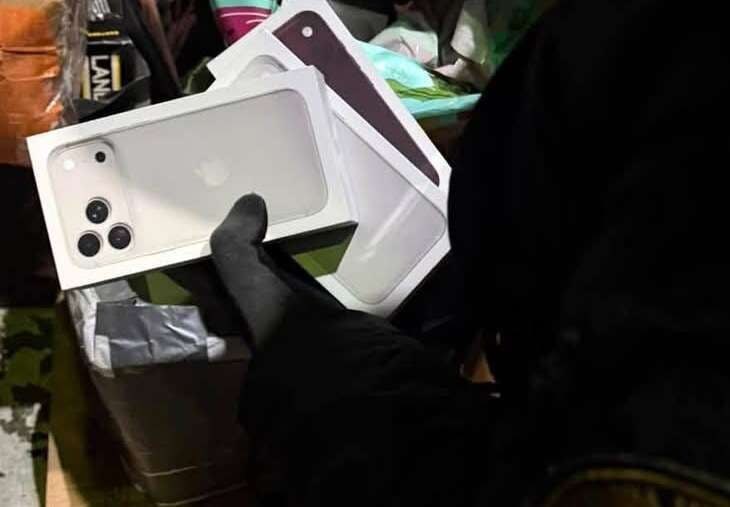
Law enforcement officers discovered a contraband batch of electronics in a minibus crossing the state border via the Krakovets – Korchova checkpoint.

A court in Chernihiv has sentenced the head of a military medical commission to prison for establishing and leading an organised group that issued fictitious medical certificates.

Officers Mykola Savchenko and Ihor Voloshko rescued a woman and her grandson from the rubble after a Russian shelling. During the evacuation, Savchenko lay on top of the child to protect him from a new UAV launch.
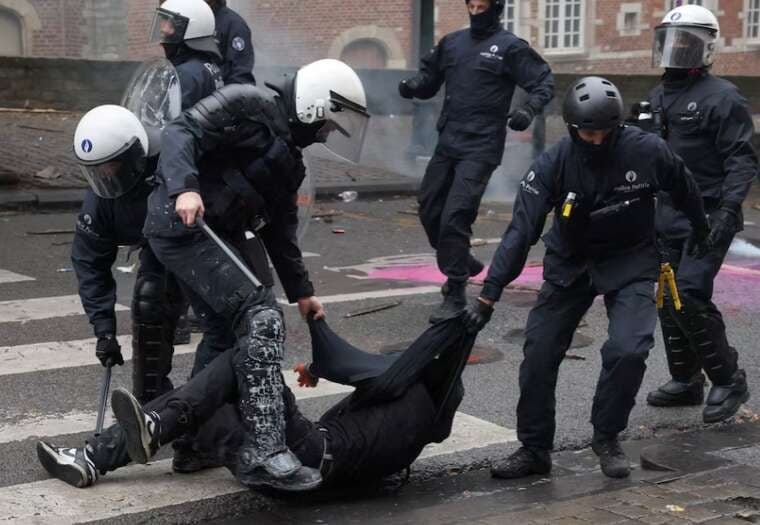
Mass march in Canada for affordable education ended in riots. Police used tear gas, and three demonstrators were detained.

Major tech giants are financing their own clients to purchase their services. The IMF has allocated $1.4 trillion to such cyclical deals.

The Ukrainian tennis player secured a victory in the final round of the group stage with a score of 6:3, 3:6, 6:1 and will continue her campaign at the tournament in Indian Wells.
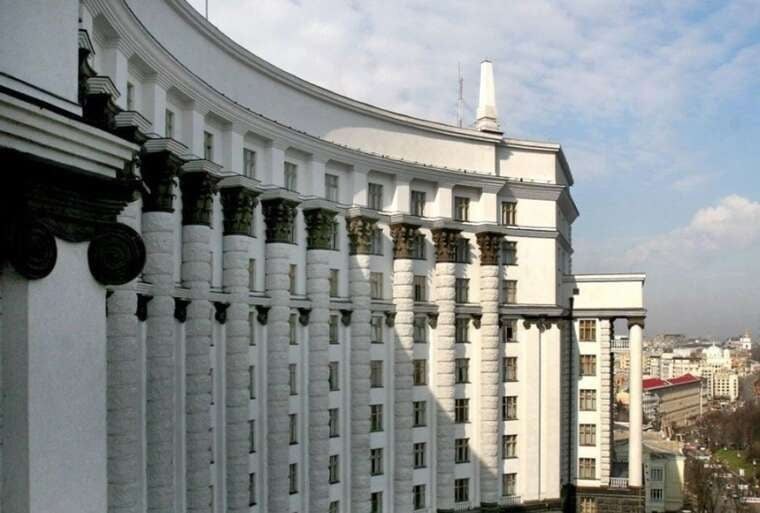
The Cabinet of Ministers approved a bill on updating the strategy, which provides for the restoration of war-damaged territories and the integration of EU requirements.
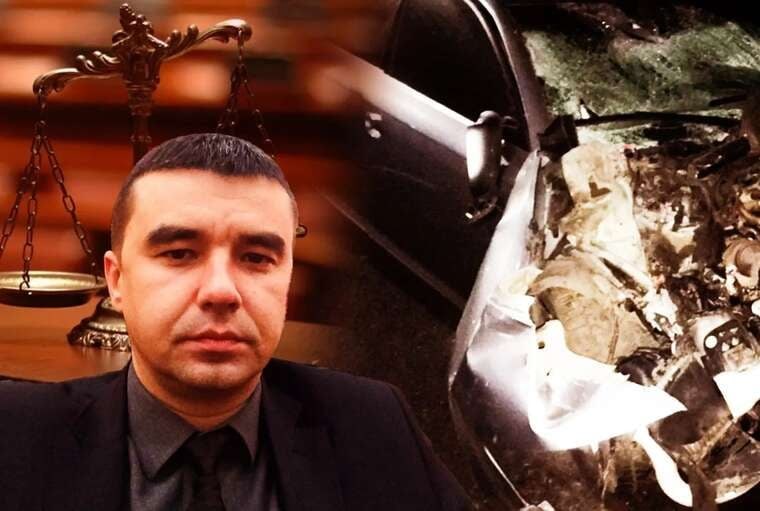
The Public Integrity Council (PIC) approved a finding that Roman Titivalov, a judge of the Turiisk District Court in Volyn Oblast, does not meet the criteria of integrity and professional ethics. One of the main grounds was a traffic accident that occurred in 2019, after which a medical examination revealed 2.67 per mille of ethyl alcohol in the judge's blood.
The incident took place on 27 February 2019 in the settlement of Turiisk, which coincided with Titivalov's birthday. Near a petrol station, an Audi A6 driven by the judge collided with a DAF truck. As a result of the impact, the truck was thrown onto the roadside, where it destroyed a public transport stop.
Police, medics, and investigators from the Lviv Regional Directorate of the State Bureau of Investigations (SBI) arrived at the scene. Titivalov was initially taken to the Turiisk District Hospital. He initially refused to undergo an alcohol test, but later blood samples were taken for laboratory analysis. The judge was then transported by special vehicle to the trauma centre of the Kovel Territorial Medical Association.
The truck driver was tested on site using a device that showed no alcohol, but blood samples were also taken for expert examination. The SBI investigated the criminal case under Article 286, Part 1 of the Criminal Code of Ukraine (violation of road traffic safety rules) for almost a year. During the investigation, a number of automotive technical and medical expert examinations were conducted. A forensic toxicological study confirmed the presence of 2.67 per mille of ethyl alcohol in Titivalov's blood.
While the expert examinations were ongoing, the judge filed a complaint with the Lychakivskyi District Court of Lviv regarding the inaction of the investigator, who had refused him victim status. It was then that Titivalov learned that in January 2020, the SBI had closed the criminal case without notifying anyone of the suspicion.
In March 2020, the Kovel City and District Court closed the administrative proceedings against Titivalov under Articles 124 and 130 of the Code of Ukraine on Administrative Offences (CAO). The court concluded that there was no corpus delicti of an administrative offence.
However, the court deemed the expert finding inadmissible evidence due to violations in the procedure for collecting, storing, and examining blood samples. Nevertheless, this decision did not mean that the court established the fact of the absence of alcohol in the judge's blood.
The criminal case was also closed; Titivalov had victim status in it. The High Council of Justice refused to open disciplinary cases, partly due to the expiration of the established time limits.
The PIC emphasised that the closure of administrative and criminal proceedings does not dispel doubts about the judge's integrity. According to the council's assessment, the court did not establish that there was no alcohol in Titivalov's blood, but only deemed the test results inadmissible evidence due to procedural violations.
In assessing integrity, the PIC believes it is important to consider not only the formal results of court proceedings, but also the circumstances of the incident itself, its public resonance, and the judge's behaviour. Titivalov's explanations did not dispel reasonable doubts about the impeccable nature of his reputation.
The council also analysed Titivalov's judicial practice. In three cases under Article 130 of the CAO regarding driving a vehicle while intoxicated, he released individuals from administrative liability under Article 21 of the CAO and transferred the materials to the work collectives.
In another 39 cases of domestic violence under Article 173-2 of the CAO, the judge applied Article 22 of the CAO, deeming the offences minor.
These decisions in themselves did not become grounds for a negative PIC finding. At the same time, the council recommended that the High Qualification Commission of Judges obtain explanations from the candidate regarding such practice.
Roman Titivalov has worked at the Turiisk District Court since 2012. In 2018, he successfully passed the qualification assessment and was appointed as a judge for life.
His father, Kostiantyn Titivalov, previously worked as a prosecutor in the transport prosecutor's office in Kovel and is currently engaged in legal practice. The judge's brother is also a lawyer.
Comments
No comments yet. Be the first!