Court ruling on registration automation
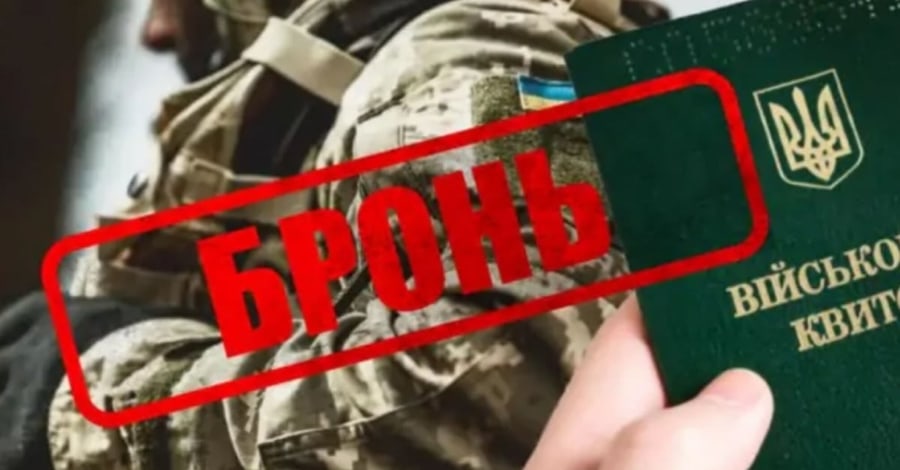
The Sixth Administrative Court of Appeal issued a decision that may halt the mechanism for automatically enrolling citizens in military registration. In case No. 320/31215/25, the court deemed the relevant provisions of the government act, which permitted such practice, unlawful and invalid. This decision was adopted on 16 September 2026.
How the experimental mechanism worked
Previously, Cabinet of Ministers Resolution No. 932 of 16 August 2024 approved an experimental project to automate the population of the "Oberyh" registry. This process involved integration with the "Trembita" system, information resources of the State Migration Service, and the demographic registry.
Under this mechanism, men aged 25 to 60 who, according to registry data, were not listed in military registration could be enrolled automatically. No military medical examination (MME) was conducted, no personal visit was required, and no proper verification of the individual's actual legal status was carried out. This automation also affected citizens who had been officially excluded from military registration for years due to their health condition.
Legal aspects and the court's position
The court emphasised the fundamental difference between "removal" from military registration (which may be temporary, for example, due to a change of place of residence) and "exclusion" from it. In accordance with Part 6 of Article 37 of Law No. 2232-XII, exclusion due to health condition means the complete termination of a person's military registration status. Such a person ceases to be a military obligor.
Special legislation does not provide for a procedure for the automatic restoration or re-enrolment of such individuals without prior cancellation of the initial decision on unfitness in the manner established by law. The Court of Appeal noted that the mechanism introduced by Resolution No. 556 created significant legal uncertainty, allowing an electronic system to automatically enrol even those who had been legally relieved of their duties.
Responsibility of state bodies
The ruling states that the improper or untimely entry by district Territorial Centres for Recruitment and Social Support of information on excluded individuals into the "Oberyh" registry is a consequence of the inaction of the state bodies themselves. Deficiencies in paper or electronic document circulation cannot serve as a justification for re-imposing on a citizen obligations from which they were legally relieved.
The court stressed that the introduction of automatic enrolment without an MME under the guise of an "experimental project" contradicts the Law "On Military Duty and Military Service". A citizen has the right to expect the stability of final state decisions, and turning them into a potential offender due to a flawed algorithm is unacceptable.
Consequences of the decision and government reaction
In conclusion, the court overturned the first-instance decision and invalidated points 17 and 17-1 of Cabinet of Ministers Resolution No. 932. The Cabinet of Ministers of Ukraine was also ordered to bring this resolution into compliance with the relevant law and to regulate the mechanism for cancelling the military registration of those individuals who had been enrolled in accordance with these provisions.
The government decided to appeal this decision. The Cabinet of Ministers filed a cassation appeal and a motion to suspend the operation of the Court of Appeal's decision. Meanwhile, as noted, the filing of these documents does not automatically suspend the operation of the court's decision. A separate ruling by the Supreme Court granting the motion is required for this.




Comments
No comments yet. Be the first!