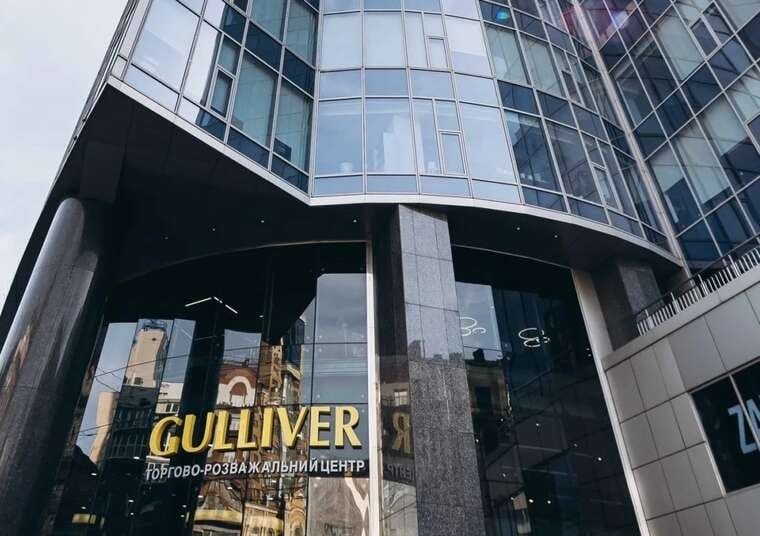
State banks sell Kyiv shopping centre Gulliver for 9.2 billion hryvnia
Oschadbank and Ukreximbank have announced a stock exchange auction for the disposal of a large office and retail complex in Kyiv, previously seized due to debts.
Oschadbank and Ukreximbank have announced a stock exchange auction for the disposal of a large office and retail complex in Kyiv, previously seized due to debts.
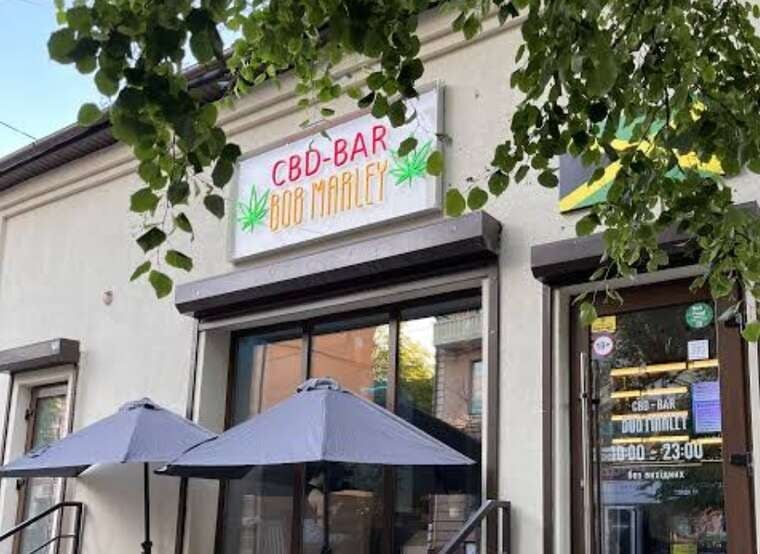
Law enforcement detained 17 individuals who sold vapes containing narcotics through "Bob Marley" venues and online stores, disguising them as legal supplements.
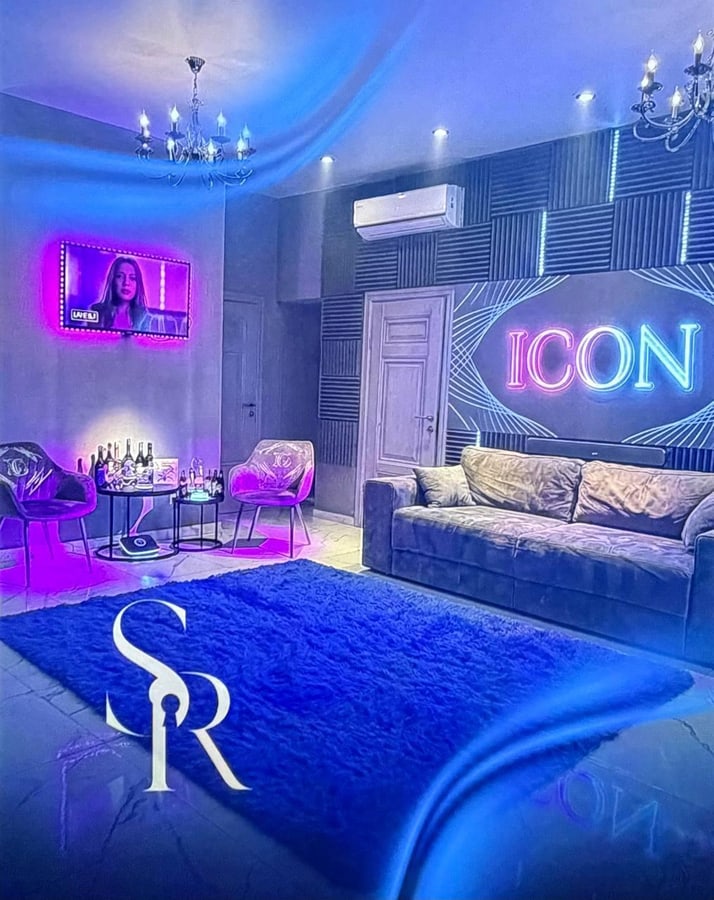
According to the authors of the publication, an establishment providing intimate services may be operating in the Delmar residential complex in central Dnipro. It concerns an apartment on the 15th floor of the building at 72B Dmytro Yavornytskoho Avenue.
Internet provider "Mereja Lanet" announced the temporary closure of its Customer Service Centre in the capital. The company assured that technical works and user support continue in online mode.

A Russian journalist reported the appearance of a dish priced at 270 rubles in a menu, which is effectively a classic Kyiv cutlet but under a different name.
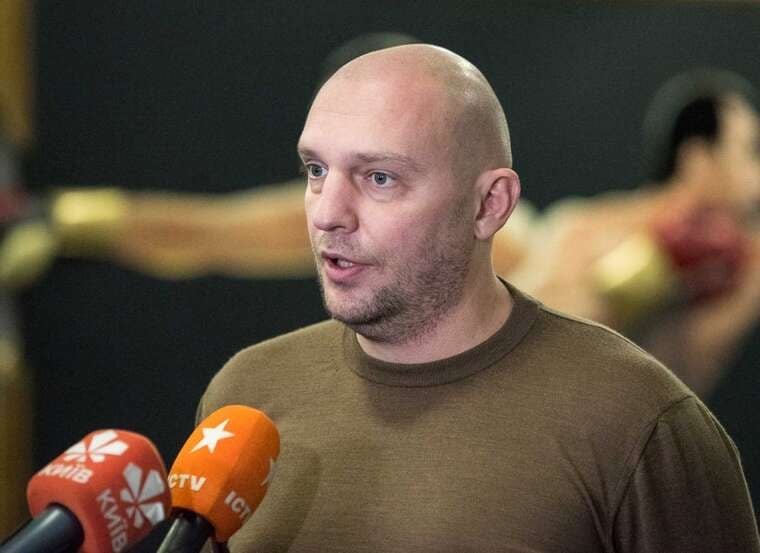
Former Vice President of the Kyiv Boxing Federation, Volodymyr Mykulenko, revealed details of the scheme by which Kyrylo Shevchenko and his associates seized assets of Swiss investors on the Desna River using forged documents.

Investigation revealed work costs inflated by 475,700 UAH and overpayment for modular structure of 1.74 million UAH. Suspicion served to former utility head and contractor executives.
Vladimir Zhuravlyov's lawyer said his client has applied to Croatian authorities for political protection, citing the lack of guarantees of a fair trial in Germany.
In early 2020, an investigation was launched in the German city of Bamberg, which soon drew attention to a group of fraudsters from Israel and Ukraine.
These individuals defrauded European pensioners of tens of millions of euros by promising investments in precious metals, real estate, and cryptocurrencies.
The fraudsters created fake "exchange" websites that displayed the growth of funds belonging to gullible depositors. However, when the "investors" attempted to withdraw their money, they were told that a 15% commission fee was required. After the funds were transferred, contact with the organisers of the criminal scheme was cut off, and the "investor" received neither profit nor their initial investment.
The scheme was quite primitive but effective. Surprisingly, the fraudsters' money was not moved to offshore accounts, as one might expect, but to accounts in Ukraine. It later emerged that most of the scheme's organisers held Ukrainian citizenship, a fact confirmed by one of the participants in the scheme, a police informant from Serbia named Aleksandar Ignjatović, who reported this shortly before his death.
Upon learning of the scale of the fraud, the German prosecution sought assistance from their Ukrainian counterparts. Ukraine responded promptly, and by December 2020, arrests and searches of suspects had been conducted on Ukrainian territory. During the investigation, the name of Timur Rohlin surfaced, along with the delivery service Rocket, which many sources linked to him. This information came to light due to the panic caused by the wife of one of the arrested individuals, Igor Kozlenko, who attempted to prove her husband's innocence on her Facebook page. There, she published a request from the Bamberg prosecution in which Timur Rohlin was listed among the suspects.
The investigation confirmed that, in addition to Rohlin himself, several companies linked to his family were also seized. For instance, the company "SpetsTorg," owned by Igor Rohlin (Timur's father), held elite real estate in the settlement of Kozyn. Subsequently, the companies were seized, and assets worth tens of millions of dollars came under the control of Ukrainian law enforcement agencies.
Other assets were also seized, including office buildings and residential real estate in Kyiv. During the searches, a collection of luxury cars was discovered, purchased with funds extracted through the fraudulent schemes.
Following this, work began to establish the connection between the Rohlin family's business and their operations in the delivery sector. The company Rocket, which at one point was considered a successful startup, may in fact have been part of this criminal scheme. The investigation revealed that Timur Rohlin may have obtained funds to purchase this business using proceeds from fraudulent operations.
The investigation also established that between September 2018 and March 2020, 35.9 million euros were deposited into the accounts of Remini Consulting LP, funds that were presumably obtained through criminal means. A portion of these funds was transferred to the accounts of RIJV Holdings Ltd, a company controlled by Timur Rohlin. Rohlin himself claimed to be a Ukrainian citizen, although the investigation materials indicate that he also holds an Israeli passport.
Furthermore, the investigation revealed that in 2020, Rohlin concealed the origin of his assets by re-registering companies in the name of his father, Igor. These companies ultimately became the owners of several major real estate properties in Kyiv.
Thus, the Rohlin family found itself in possession of elite real estate and businesses that may have been acquired with funds derived from criminal activity. The question of the legality of these funds remains open, although the investigation is ongoing.
In addition, it is worth noting that after media outlets published materials about Timur Rohlin, the portal hosting the article was subjected to a DDoS attack, and Rohlin himself filed several lawsuits against the sources that disseminated the information. However, the investigation initiated by German law enforcement remains in the spotlight, and its continuation may lead to further exposure of the scheme and the accountability of all participants.
Comments
No comments yet. Be the first!