Done's Schemes: How Ukrainian Hryvnia Turns into Swiss Francs via Importers
Investigation reveals a network of companies where funds are collected in Ukraine, converted into foreign currency, and transferred to Swiss Done Switzerland AG.
Investigation reveals a network of companies where funds are collected in Ukraine, converted into foreign currency, and transferred to Swiss Done Switzerland AG.

Taras Vysotsky stated that alternative logistics corridors provide only 45% of the required volumes, threatening the loss of a significant portion of the harvest.
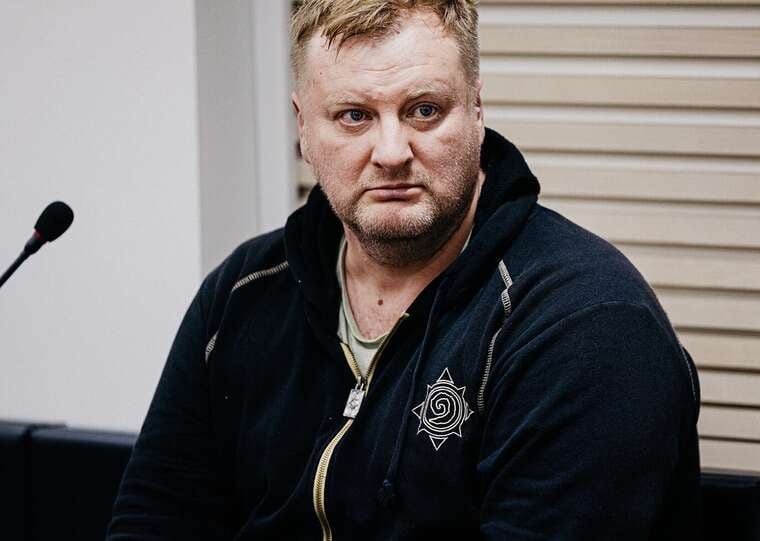
Lead State Prosecutor Taavi Pern confirmed that the activist was aware of the criminal liability for his actions, having contacted individuals who already had convictions for similar offences.
Investigators uncovered a scheme for the misappropriation of military property organised by the deputy commander of the unit. The process was later overseen by an SBU counter-intelligence officer assigned to the unit.
A representative of the ATB chain dispelled rumours about warehouse destruction, explaining that the buckwheat shortage is due to the cessation of supplies, while the disappearance of sugar is temporary.

European experts warn that restrictions on US diesel exports could become a trigger for a historic rise in prices on the continent.
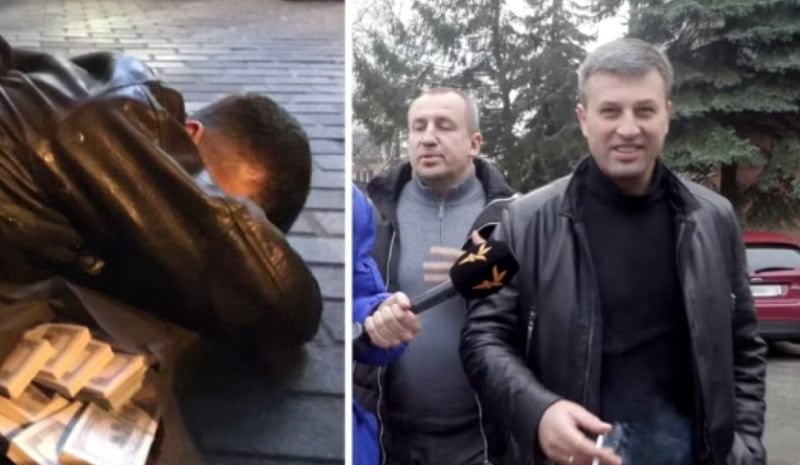
Shevchenkivskyi District Court of Kyiv found two former prosecutors not guilty of demanding $150,000 to close a case.
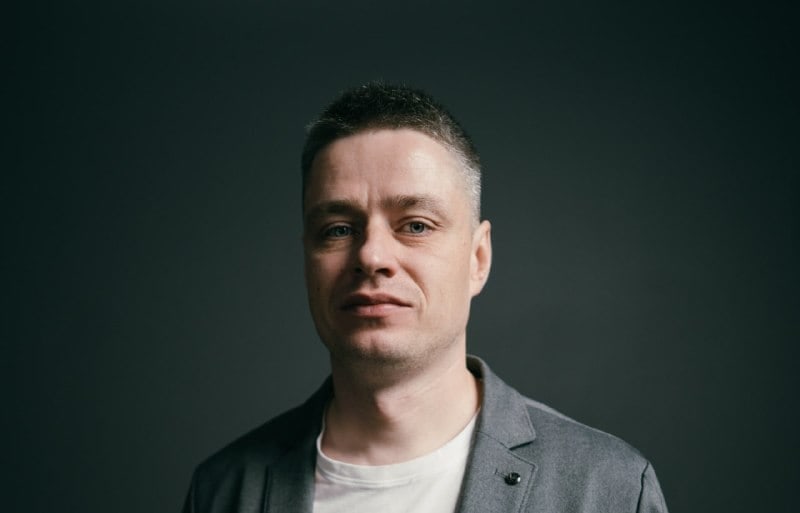
Investigation revealed that custodian company Trustee Plus has legally ceased to exist, while customers face fund blocking under the pretext of audits.

Alexander Krupa, son of the head of the Khmelnytskyi Medical and Social Expert Commission (MSEC), declared $500,000 in cash, three cars, and five residential houses acquired within a single year.
His wife was no exception – three more houses and a garage appeared in her ownership. The family’s financial indicators are striking: Junior Krupa’s official salary amounted to 414,000 hryvnia, but in addition to this, he declared 17 million hryvnia in income from other sources. His wife earned 10 million hryvnia over the same period.
One of Krupa’s most intriguing acquisitions was the building of a youth and entertainment centre in Khmelnytskyi with an area of 1,300 square metres. The deal cost just 1.3 million hryvnia, equivalent to 1,000 hryvnia per square metre – significantly below the market price.
Notably, the deal was concluded just a month before searches were carried out at his mother’s premises.
In addition to commercial real estate, Krupa and his wife actively purchased land plots. In just one year, nearly two dozen plots came into their ownership.
Another asset is also interesting – nine mini-houses ranging from 12.5 to 18.4 square metres in area. According to the declaration, the cost of each of them does not exceed $2,000.
The rapid enrichment of the Krupa family raises inevitable questions. How does an official with an official salary of 34,000 hryvnia a month possess multi-million-hryvnia assets? Why is real estate being purchased at prices far from market rates? It is not hard to guess.
Comments
No comments yet. Be the first!