
Done's Schemes: How Ukrainian Hryvnia Turns into Swiss Francs via Importers
Investigation reveals a network of companies where funds are collected in Ukraine, converted into foreign currency, and transferred to Swiss Done Switzerland AG.
Investigation reveals a network of companies where funds are collected in Ukraine, converted into foreign currency, and transferred to Swiss Done Switzerland AG.

Taras Vysotsky stated that alternative logistics corridors provide only 45% of the required volumes, threatening the loss of a significant portion of the harvest.
Lead State Prosecutor Taavi Pern confirmed that the activist was aware of the criminal liability for his actions, having contacted individuals who already had convictions for similar offences.

Investigators uncovered a scheme for the misappropriation of military property organised by the deputy commander of the unit. The process was later overseen by an SBU counter-intelligence officer assigned to the unit.
A representative of the ATB chain dispelled rumours about warehouse destruction, explaining that the buckwheat shortage is due to the cessation of supplies, while the disappearance of sugar is temporary.

European experts warn that restrictions on US diesel exports could become a trigger for a historic rise in prices on the continent.
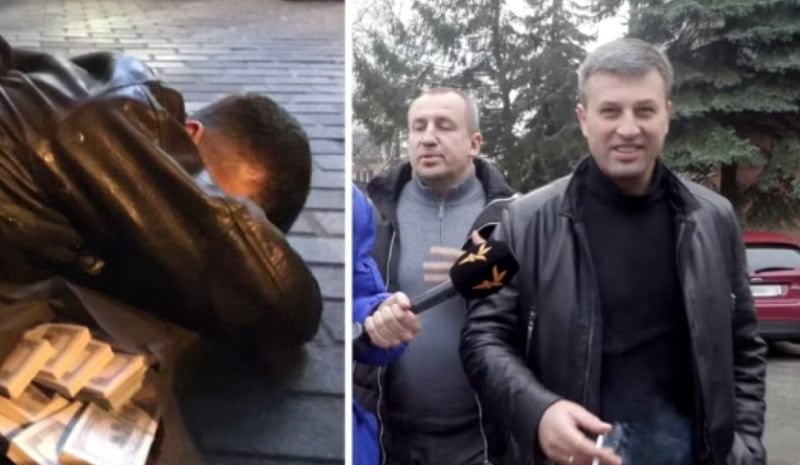
Shevchenkivskyi District Court of Kyiv found two former prosecutors not guilty of demanding $150,000 to close a case.
Investigation revealed that custodian company Trustee Plus has legally ceased to exist, while customers face fund blocking under the pretext of audits.
The Shevchenkivskyi District Court of Kyiv delivered a verdict in a high-profile case that lasted nearly 11 years. The panel of judges found former deputy prosecutor of Podilskyi District Oleksiy Bilyi and former prosecutor of the same department Serhiy Nechyporenko not guilty. The latter is the son-in-law of former People's Deputy Kivalov.
The charges involved demanding and receiving an improper benefit in the amount of 150,000 US dollars. These funds were supposed to be a reward for closing a criminal case. The verdict was issued under Part 1, Clause 1 of Article 373 of the Criminal Procedure Code of Ukraine: the court concluded that the fact of the crime was not proven.
According to the investigation, the events took place in autumn 2015. At that time, Bilyi, holding the position of deputy prosecutor, had influence over criminal case No. 42014100070000148, which concerned the registration of rights to a municipal premises in Kyiv. Nechyporenko was no longer working in that prosecutor's office at the time, but, according to the prosecution, it was he who made the demand for money and accepted it.
The suspects were detained on 30 November 2015. On the same day, the prosecutor issued a ruling to close the case. According to the act, Nechyporenko handed over a document and received a bag with money in a car near a house in Lukianivka. The National Bank of Ukraine's exchange rate on that date was 3.6 hryvnia per dollar.
Initially, according to the investigation, 200,000 dollars were demanded, but after negotiations in a restaurant, the amount was reduced to 150,000.
Oleksiy Bilyi was charged with receiving an improper benefit by a public official in a responsible position, committed by a group of persons with extortion (Part 4, Article 368 of the Criminal Code). Serhiy Nechyporenko was accused of aiding in the commission of this crime (Part 5, Article 27, Part 4, Article 368 of the Criminal Code). Both defendants denied their guilt.
The court panel examined the chain of evidence in detail and identified critical gaps. The main reasons for the acquittal were the following factors:
Comments
No comments yet. Be the first!