
Done's Schemes: How Ukrainian Hryvnia Turns into Swiss Francs via Importers
Investigation reveals a network of companies where funds are collected in Ukraine, converted into foreign currency, and transferred to Swiss Done Switzerland AG.
Investigation reveals a network of companies where funds are collected in Ukraine, converted into foreign currency, and transferred to Swiss Done Switzerland AG.
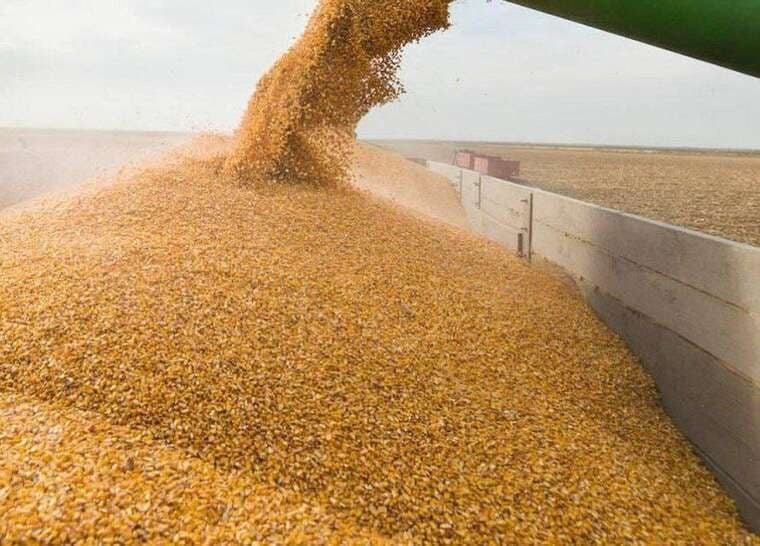
Taras Vysotsky stated that alternative logistics corridors provide only 45% of the required volumes, threatening the loss of a significant portion of the harvest.
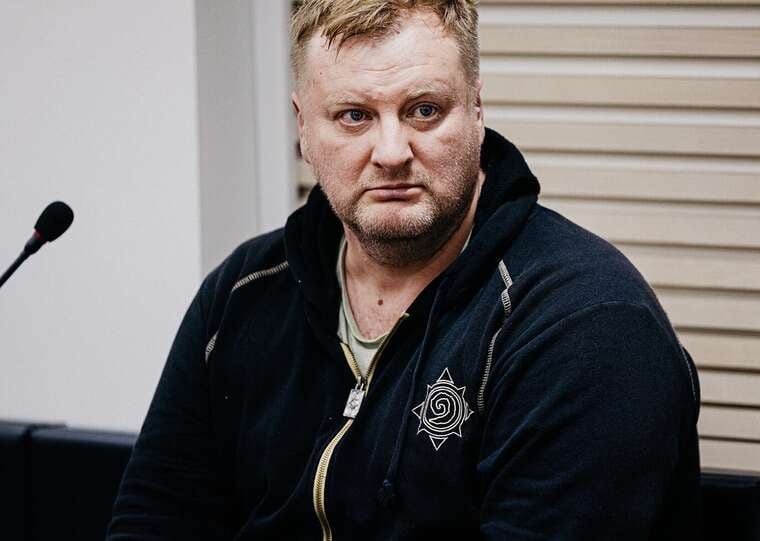
Lead State Prosecutor Taavi Pern confirmed that the activist was aware of the criminal liability for his actions, having contacted individuals who already had convictions for similar offences.
Investigators uncovered a scheme for the misappropriation of military property organised by the deputy commander of the unit. The process was later overseen by an SBU counter-intelligence officer assigned to the unit.
A representative of the ATB chain dispelled rumours about warehouse destruction, explaining that the buckwheat shortage is due to the cessation of supplies, while the disappearance of sugar is temporary.
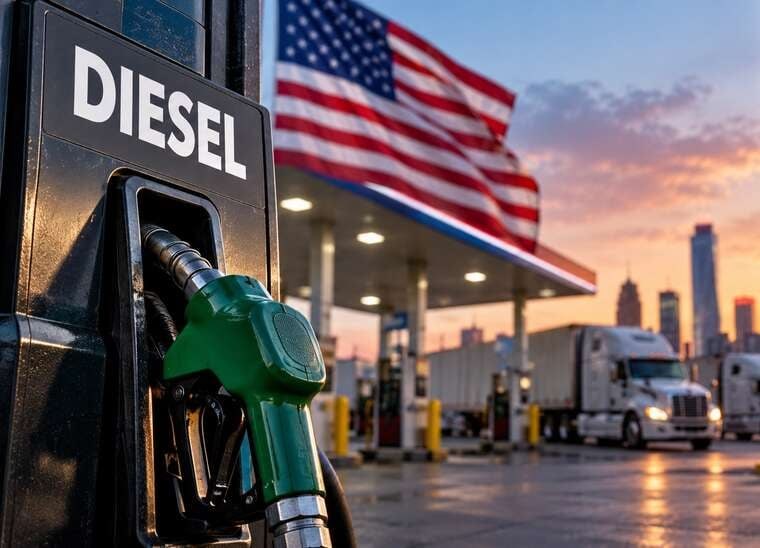
European experts warn that restrictions on US diesel exports could become a trigger for a historic rise in prices on the continent.

Shevchenkivskyi District Court of Kyiv found two former prosecutors not guilty of demanding $150,000 to close a case.
Investigation revealed that custodian company Trustee Plus has legally ceased to exist, while customers face fund blocking under the pretext of audits.

The "Slobodzhansky Agrosoyuz" farm and its affiliated companies have become the focus of an investigation by the Bureau of Economic Security (BES). According to the investigation, the group organised a complex system for tax evasion, money laundering, and moving funds into the shadow economy.
Collusion with officials of the State Tax Service (STS) allowed the enterprises to declare fictitious deals involving the sale of grain crops and receive budgetary compensation. Subsequently, reporting was manipulated to avoid paying profit tax and VAT. Funds were transferred through controlled firms, cashed out, or directed to accounts in the real sector under the guise of legitimate operations.
At the heart of the scheme was the trade in agricultural products, which, according to the BES, existed only on paper. The "Slobodzhansky Agrosoyuz" farm and affiliated companies – "TK Real", "Kolosek 2024", "Sinton Trade" and "Slobodka 2022" – declared the sale of sunflower, corn and wheat, inflating volumes by 25–60%.
Analysis revealed that the origin of the products was unverified, and the suppliers exhibited signs of being fictitious or transit entities.
To mask illegal operations, the group processed fictitious purchases of goods unrelated to the agricultural sector. These included:
These deals allowed the group to create a fictitious tax credit, reducing VAT liabilities and withdrawing funds from circulation.
In 2023–2024, the "Slobodzhansky Agrosoyuz" farm conducted deals totalling:
More than 30 enterprises were involved in the scheme, including:
Accounts at PrivatBank, Oschadbank, PUMB, Ukreximbank, Sens Bank, and Uksibbank and others were used to transfer funds. The total amount of declared atypical purchases was UAH 136.14 million, of which UAH 21.86 million was VAT.
The "Slobodzhansky Agrosoyuz" farm declared the lease of 47 land plots in the Kupiansk and Chuhuiv districts of Kharkiv Oblast, but their actual use has not been verified. The contracts were signed with "Zolochivske Nyvy" and "Karban A.V.", which did not register tax invoices for the supplies.
Declared assets, such as grain drying complexes, ploughs, and fuel tankers in Kirovohrad Oblast, are not documented, and their acquisition through "Sinton Logistic" cannot be traced through the supply chain.
From December 2023 to April 2024, "Slobodzhansky Agrosoyuz" was on the STS list of high-risk taxpayers, but was subsequently removed by a decision of the Kyiv Oblast STS commission.
Experts estimate that Ukraine's annual budget losses from shadow schemes in the agricultural sector amount to UAH 20–30 billion. In 2024, according to STS data, the share of the shadow economy in agriculture rose to 18% due to weak control and corruption within tax authorities.
According to information from the ABSOLUTION detective agency
Comments
No comments yet. Be the first!